
Boeing 737 Max 10 certification delayed by software issue, FAA says
Source: CNBC
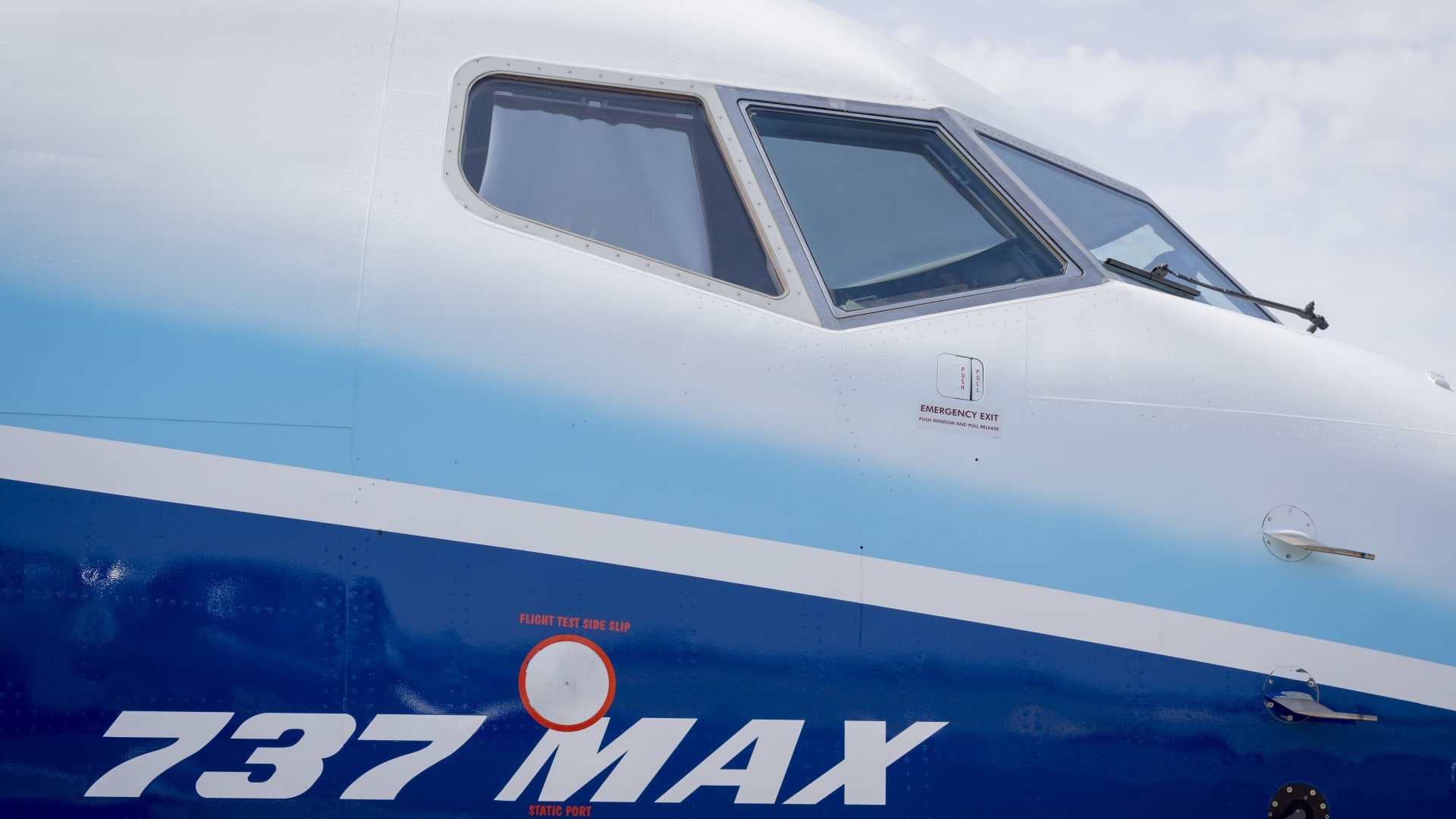
The FAA delayed certification of Boeing's 737 Max 10 after a newly identified software glitch raised an unresolved potential safety-of-flight concern, reversing Boeing's expectation of near-term approval. Boeing said the vertical-navigation issue can occur following a missed approach and subsequent go-around; U.S. airlines said affected aircraft are not in service and can revert to earlier software. Boeing shares fell more than 6% in afternoon trading, as the delay extends the already prolonged certification process for its key Max variant.
Analysis
The market issue is not the incremental engineering cost; it is renewed uncertainty around Boeing's certification cadence and the credibility of its production-to-cash-conversion plan. The 737-10 is a higher-capacity, higher-value variant, so a prolonged delay can push customer deliveries, associated pre-delivery-payment conversion, and margin-accretive mix into later periods. That creates downside to near-term free-cash-flow expectations even if the eventual software remedy is inexpensive, while keeping BA's valuation anchored to regulatory execution rather than an aerospace recovery multiple.
United (UAL) has the clearest fleet-planning exposure among U.S. carriers because the -10 is central to domestic upgauging; a delayed delivery stream raises the odds of capacity growth being met with older aircraft, leases, or less efficient substitutes. Airbus (EADSY/AIR FP) gains negotiating leverage at the margin, particularly where airline network plans require incremental narrowbody capacity and delivery slots are scarce. The near-term selloff may be overdone only if the FAA defines this as a bounded software validation issue within weeks; the more material bear case is a broader review of development controls, which would extend the timeline by quarters and reopen airline compensation and order-deferral risk.
Over the next 1-3 months, FAA characterization of the scope, Boeing's revised certification timetable, and any change in 2026 delivery or FCF framing are the catalysts. A rapid clearance without revised production guidance would falsify the short thesis; conversely, a formal safety finding, new fleet inspections, customer schedule changes, or a further cut to cash-flow expectations would justify materially lower estimates. For the 6-18 month horizon, repeated certification slippage would shift airline procurement leverage toward Airbus and make Boeing's balance-sheet repair more dependent on external financing discipline rather than internally generated cash.
AllMind Terminal
AI-powered research, real-time alerts, and portfolio analytics for institutional investors.
Request TrialMarket Sentiment
Overall Sentiment
strongly negative
Sentiment Score
-0.62
Ticker Sentiment
Key Decisions for Investors
- Initiate a tactical BA short versus long EADSY (or AIR FP) for 1-3 months, sized as a relative-value trade rather than a pure aerospace beta short. The thesis is certification and delivery-mix divergence; cover if the FAA provides a bounded remediation path and Boeing reiterates delivery and FCF expectations.
- Maintain a watch item on UAL rather than shorting immediately: assess whether management changes narrowbody capacity, lease expense, or capex assumptions at the next earnings update. A disclosed aircraft-substitution cost or reduced growth outlook would support a UAL underweight versus DAL, which has less direct 737-10 dependence.
- For BA holders, use a 3-6 month put spread rather than outright liquidation if exposure must be retained: the key downside catalyst is a timetable measured in quarters, while a clean software fix can produce a sharp relief rally. Do not add long exposure until revised certification timing and the cash-flow effect are independently quantified.
- Monitor supplier read-through selectively: avoid assuming broad benefit to BA suppliers from delayed deliveries, as deferred higher-margin aircraft can postpone OEM and supplier revenue recognition. The actionable trigger is any Boeing production-rate or supplier call-off revision, not the certification headline alone.
More News
- DRDGOLD at Mining Forum Americas 2026: growth funded by cash flow
- Boeing Leads Dow Lower on News of 737 MAX Software Glitch
- Who’s liable when AI agents go rogue?
- Stock Movers: Kodiak, MongoDB, Boeing (Podcast)
- GE Aerospace Secures Polish Defense Deal, But Broad Industrial Pullback Weighs on Shares
- Embraer's 2026 Outlook: Record $34.5 billion Backlog Drives Future Production Growth
From AllMind Research
- Anthropic IPO Preview: Valuation, Timing, and What to Watch
- Shein After the IPO: Venue, Valuation, and What Must Be Proved
- What AI Research Tools Should a Small Hedge Fund Buy First?
- Bitcoin's 52% Crash Proves It's a Tech Stock: Here's What That Means for Portfolio Construction
- What Is an AI Investment Research Platform?