
Pella Corporation Advances Connected Manufacturing to Support Greater Customization
Source: PR Newswire
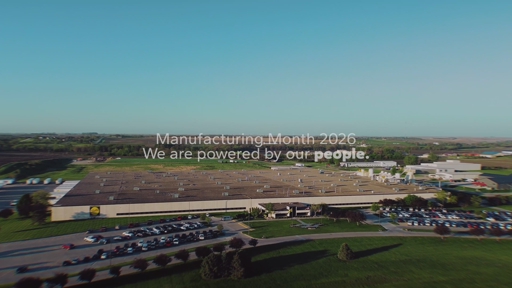
Pella Corporation is expanding its connected-manufacturing “Intelligent Operations” model to manage made-to-order window and door complexity through automation, data tools and workforce training. The company has deployed 35 automated guided vehicles across four production lines, contributing to an approximately 80% reduction in material-handling damage for door panels weighing up to 300 pounds. Its robotic paint system supports more than 11,000 custom colors and 300-plus product profiles, while digital tools and adaptive workstations aim to improve quality, customization and employee productivity.
Analysis
This is not an investable company-specific catalyst: Pella is private and the disclosure provides no capex, throughput, labor-cost, warranty, or payback data. The relevant read-through is that made-to-order building-products manufacturers are prioritizing flexible automation over outright SKU rationalization, which favors suppliers of industrial controls and machine vision such as Rockwell Automation (ROK) and Cognex (CGNX) only if replicated broadly across the residential-products complex. For public peers JELD-WEN (JELD), Fortune Brands Innovations (FBIN) and Owens Corning (OC, via doors), any margin benefit from similar programs remains secondary to repair/remodel volumes, new housing starts, dealer inventory, and promotional pricing.
The more important second-order implication is competitive: automation that reduces defects and lead-time variability can protect premium-price realization during a soft demand environment, raising the hurdle for lower-scale regional fabricators that compete principally on labor cost. That is a 6-18 month structural risk for smaller private competitors, not a near-term earnings catalyst for public building-products equities. Consensus should not extrapolate a single-factory modernization narrative into an industry productivity cycle; customized manufacturing often shifts cost from direct labor to maintenance, software integration, and depreciation, with returns dependent on utilization. A weakening housing backdrop would delay payback even if operational metrics improve.
Over the next 1-3 months, housing data and mortgage-rate direction will overwhelm this signal. The thesis that automation is becoming margin-accretive would be supported by JELD or FBIN reporting lower warranty/returns, stable lead times, and gross-margin expansion despite flat volumes; it is falsified if capex rises while conversion margins, working capital, or dealer service levels deteriorate. There is no standalone directional trade from this release.
AllMind Terminal
AI-powered research, real-time alerts, and portfolio analytics for institutional investors.
Request TrialMarket Sentiment
Overall Sentiment
mildly positive
Sentiment Score
0.34
Key Decisions for Investors
- No immediate position: treat this as a watch item rather than a catalyst, given the private issuer and absence of disclosed financial returns.
- Monitor JELD and FBIN through the next two earnings cycles for automation-linked evidence: gross-margin improvement with flat-to-down unit volumes, lower warranty expense, and no material capex-to-sales acceleration. Consider a long only after those metrics validate a productivity inflection.
- For housing exposure, maintain OC as the higher-quality relative expression versus JELD if rates decline and repair/remodel demand improves; OC's broader insulation, roofing and doors portfolio reduces dependence on any one window-and-door operating initiative. Reassess if residential construction guidance weakens or channel inventories rebuild.
- Use ROK and CGNX only as confirmation-watch names, not direct beneficiaries: initiate interest only if multiple building-products manufacturers cite flexible automation or vision systems as funded 2027 capex priorities. Broad industrial capex guidance, rather than this release, is the required catalyst.
More News
- Nvidia Faces Questions Over China AI Chip Smuggling Cases
- $8.2B acquisition validates AI-picked chip stock: +20% since June
- Nike Warns Sales Slump Will Worsen This Fiscal Year
- Nuveen CEO on Schroders Deal, Plans for Combined Company
- Broadcom to lend Anthropic up to $42 billion to lease its chips, filing says
- New Mexico wants Meta to pay up to $40 billion in penalties after data privacy trial