
Brazil Election: Data Centers That Are Hated in US Win Support in Brazil
Source: Bloomberg
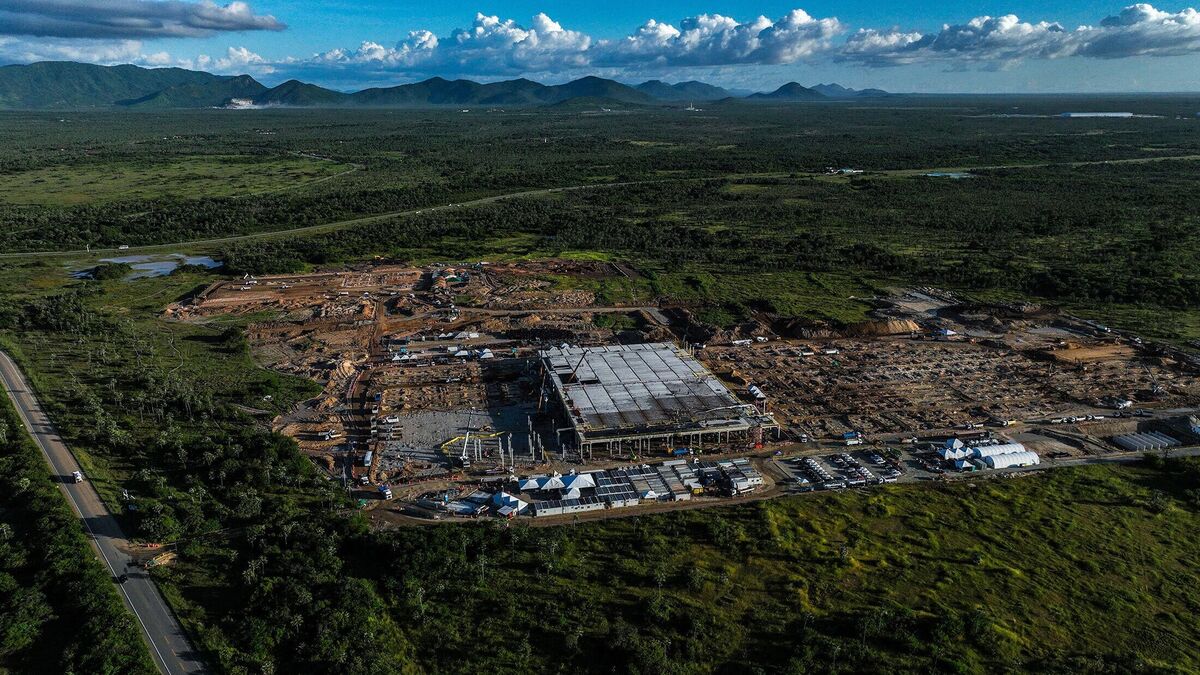
Ahead of Brazil’s October presidential election, both Luiz Inácio Lula da Silva and right-wing rival Flávio Bolsonaro are making multibillion-dollar data center builds—paired with AI investment—central to their economic pitches. Unlike in the US midterms where data centers have become politically toxic, Brazil’s campaign messaging frames the sector as a growth lever for Latin America’s largest economy. The article is largely political positioning with limited immediate financial specifics.
Analysis
The investable edge is not the headline-friendly AI spend; it is the policy premium on firm power, interconnection, and permitting. In Brazil, that should flow first to listed utilities and transmission owners with scarce-load optionality, while the real economy losers are tariff-sensitive industrial users if regulators socialize grid upgrades or subsidize demand. Second-order, a credible data-center buildout can also pull forward EPC, switchgear, cooling, and fiber capex, but the equity market will likely pay up for the bottleneck assets, not the growth story itself.
This is mostly a 1-3 month election/polling trade, not an immediate earnings trade. Until there is language on tax treatment, land, water, and grid access, the market should treat this as a beta signal for Brazilian infrastructure rather than a direct profit stream. Over 6-18 months, if the next administration actually fast-tracks interconnection and PPAs, the winners are EBR/ELP-style grid and utility names; the main reversal risk is fiscal tightening, environmental pushback, or power price inflation that makes the projects uneconomic.
The contrarian point is that both campaigns may be signaling growth-friendly optics without solving the constraint that matters: cheap, reliable 24/7 power. If the policy package ends up being tax holidays plus rhetoric, hyperscalers win on lower build costs while local listed equities get little incremental margin. The thesis is falsified if election rhetoric does not turn into approvals and capex within one or two quarters, or if Brazilian power spreads/tariffs widen enough to make the business case unattractive.
AllMind Terminal
AI-powered research, real-time alerts, and portfolio analytics for institutional investors.
Request TrialMarket Sentiment
Overall Sentiment
neutral
Sentiment Score
0.05
Key Decisions for Investors
- Watchlist, not a rush trade: accumulate EBR and ELP on pullbacks over the next 1-3 months only if campaign platforms start including permits/interconnect incentives; expect 5-10% relative upside versus EWZ if policy specificity improves.
- Relative-value expression: long EBR / short EWZ as a beta-neutral way to play any re-rating of Brazilian grid and utility assets from data-center demand; cut the pair if utilities underperform EWZ by >300 bps after the election or if no implementing policy emerges.
- Avoid front-dated options until there is visible execution. The current signal is too political for a clean earnings catalyst; if PPA, land-lease, or transmission approvals start landing, consider 6-12 month calls on EBR as a higher-conviction convexity trade.
- Monitor Brazilian power price spreads and interconnection queue approvals as the falsifiers; if tariffs rise or approvals stall, abandon the thesis because the market will reprice this as a policy slogan rather than an earnings driver.
More News
- Order to limit Starshield for Ukraine came from inside White House: Reuters reports
- CoreWeave credit default swaps hit distress levels as investors sour on AI debt
- Taiwan to curb AI chip sales to China for more U.S. alignment- Bloomberg
- Giant Taiwanese chipmaker TSMC confirms it’s in talks with Elon Musk to join ‘Terafab’ complex in Texas: ‘The AI market continues to be very strong’
- The Tesla Roadster 2 Is Here—and It Flies
- Suddenly, Wall Street is worried that the U.S. economy is more ‘vulnerable’ than it looks