
Transmart Advances Soft Magnetic Core Technology for High-Frequency Power and AI Data Center Applications
Source: PR Newswire
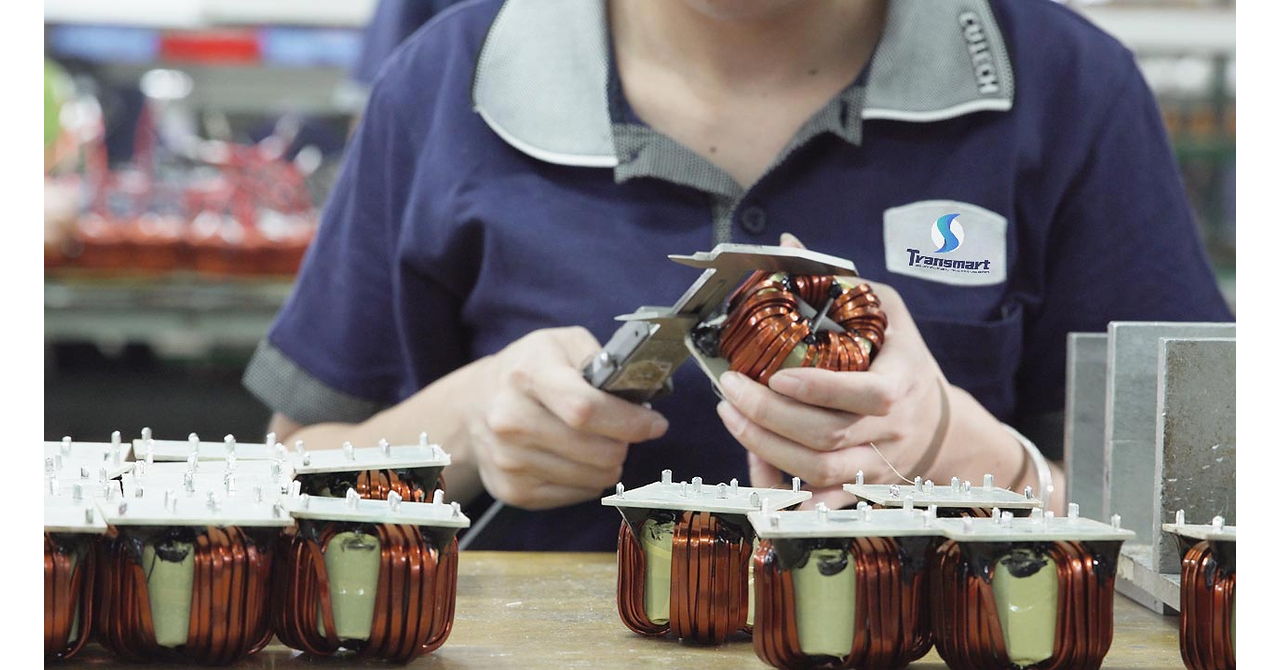
Transmart is expanding its North American customer engagement for nanocrystalline, amorphous and silicon-steel magnetic cores used in AI data-center power systems, grids, renewable energy and EV charging. Its 12–14 μm nanocrystalline ribbon technology enables core losses as low as 0.4 W/kg at 20 kHz and 50 mT, supporting smaller and more efficient high-frequency power components. The company cites EIA forecasts for U.S. electricity demand growth of 1% in 2026 and 3% in 2027, driven substantially by large-scale computing and AI workloads, as a demand tailwind.
Analysis
This is not a direct public-equity catalyst: Transmart is private, provides no customer wins, capacity, pricing, qualification status, or revenue contribution, and its North American expansion is more likely to be a 12-24 month supplier-qualification process than an earnings event. The investable read-through is that high-density power conversion is making magnetics a tighter engineering constraint, modestly strengthening the pricing and design-in value of established power-system vendors such as Vertiv (VRT), Eaton (ETN), Schneider Electric (SU), ABB (ABBNY), and Delta Electronics (2308.TW).
The second-order risk is supply-chain localization rather than a broad margin windfall. Chinese-origin magnetic components face procurement scrutiny, tariff uncertainty, and dual-sourcing requirements in North American data-center infrastructure; VRT and ETN can generally pass through component costs, but a shortage or qualification delay can lengthen lead times and defer system revenue. Incumbent specialty-material suppliers, including Nippon Steel (5401.T) and Proterial/Hitachi Metals' private operations, retain an advantage where reliability, thermal performance, and long-term qualification outweigh unit cost.
Consensus may over-extrapolate AI power demand into near-term solid-state-transformer adoption. The nearer commercial opportunity is conventional UPS, busway, switchgear, rectification, and high-frequency filtering, where magnetic-core improvements are usually captured by OEMs rather than by end customers. Over 6-18 months, rising rack power density supports VRT and ETN order mix and service attach rates; it does not by itself justify a discrete rerating for commodity electrical-steel producers such as Cleveland-Cliffs (CLF), whose earnings remain substantially more exposed to steel pricing and autos.
Falsification for the data-center power thesis would be a sequential deterioration in VRT/ETN backlog conversion, lower megawatt-per-rack deployments from hyperscalers, or evidence that power equipment lead times are normalizing without pricing retention. Conversely, disclosed multi-source magnetic-component shortages, rising power-conversion content per rack, or sustained data-center capex guidance would validate the higher-value power-chain exposure.
AllMind Terminal
AI-powered research, real-time alerts, and portfolio analytics for institutional investors.
Request TrialMarket Sentiment
Overall Sentiment
mildly positive
Sentiment Score
0.30
Key Decisions for Investors
- No trade on Transmart-specific news; place a 6-12 month watch alert for disclosed North American design wins, certified local inventory, capacity additions, or named OEM customers before assigning financial significance.
- Prefer a 3-9 month long VRT / short CLF pair for AI-power-density exposure versus cyclical electrical-steel exposure. The thesis requires VRT backlog and pricing to remain resilient; exit if VRT reports material backlog conversion slippage or cuts its data-center outlook.
- For lower-beta exposure, accumulate ETN on broad industrial pullbacks rather than chasing a press-release-driven theme. Target a 12-18 month horizon tied to data-center electrical-distribution backlog; risk is hyperscaler capex moderation or mix dilution from lower-margin products.
- Monitor 5401.T, 2308.TW, and ABBNY for earnings commentary on high-frequency magnetics, power-conversion content, and China-to-North America sourcing shifts. Treat any position as a confirmation trade only after order or margin disclosure, not as a response to claimed technical specifications.
More News
- UK Prime Minister Burnham says Iran 'played a part' in British air base incident
- South Korea’s exports hit record high on AI boom
- Asian stocks dip, bonds in focus after torrid September
- RAM supply set to worsen, says Micron, as CEO celebrates ‘much higher’ prices
- Tencent leases 100,000 chips from Oracle for $7 bln- FT
- Greer urges G20 to back Trump tariff agenda, takes aim at China