
PepsiCo Trades Below 50-Day SMA: Opportunity or Warning Sign?
Source: zacks.com
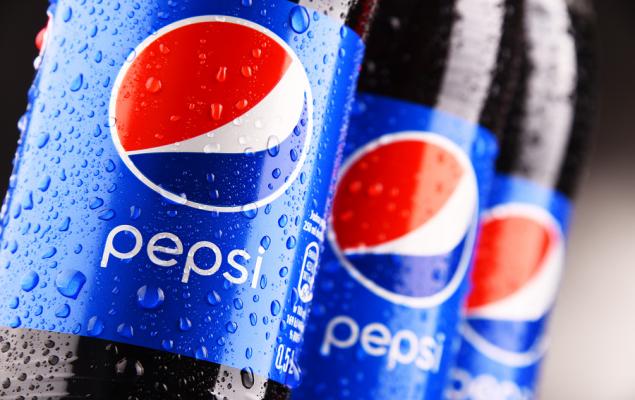
PepsiCo shares are down 5.6% year to date, lagging the soft-drinks industry’s 15.3% gain, the consumer-staples sector’s 9.4% rise and the S&P 500’s 11.1% advance; the stock fell below its 50-day SMA at $138.16 after closing at $136.69 on Sept. 9. Softer North American food and beverage demand, subdued beverage volumes, affordability investments and expected second-half input-cost inflation are pressuring margins and delaying a domestic recovery. PEP trades at 15.28x forward earnings versus 19.43x for the industry, but its discount reflects weak momentum, limited estimate improvement and execution concerns; Zacks rates the shares Rank #4 (Sell).
Analysis
The relevant question is not whether PEP is optically cheap, but whether its North American profit pool has reached an earnings trough. Affordability actions and higher brand spend are likely to protect shelf space but reduce the near-term conversion of revenue into EBIT; that creates a setup where even modest volume misses can drive disproportionate margin-estimate cuts over the next 1-2 quarters. The company’s snacks exposure makes PEP more sensitive than KO to a pressured lower-income consumer, while KO's concentrate model and MNST's premium energy mix offer cleaner operating leverage if consumption stabilizes.
A second-order read-through is that prolonged PEP promotional intensity could force private-label and branded snack competitors to defend price points, worsening category profitability rather than merely reallocating share. KDP is the more relevant valuation comparator: its lower multiple already embeds a slower-growth profile, whereas PEP's apparent discount to KO should not mechanically close without evidence of sequential North American volume improvement. The article contains an internal technical-data inconsistency on the long-term moving average, so no decision should rely on the moving-average signal alone.
Over 1-3 months, the key catalyst is the next earnings update and whether management can show improved U.S. volume without a further gross-margin reset. Over 6-18 months, productivity, international growth and a return of operating leverage can support rerating, but only if promotional investment is demonstrably temporary. Contrarian upside is meaningful because expectations appear subdued: flat-to-positive volume, stable North America margins, and no estimate cuts could support a 1-2 turn forward-P/E recovery; the thesis is falsified by another guidance reduction, sustained volume deterioration, or incremental margin pressure despite higher spending.
AllMind Terminal
AI-powered research, real-time alerts, and portfolio analytics for institutional investors.
Request TrialMarket Sentiment
Overall Sentiment
moderately negative
Sentiment Score
-0.48
Ticker Sentiment
Key Decisions for Investors
- Maintain an underweight PEP versus KO through the next earnings print; use a market-neutral long KO / short PEP pair, sized 1:1 beta-adjusted, to isolate the divergence in U.S. margin and mix. Target 8-12% relative return over 3-6 months; exit if PEP reports two consecutive quarters of North America volume improvement with stable or expanding segment margin.
- Do not buy PEP solely on valuation or technical weakness. Set a watch trigger for initiation only after management demonstrates sequential volume improvement and holds full-year operating-margin guidance; absent those data, the discount can persist rather than mean-revert.
- For downside hedging into earnings, consider PEP put spreads rather than outright short exposure: buy 3-month near-the-money puts and sell 8-10% out-of-the-money puts. This limits carry in a defensive-staples name while targeting the risk of an estimate or margin-guide reset.
- Prefer MNST selectively over PEP for consumer-beverage exposure, but avoid chasing after strong relative performance; enter only on a 5-8% pullback or after confirming category data. The risk is an energy-drink slowdown or increased promotional competition, which would narrow MNST's premium multiple.
- Monitor Nielsen/IRI scanner data, PEP North America organic volume, gross margin, and A&P as a percentage of sales. A sustained improvement in volumes accompanied by lower promotional intensity would invalidate the bearish relative thesis before consensus estimates react.
More News
- Ad agency sector outlook: Publicis leads as WPP retreats and Omnicom integrates IPG
- Salesforce suffers global outage amid Dreamforce shindig
- Salesforce customers see service returning to normal after global outage
- Salesforce staggers back to feet after global outage
- Oil extends losses as Saudi Arabia reportedly offers ship-to-ship crude transfers after pipeline hit
- Japan’s corporate leaders sound alarm over weak yen — even dollar-earners are voicing concerns