
Options traders are seizing control of the S&P 500
Source: MarketWatch
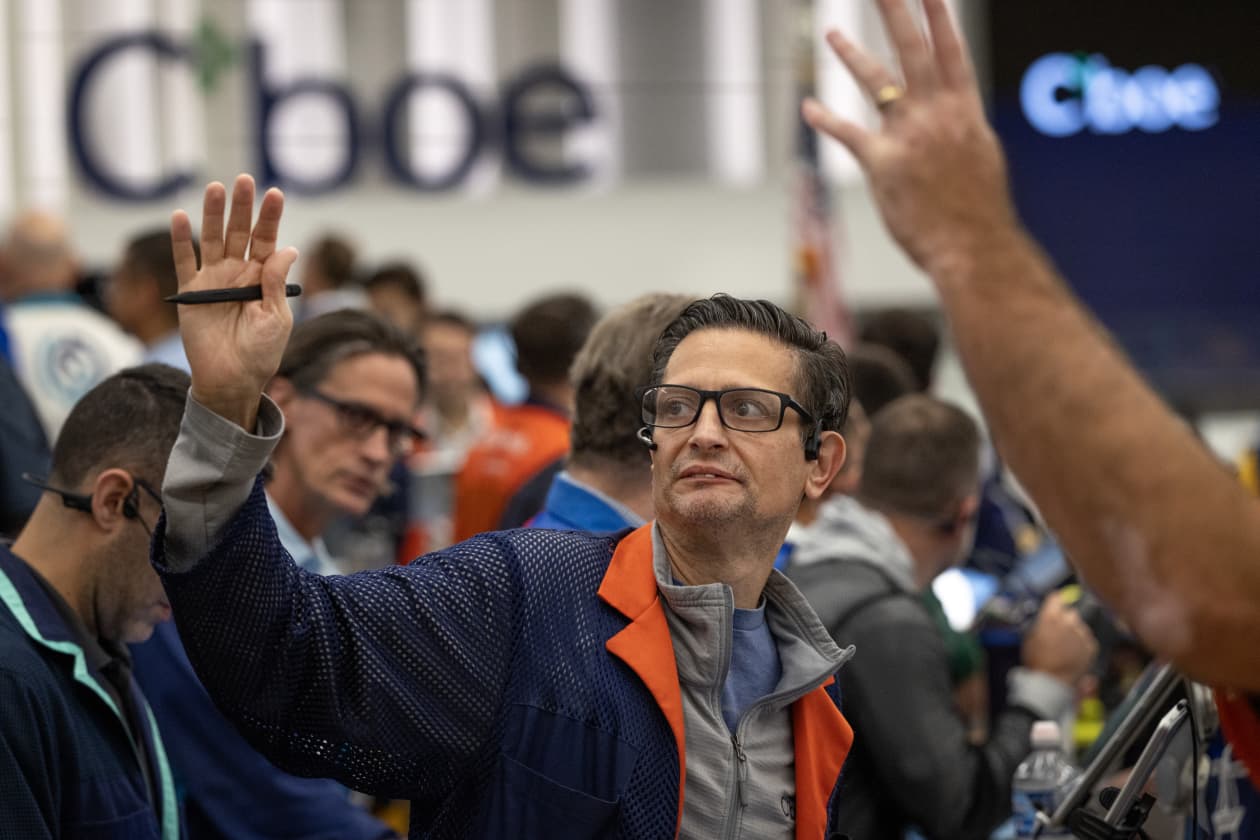
UBS trading-desk analysts say growth in S&P 500 options trading has shifted price discovery away from cash equities and index futures, helping explain why the index has moved little since June. Since 2022, day traders have increasingly used same-day-expiring 0DTE S&P 500 options; the article excerpt gives no trading-volume figures or specific market effects.
Analysis
The useful implication is not that 0DTE activity mechanically caps the S&P 500, but that dealer hedging can alter intraday price dynamics. If dealers are net long gamma, buying dips and selling rallies may damp moves and concentrate trading near large strikes; if dealers are short gamma, the same hedging can chase price and amplify a break. Gross options volume alone does not reveal which regime applies, and contracts expiring today reset rather than creating a durable hedge over multiple sessions.
That distinction matters for volatility positioning: subdued index movement may coexist with sharp intraday reversals or abrupt volatility expansion when flows, macro news, or dealer gamma positioning change. ES futures are a likely hedge transmission channel; cash-index calm is not, by itself, evidence that tail risk has fallen. UBS’s explanation is a market-structure hypothesis, not proof that 0DTE flows caused the range.
Near term, avoid treating low realized volatility as a directional signal. Over the next 1–3 months, monitor dealer gamma estimates, strike concentration, and intraday versus close-to-close realized volatility. The thesis weakens if range-bound trading persists without expiry-related intraday pinning, or if large moves track macro news rather than options positioning. Structural significance is possible, but the supplied information does not establish net dealer exposure or a persistent volatility premium.
AllMind Terminal
AI-powered research, real-time alerts, and portfolio analytics for institutional investors.
Request TrialMarket Sentiment
Overall Sentiment
neutral
Sentiment Score
0.00
Key Decisions for Investors
- No standalone directional S&P 500 trade from this report. The key missing evidence is dealer net gamma by strike and expiry; treat any claim of systematic volatility suppression as a watch item until that is verified.
- For the next 1–3 months, track SPX strike-level open interest and estimated dealer gamma alongside ES intraday reversals and realized volatility. A pattern of repeated pinning near concentrated strikes would support the dampening mechanism; persistent trend days would argue against it.
- Do not short volatility solely because the index has been quiet. If a catalyst creates a defined event window and options pricing is not already elevated, consider limited-risk SPX or VIX call spreads rather than naked short-vol exposure; cap premium at an amount the portfolio can lose in full.
- Falsify the dampening thesis if realized intraday ranges expand materially without a corresponding change in dealer positioning, or if price breaks through heavily watched strikes and hedging appears to reinforce rather than resist the move. Reassess any volatility-selling exposure under those conditions.
More News
- From Wall Street to Silicon Valley, Anthropic IPO poised to have massive 'trickle-down effect'
- A shock in Brazil sends stocks plunging, while neoclouds take another hit
- Lula wins Brazil runoff after prediction markets favored Bolsonaro
- Brazil’s real sinks after Lula’s re-election victory
- One-Day Wipeout Tops 60% For the Hardest-Hit Brazilian Stocks
- Trump says Brazil election looked ’rigged’, defeated Bolsonaro’s party recognizes Lula win