
Huawei predstavuje inovatívnu imerzívnu teleprítomnosť s pohlcujúcimi zážitkami a inteligentnými službami
Source: PR Newswire
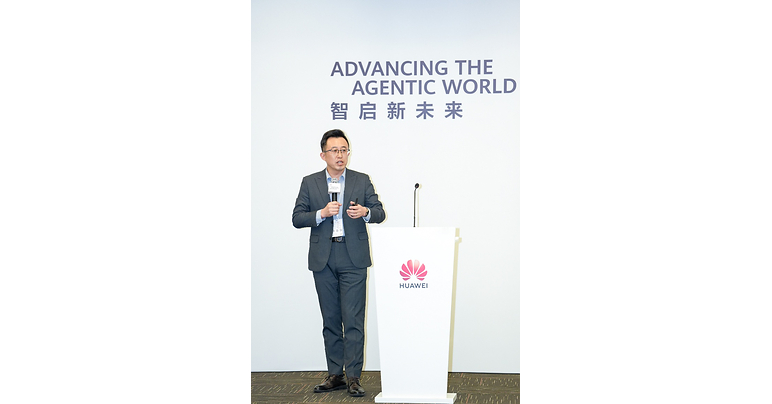
Huawei unveiled an AI-enabled immersive telepresence system at HUAWEI CONNECT 2026, featuring the CloudLink Camera 610, 1:1 participant rendering, AI noise separation, stereo audio localization, and IdeaPresence displays supporting 1.07 billion colors. The company also expanded its OpenHarmony collaboration ecosystem with development tools for AI, media processing, digital whiteboards, and cloud/network services, targeting enterprise conferencing, overseas cloud meetings, and smart classrooms. The announcement signals continued product innovation in enterprise collaboration but provides no revenue, pricing, customer-contract, or financial guidance details.
Analysis
This is not yet an investable revenue event, but it reinforces Huawei’s strategy of bundling endpoint hardware, collaboration software, AI inference and security into a sovereign-enterprise stack. The competitive pressure is most relevant in China and Huawei-aligned emerging markets, where customers facing data-localization requirements may favor an integrated local vendor over Cisco (CSCO), Microsoft (MSFT) Teams Rooms, Zoom (ZM), Logitech (LOGI) and HP (HPQ). The near-term exposure is likely concentrated in low-margin room hardware rather than enough software seats to alter global collaboration-platform earnings.
The second-order issue is procurement: immersive room systems increase demand for displays, cameras, microphones and enterprise networking, but Huawei’s vertical integration and domestic supply chain limit the read-through to listed Western component vendors. If adoption occurs in regulated industries, security/watermarking features could make standalone videoconferencing vendors compete on compliance and on-premise deployment rather than user experience, raising selling costs and pressuring international-market margins over 6-18 months.
Consensus should not extrapolate a product demonstration into a material threat to MSFT or CSCO. Enterprise collaboration purchasing is governed by installed-base interoperability, service coverage and software workflows; measurable displacement would require disclosed contract wins, recurring-cloud metrics, or evidence that OpenHarmony applications are gaining developers outside China. No directional trade is warranted before such verification.
AllMind Terminal
AI-powered research, real-time alerts, and portfolio analytics for institutional investors.
Request TrialMarket Sentiment
Overall Sentiment
mildly positive
Sentiment Score
0.38
Key Decisions for Investors
- No immediate position: treat this as a competitive-intelligence alert rather than a catalyst for MSFT, CSCO, ZM, LOGI or HPQ; the announcement provides no pricing, backlog, unit-volume or recurring-revenue data.
- Monitor CSCO and MSFT China/Asia enterprise commentary over the next 1-3 earnings cycles for collaboration or secure-networking share loss. A guidance reduction explicitly tied to China public-sector or regulated-enterprise demand would validate a modest CSCO short versus long US enterprise-software basket.
- Watch ZM’s enterprise net-dollar retention and international expansion metrics over 6-12 months. A sustained deterioration attributable to sovereign/on-premise requirements would strengthen a ZM short thesis, but absent this attribution the company’s larger risks remain competition from MSFT and its own monetization execution.
- For hardware exposure, require evidence of Chinese meeting-room refresh acceleration before acting on LOGI or HPQ. A broad, price-led hardware upgrade cycle could be incrementally negative to their China mix, while weak corporate IT capex would dominate any product-specific effect.
More News
- Trump & Xi to Meet Amidst Friction on Wars, Tech, Trade
- Here are the 3 big things we're watching in the stock market this week
- Tech leads shares higher in Asia, oil eases
- Yuan hits fresh multi-year peak as PBOC eases curb ahead of Trump-Xi summit
- China slows humanoid robot IPO rush as hype outruns reality
- The economy has undergone a structural transformation that ended the low-cost era. ‘The regime change in inflation and interest rates is the outcome’
From AllMind Research
- Anthropic IPO Preview: Valuation, Timing, and What to Watch
- Shein After the IPO: Venue, Valuation, and What Must Be Proved
- What AI Research Tools Should a Small Hedge Fund Buy First?
- How to Evaluate AI Report Writers for Financial Analysis
- Weekly Update: Sector Analysis, Improvements on Research Data, and Performance Enhancements