
HSA Group Launches AI Lab to Drive Its Next Era of Transformation
Source: PR Newswire
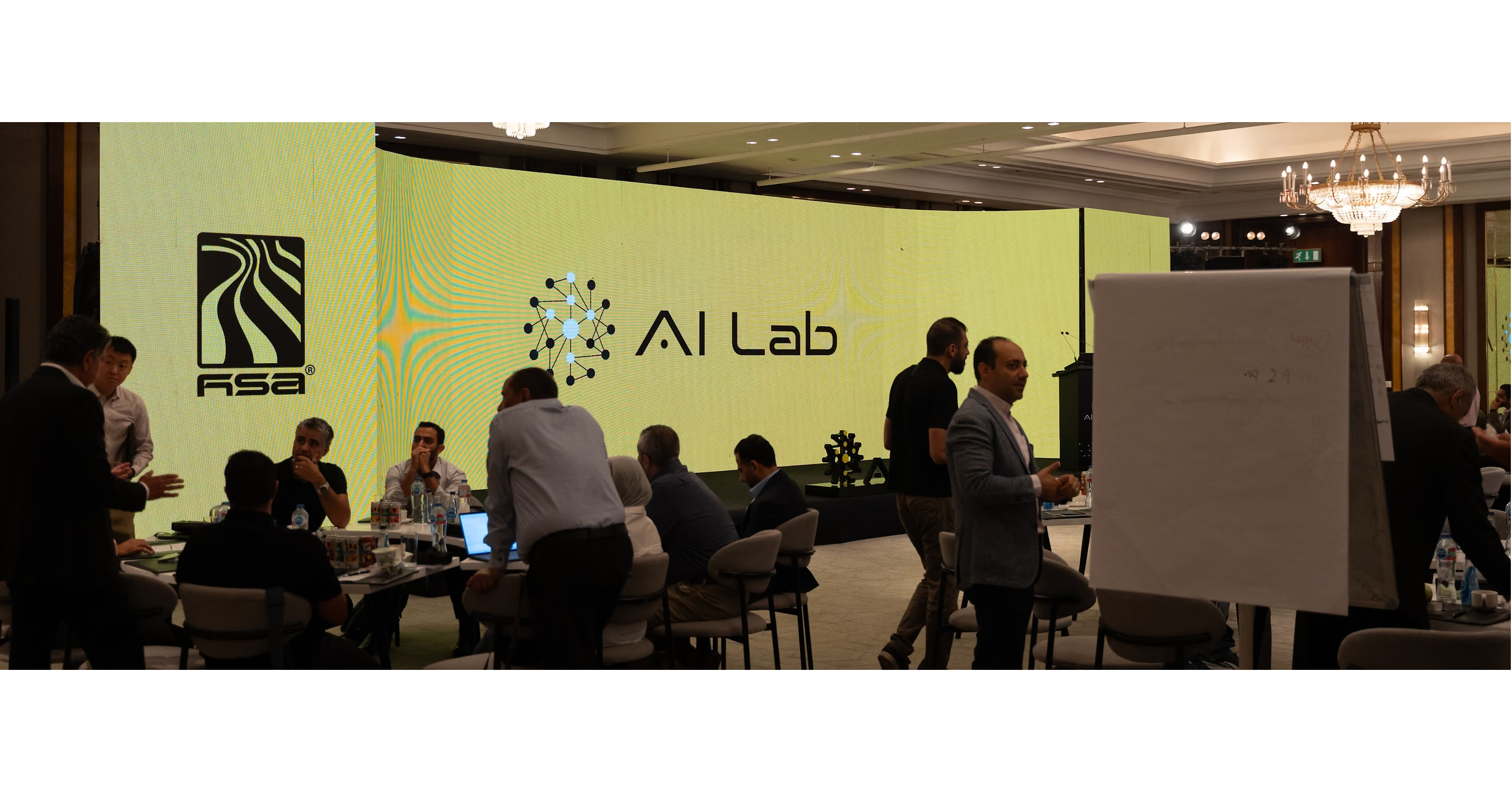
HSA Group launched an AI Lab after identifying 229 potential AI use cases and narrowing them to 38 priority initiatives based on impact and feasibility. The Lab will focus on workforce AI capabilities, automation, integrated AI systems and new AI-enabled businesses, with initiatives governed under responsible-AI principles. The program signals a strategic productivity and decision-making push across HSA's more than 70 operating companies, though no financial targets or investment figures were disclosed.
Analysis
There is no directly investable public-security read-through: HSA is private, and the announcement contains no budget, implementation timeline, vendor commitments, baseline cost structure, or quantified productivity targets. This should be treated as a low-signal corporate transformation statement rather than evidence of near-term earnings accretion. The key diligence question is whether the program becomes centralized procurement for cloud, data infrastructure and enterprise software, or remains a collection of small internal pilots.
The potentially investable second-order effect is regional enterprise AI demand. A multi-country industrial and consumer conglomerate has heterogeneous data, legacy systems and governance constraints; successful deployment would likely favor systems integrators and enterprise platforms capable of integration, security and workflow redesign over pure model providers. Relevant listed beneficiaries could include Microsoft (MSFT), SAP (SAP), ServiceNow (NOW), Accenture (ACN) and Oracle (ORCL), but one private customer's adoption is immaterial to their financial results absent disclosed contract scale.
Over 6-18 months, measurable proof would be labor-cost reduction, working-capital improvement, lower manufacturing downtime, or better demand forecasting—not the number of identified use cases. The more likely near-term outcome is elevated consulting and implementation expense, with ROI delayed by data standardization and local-language/regulatory complexity. A broader risk is that Gulf enterprise AI enthusiasm sustains elevated software expectations while conversion cycles and monetization remain slower than consensus assumes.
AllMind Terminal
AI-powered research, real-time alerts, and portfolio analytics for institutional investors.
Request TrialMarket Sentiment
Overall Sentiment
moderately positive
Sentiment Score
0.42
Key Decisions for Investors
- No standalone trade: do not extrapolate a private conglomerate's AI initiative into revenue estimates for MSFT, SAP, NOW, ACN or ORCL without named vendor contracts, contract value, or deployment milestones.
- Create a 3-6 month procurement alert for disclosed cloud, ERP, cybersecurity, data-platform or systems-integration partners. A material contract would be a modest positive data point for the selected vendor, but only actionable if it changes regional bookings guidance or backlog.
- For existing enterprise-AI longs, use this as qualitative support for regional demand but retain discipline around valuation: reduce exposure if FY revenue guidance, remaining performance obligations, or AI attach-rate disclosures fail to improve over the next two earnings cycles.
- Monitor whether HSA discloses operating KPIs—inventory turns, production yield, SG&A as a percentage of sales, or headcount productivity—within 12-18 months. Absence of quantified outcomes would falsify any thesis that this program represents a replicable, near-term enterprise-AI ROI case.
More News
- Grab aims for 'next level' in financial services with purchase of buy-now pay-later platform Atome
- China's AI leaders keep quiet despite U.S. 'publicity' on tech risks
- Exclusive-Malaysia talks to rival airlines as it monitors AirAsia’s financial health, sources say
- Karin Rådström is steering Daimler Truck in a new direction as the world’s biggest truckmaker faces a growing challenge from China
- France would back Dutch veteran Knot to lead ECB, wants chief economist job, sources say
- China’s slower loan growth is the new normal, central bank governor says
From AllMind Research
- Anthropic IPO Preview: Valuation, Timing, and What to Watch
- Shein After the IPO: Venue, Valuation, and What Must Be Proved
- What AI Research Tools Should a Small Hedge Fund Buy First?
- Index and ETF Holdings Data for AI Research
- Capital Intensity as Gravity: The AI Trade Enters Its Industrial Era (Looking at Q3 2025 Earnings in Tech)