
BioBrain Study Finds Consumers Embrace AI but Still Want Human Oversight
Source: PRWeb
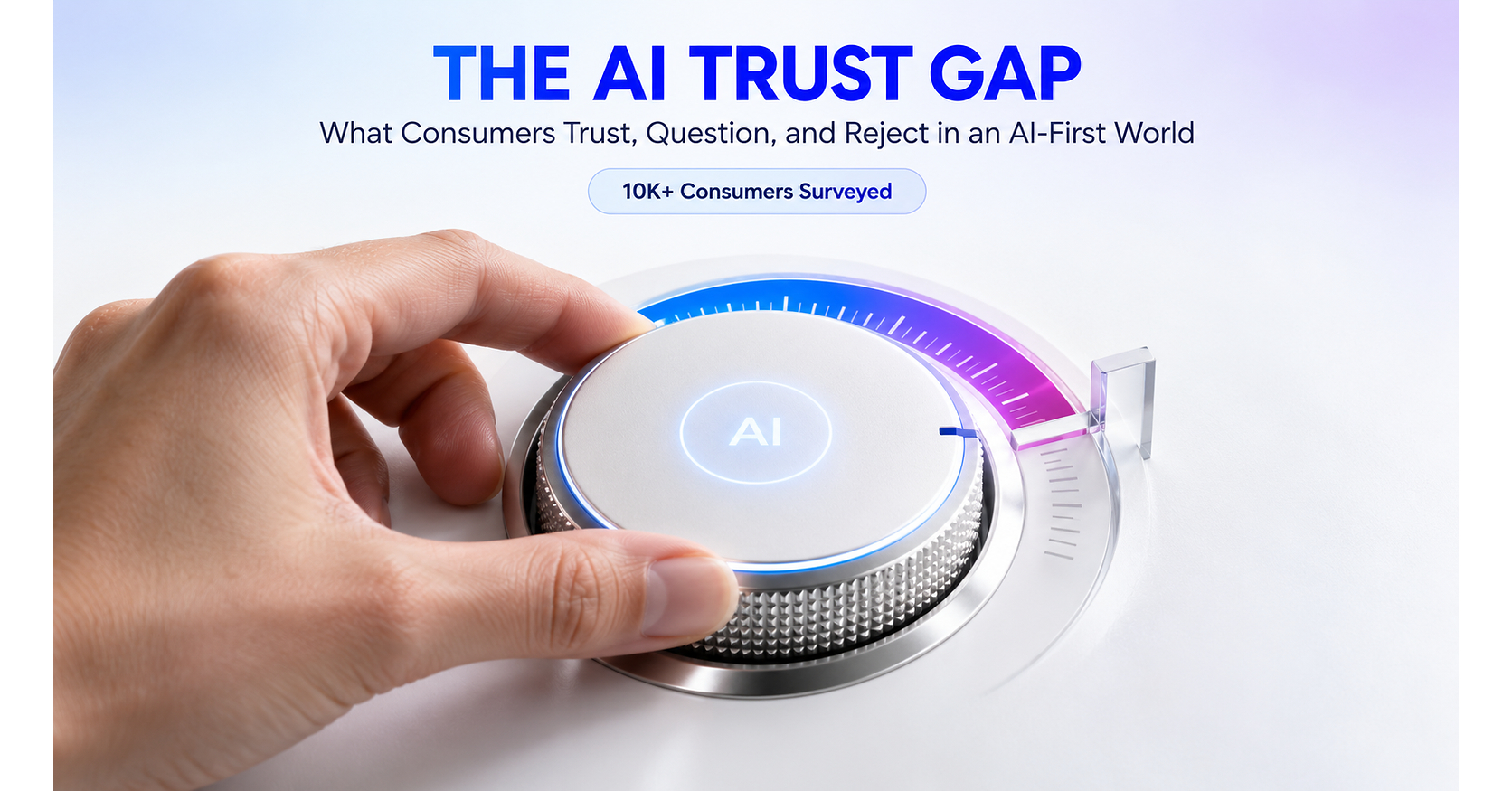
A BioBrain Insights survey of more than 10,000 consumers finds AI use is routine, but trust in AI making consequential decisions remains conditional: 45% use AI-powered tools daily, while 40% prefer human review of AI decisions. Privacy risks and incorrect or fabricated information account for 51% of recorded distrust responses. Consumers are more comfortable with AI assistance in tasks such as writing and summarizing than with AI authority in high-stakes areas including healthcare, employment, and finance.
Analysis
The investable distinction is not AI use versus non-use; it is whether usage converts into permission to automate consequential workflows. That constraint could delay the margin and labor-substitution benefits embedded in “agentic AI” narratives, while shifting spend toward approval layers, audit trails, permissions, provenance, and privacy controls. Workflow vendors that can retain a human checkpoint may capture more durable enterprise budgets than products whose economics depend on removing human review. Conversely, the survey does not establish that consumers will pay for safeguards or that enterprise purchasing behavior matches consumer sentiment.
Treat the release as weak directional evidence, not a demand datapoint: the survey’s sampling, question wording, and representativeness are not provided, and a press release promotes the report. In the next 1–3 months, watch earnings commentary for paid AI usage translating into autonomous task completion, renewal/seat expansion, and measurable customer ROI—not just pilots or daily prompts. Over 6–18 months, privacy incidents, accuracy failures, or regulation could raise adoption costs and favor incumbents with trusted distribution and governance infrastructure; better reliability and clear liability frameworks could instead narrow the authority gap. No company-specific earnings revision follows from this survey alone.
AllMind Terminal
AI-powered research, real-time alerts, and portfolio analytics for institutional investors.
Request TrialMarket Sentiment
Overall Sentiment
mixed
Sentiment Score
0.00
Key Decisions for Investors
- No immediate directional trade: the signal is low-impact and lacks disclosed methodology or evidence of willingness to pay. Do not treat daily AI usage as proof of monetizable autonomous-workflow demand.
- Build a relative-value watchlist: favor enterprise workflow and security vendors able to sell human approval, auditability, and data controls; be cautious with exposures whose valuation case requires rapid displacement of human decision-makers. Initiate only if earnings show control-layer spending converting to recurring revenue.
- Over the next 1–3 months, track vendor disclosures on agent task-completion rates, human override frequency, paid-seat expansion, and customer ROI. A rise in usage without improved conversion or retention would falsify the monetization thesis.
- Reassess after a material AI privacy or accuracy incident, or regulatory action: these could accelerate governance budgets but also delay deployments. Conversely, sustained evidence that customers accept autonomous decisions in high-stakes workflows would weaken the human-oversight thesis.
More News
- Why is SK Hynix stock gaining today?
- Asia shares subdued, bonds swamped by AI debt wave
- Elon Musk blames Indian 'oligarchs' for stalling Starlink launch
- Anthropic will be 'most ridiculous IPO' of year, analyst says
- Megacaps Are Back Driving the US Stock Rally in Hot-Running Economy
- Levi Strauss hikes profit guidance after tariff refunds, but its sales outlook is less optimistic