
Freedom Tech DC to Convene Policymakers, Industry Leaders on AI, Data Centers, Energy and the Future of Money
Source: PR Newswire
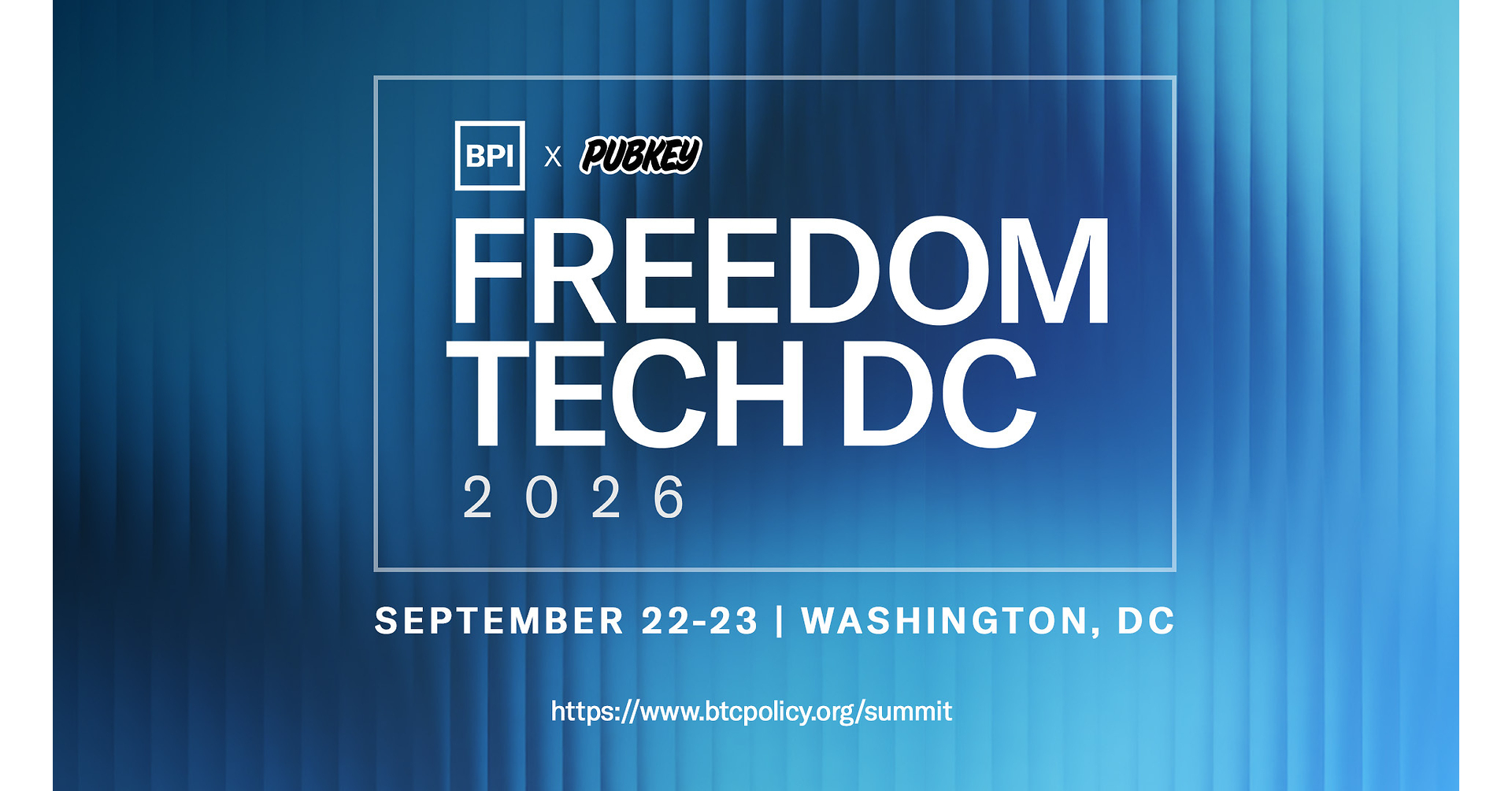
Freedom Tech DC, hosted by the Bitcoin Policy Institute and PubKey DC, will convene U.S. lawmakers, White House digital-asset officials and industry leaders in Washington on Sept. 22-23, 2026. The summit broadens beyond Bitcoin and dollar-backed stablecoins to cover AI policy, open-source models, data-center buildout, grid resilience, cybersecurity and national security. The event highlights growing policy focus on cryptocurrency market-structure legislation and a potential Strategic Bitcoin Reserve ahead of the 2026 midterm elections, but announces no binding policy action or financial transaction.
Analysis
This is lobbying-access signaling rather than a policy event with independently measurable economic consequences. MSTR has the clearest narrative sensitivity because reserve-policy discussion can reinforce the institutional-legitimacy premium embedded in its Bitcoin-linked equity valuation; however, no legislative text, committee calendar, or agency action is identified. Any near-term move should therefore be treated as low-conviction positioning flow, not a change in Bitcoin demand or MSTR's underlying NAV economics.
The broader AI-power-grid linkage is more investable only if it produces permitting, interconnection, or federal procurement mechanisms. A policy regime favoring open-weight models could modestly challenge proprietary-model monetization at the margin, but it is not automatically negative for NVDA: lower-cost model access may expand inference demand and data-center utilization. The nearer bottleneck remains power availability, where utilities, gas generation, and grid equipment capture economics only after project awards and regulated rate-base approvals—not conference rhetoric.
Contrarian view: crypto-policy headlines frequently generate asymmetric upside in high-beta proxies while leaving the probability-weighted legislative outcome largely unchanged. With midterm incentives likely to delay contentious market-structure compromises, a summit is more likely to shape the framing of future bills than accelerate enactment over the next one to three months. The actionable catalyst is any subsequent release of bill language, bipartisan co-sponsorship, committee markup date, or Treasury/SEC implementation timeline; absent those, there is no standalone trade.
Over six to eighteen months, formal recognition of strategic-reserve or stablecoin frameworks would favor regulated onshore platforms and Bitcoin treasury vehicles, while potentially increasing scrutiny and compliance costs for offshore liquidity venues. That outcome is highly path-dependent: a risk-off macro shock, BTC drawdown, security incident, or election-driven regulatory reversal would compress the policy premium first, particularly in leveraged or premium-to-NAV crypto equities.
AllMind Terminal
AI-powered research, real-time alerts, and portfolio analytics for institutional investors.
Request TrialMarket Sentiment
Overall Sentiment
neutral
Sentiment Score
0.08
Ticker Sentiment
Key Decisions for Investors
- No event-driven position ahead of Sept. 22-23 based solely on the summit; monitor for bill text, markup scheduling, or agency guidance within 30 days. Treat speaker comments without a formal policy vehicle as non-tradable.
- Maintain MSTR as a tactical watch rather than add exposure: only consider a long on a confirmed legislative catalyst plus sustained narrowing of its premium to Bitcoin NAV. Falsify on a BTC-led drawdown or widening NAV premium, which would indicate narrative momentum rather than improved fundamentals.
- For crypto-policy exposure, prefer a defined-risk relative-value structure—long GEMI versus short a broad high-beta crypto proxy only after verifiable stablecoin or market-structure progress. The thesis requires GEMI-specific volume, custody, or regulatory-access evidence; missing operating data precludes a directional recommendation.
- Create an alert basket for ETN, PWR, GEV and VRT if the summit is followed by concrete federal data-center power, transmission, or procurement actions. Enter only on award, interconnection, or rate-base evidence; policy discussion alone does not alter 2026-27 earnings estimates.
More News
- What investors need to know about Alphabet's stock-busting earnings report
- Our next steps for Alphabet stock after earnings disappoint at nearly every turn
- Budget 2026 speech
- Fortinet’s stock is taking a dive after earnings. Here’s why.
- The UK cuts energy bills, taxes banks and boosts defense in high-stakes budget
- Microsoft's Big Bets on AI Start to Pay Off