
Fifty-One Sovereign Wealth Funds Behind US$6 Trillion in US Investments Invited to Converge on Miami for G20 Investment Week
Source: PR Newswire
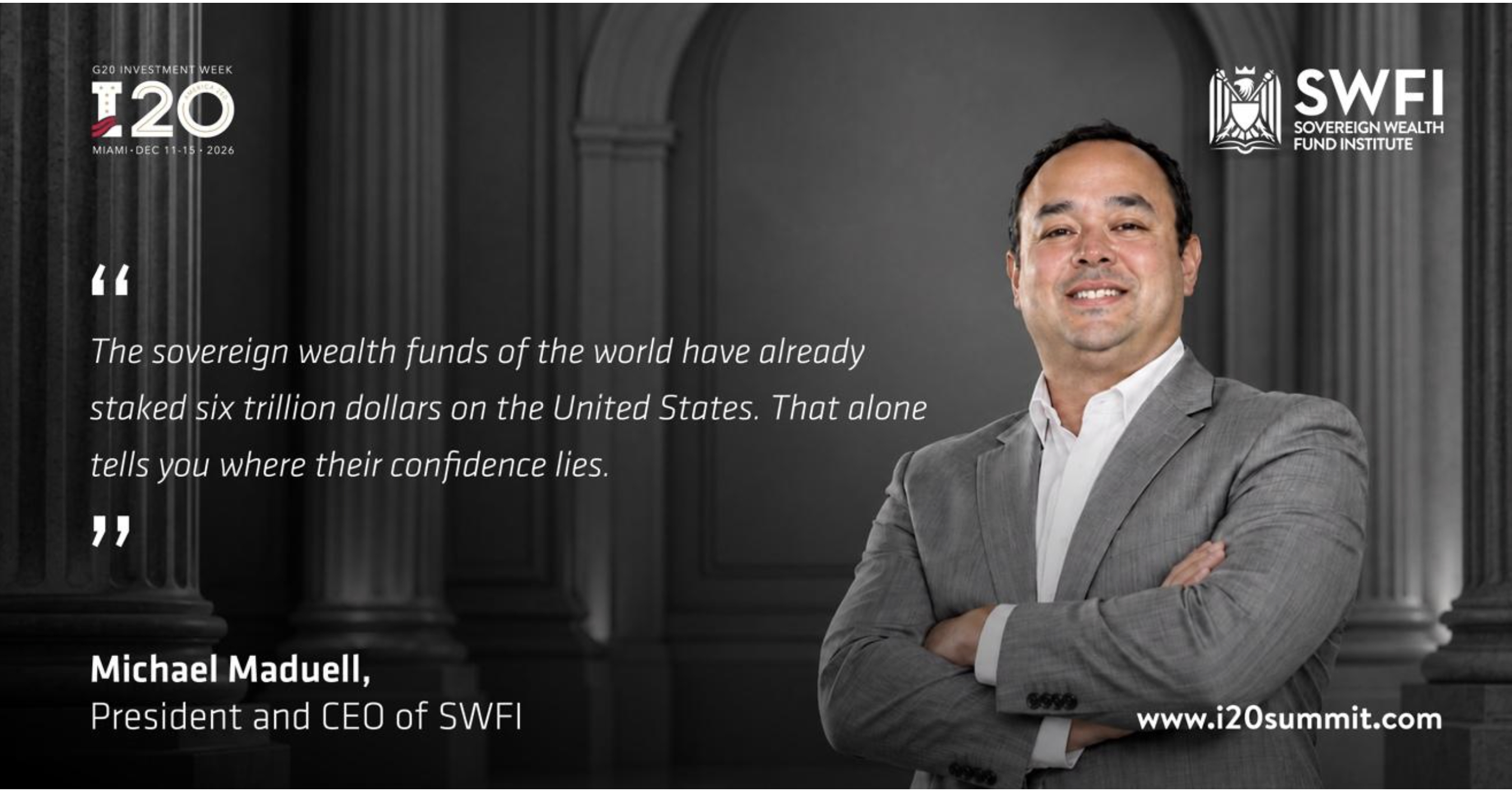
SWFI invited 51 sovereign and public investment funds managing about US$10 trillion to its inaugural I20 Summit in Miami on December 11–15, 2026. The invited funds already hold more than US$3 trillion in US assets, while Gulf governments have committed a further US$3 trillion over the next decade; SWFI says one in three dollars invested by these funds over the past year went into AI-related areas, including data centres, compute and semiconductors. The announcement describes a planned investor convening and capital commitments, not completed new investments or a reported market reaction.
Analysis
The investable signal is not the headline capital total; it is the possibility that sovereign allocators deepen financing for US AI infrastructure. If actual commitments translate into funded projects, beneficiaries extend beyond data-center owners to grid equipment, power generation, gas/LNG, and construction. The constraint is increasingly deliverable electricity and interconnection—not investor appetite—so capital could lift project values while worsening delays and cost inflation for developers without secured power. Incumbent utilities and infrastructure suppliers may capture more durable economics than speculative campus developers.
Treat the event announcement as promotion, not evidence of incremental buying. Existing holdings and multi-year government pledges are not equivalent to new, legally committed US flows; attendance, deal terms, and deployment schedules remain unverified. Gulf capital is also exposed to geopolitical shifts, US investment screening, and changing energy revenues. Any tightening of CFIUS or export-control rules could redirect funding toward non-sensitive infrastructure or non-US markets.
Near term, the December summit may generate deal headlines but is unlikely to establish earnings impact. Over 1–3 months, verify signed transactions, project-level financing, power purchase agreements, and utility interconnection timelines. Over 6–18 months, the structural opportunity is power and grid capacity; the contrarian risk is that enthusiasm capitalizes anticipated demand before projects can be energized. The stated US$6 trillion combines existing assets with future commitments and should not be treated as a forecast of net inflows.
AllMind Terminal
AI-powered research, real-time alerts, and portfolio analytics for institutional investors.
Request TrialMarket Sentiment
Overall Sentiment
mildly positive
Sentiment Score
0.25
Key Decisions for Investors
- Do not trade the summit announcement itself. Treat it as a watchlist signal until named, binding investments and deployment schedules are disclosed.
- Build a conditional relative-value idea: favor diversified grid-equipment and power-infrastructure exposure over unpowered data-center development exposure. Add only when project-level funding and secured electricity are evident; the thesis weakens if interconnection delays persist or contracted power costs materially impair project returns.
- Track the December 11–15 event for signed deals, not attendance or memoranda. Verify counterparties, financing structure, US location, and whether commitments are new capital rather than recycled or previously announced plans.
- Monitor CFIUS and export-control actions, US grid/interconnection data, and Gulf energy revenues as reversal indicators; restrictive policy or weaker funding capacity could defer projects and redirect capital.
More News
- What investors need to know about Alphabet's stock-busting earnings report
- Our next steps for Alphabet stock after earnings disappoint at nearly every turn
- Budget 2026 speech
- GE Vernova shares slip despite a beat-and-raise. What the sellers are getting wrong
- Microsoft's Big Bets on AI Start to Pay Off
- Asian shares fall as Alphabet earnings miss drags Wall St futures lower