
Warren Buffett Says He Has "Never Felt Better" About Berkshire Hathaway's Future as He Steps Down as Chairman at 96
Source: fool.com
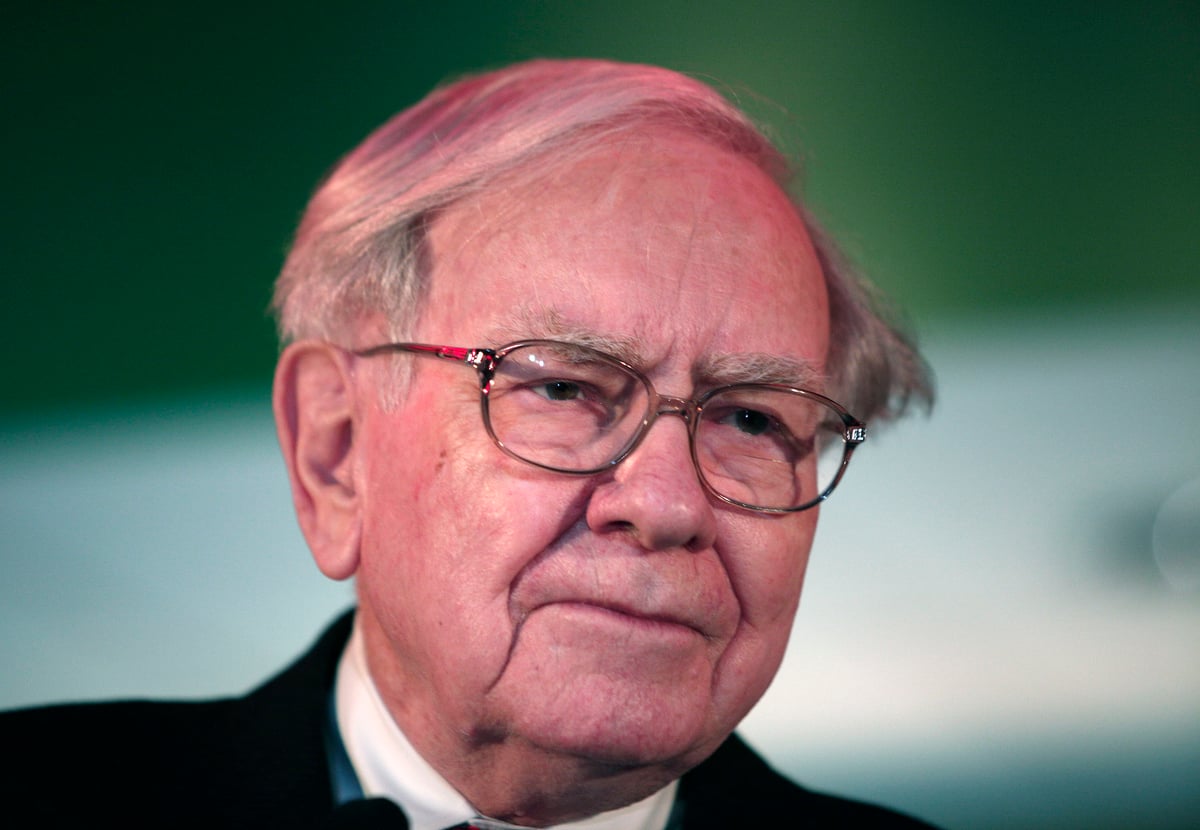
Warren Buffett, 96, is stepping back from Berkshire Hathaway’s board chairmanship to become chairman emeritus, with his son Howard taking the chairmanship; Greg Abel is the CEO successor Buffett has praised. The article highlights Berkshire’s resilient balance sheet, succession planning and reputation as reasons for long-term confidence. Shares are described as reasonably valued or slightly overvalued, with a forward P/E of 25.6 versus a five-year average of 21.2; the author suggests watching for a better entry price or buying incrementally.
Analysis
The market-relevant risk is not day-to-day operating continuity; it is whether Berkshire can preserve its unusual acquisition advantage as decision authority shifts from Buffett’s personal reputation to institutional process. Greg Abel’s operating experience supports continuity, but Howard Buffett’s chairmanship creates a separate governance test: investors should watch how the board oversees capital allocation and handles disagreement, rather than treating family succession itself as either a positive or negative.
Over 1–3 months, the announcements offer little standalone earnings catalyst; any near-term move is more likely sentiment than cash-flow repricing. Over 6–18 months, the key evidence will be acquisition discipline, succession of key subsidiary leaders, and whether Berkshire’s reputation continues to attract sellers. A less visible risk is that a very large capital base makes attractive deals harder to find, so continuity does not guarantee per-share compounding at the historical pace.
The article’s cited forward P/E premium to its five-year average is a caution, not a clean valuation signal: investment gains and insurance results can make reported earnings lumpy. The contrarian angle is that succession reassurance may be overvalued as a catalyst, while Berkshire’s decentralized operating model may make the transition less disruptive than a conventional CEO change. Falsify that resilience thesis if capital allocation weakens, major subsidiaries lose leadership, or per-share operating earnings and book-value growth persistently lag broad-market alternatives.
AllMind Terminal
AI-powered research, real-time alerts, and portfolio analytics for institutional investors.
Request TrialMarket Sentiment
Overall Sentiment
mildly positive
Sentiment Score
0.20
Ticker Sentiment
Key Decisions for Investors
- No event-driven trade: the governance news does not establish a near-term change in earnings or capital returns. Hold existing BRK.A exposure against its long-duration, defensive role; avoid adding solely on succession reassurance.
- For new exposure, scale in rather than chase. The article’s valuation comparison argues for patience, but verify the earnings denominator and operating-earnings trend before using P/E as an entry signal.
- Set a 6–18 month watch list around capital-allocation decisions, acquisition quality, subsidiary leadership retention, and per-share operating earnings. Reassess if these deteriorate versus broad-market alternatives; that would challenge the continuity premium.
- Treat any future claim that Berkshire remains an unusually trusted home for businesses as a hypothesis to test against actual deal flow and terms. A sustained absence of attractive deployment opportunities would weaken the compounding case, even if governance remains stable.
More News
- Warren Buffett's bet on this oil stock is finally paying off; Time to buy?
- Tim Cook says late Apple cofounder Steve Jobs gave him this unforgettable advice before handing over the reins as CEO: ‘Never ask what I would do’
- Warren Buffett Isn't Worried About Bear Markets, and You Shouldn't Be, Either. Here's Why.
- Indonesian stocks plunge to six-year low as MSCI downgrade fears mount
- Nifty Bank Heavyweights HDFC, ICICI in Focus After Weekend Earnings
- China's CXMT sees shares drop over 6% as investors look past chipmaker's profit turnaround