
AI Memory & Storage: The 5th GMIF2026 Innovation Summit Successfully Concludes in Shenzhen
Source: PR Newswire
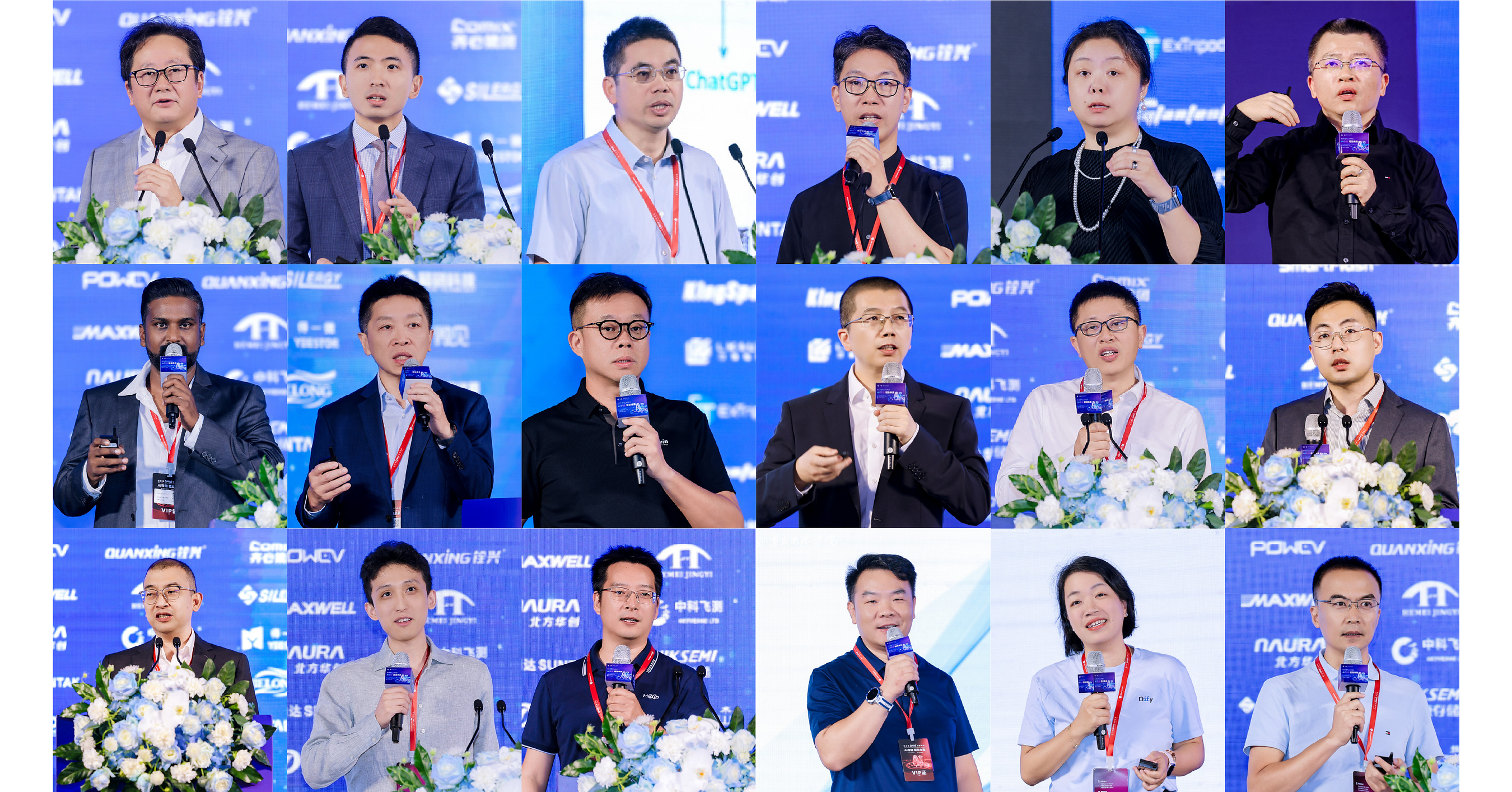
GMIF 2026 in Shenzhen highlighted rising AI-inference demand for high-capacity, high-bandwidth and energy-efficient memory and storage, including HBM, high-bandwidth flash, NAND, QLC enterprise SSDs and PCIe Gen6 products. Industry participants from Samsung, Sandisk, Solidigm, Arm, Lenovo and others emphasized that expanding token generation, KV-cache workloads and cloud-edge-device AI deployments are increasing the strategic value of storage architectures and data tiering. The event signals supportive long-term demand trends for the AI memory and storage ecosystem, but provides no company-specific financial results, orders, or guidance.
Analysis
The investable implication is not a broad “AI storage” rerating but a shift in the bottleneck from HBM capacity toward the cost of retaining and serving inference data. This favors enterprise-SSD suppliers with credible hyperscale qualification and controller vendors able to monetize QoS/firmware complexity; it is less immediately favorable to commodity NAND producers if higher-capacity QLC adoption accelerates bits shipped faster than pricing. SIMO is a higher-beta beneficiary if enterprise/controller design wins translate into Gen5/Gen6 mix, while SNDK’s upside requires evidence that AI SSD mix lifts gross margin rather than merely absorbs NAND supply.
The key second-order risk is substitution: better model quantization, KV-cache compression, and software scheduling can reduce DRAM/HBM intensity but also lower the amount of premium flash required per token. Conversely, if inference moves from centralized clusters toward edge devices, embedded-storage demand broadens but fragments across lower-margin automotive, PC, and mobile channels. The claimed architecture shift remains promotional rather than a demand datapoint; controller attach rates, hyperscaler SSD qualification cycles, and enterprise SSD ASPs—not conference commentary—determine earnings relevance.
Near term, this is more supportive of memory/SSD sentiment than estimates. Over 1-3 months, NAND contract pricing and capex discipline are the catalyst path; over 6-18 months, durable upside depends on whether AI storage demand tightens supply enough to sustain pricing despite QLC’s lower cost per bit. Morgan Stanley has only indirect advisory/capital-markets exposure and should not be treated as an AI-memory proxy.
Contrarian view: consensus may overpay for any “AI storage” narrative while underweighting the possibility that NAND vendors use AI demand to restore utilization, creating a supply response that caps ASPs. The cleaner expression is quality of enterprise exposure versus commodity bit-growth, not an outright sector chase.
AllMind Terminal
AI-powered research, real-time alerts, and portfolio analytics for institutional investors.
Request TrialMarket Sentiment
Overall Sentiment
mildly positive
Sentiment Score
0.28
Ticker Sentiment
Key Decisions for Investors
- Maintain a watch-list long bias in SIMO, not a fresh full-size position, until management discloses enterprise/controller revenue mix or a material PCIe Gen5/Gen6 design-win signal. Use a 3-6 month horizon; invalidate on sequential controller revenue weakness or gross-margin guidance below the prior quarter’s range.
- For SNDK, wait for NAND contract-price data and next earnings guidance before adding exposure. A long is attractive only if enterprise SSD mix expands while gross margin improves sequentially; avoid treating higher unit shipments alone as confirmation, since QLC mix can dilute ASPs.
- Consider a 6-12 month relative-value basket: long SIMO versus short a broad commodity-memory proxy or underweight lower-differentiation NAND exposure. The thesis fails if NAND pricing tightens sharply enough that commodity producers capture more incremental operating leverage than controller suppliers.
- Do not position in MS on this theme. Reassess only if AI-infrastructure financing, semiconductor underwriting, or advisory backlog becomes large enough to be discussed as a measurable earnings driver.
More News
- 5 big analyst AI moves: Muse AI seen as major catalyst for Meta; MSFT upgraded
- Should You Buy Sandisk Stock After Its $14 Billion Buyback Announcement?
- Down 23%, Should You Buy the Dip on Sandisk Stock?
- Sandisk: The Market Still Doubts This Boom
- Viking Therapeutics (VKTX) Delivers Great VK2735 Results: Here's a Word of Caution
- Comcast's Dividend Keeps Growing While the Market Treats It Like a Melting Ice Cube
From AllMind Research
- Anthropic IPO Preview: Valuation, Timing, and What to Watch
- Shein After the IPO: Venue, Valuation, and What Must Be Proved
- What AI Research Tools Should a Small Hedge Fund Buy First?
- Introducing AllMind: A New Data & AI Workspace for Institutional Investors
- AI Tools for Private Equity Due Diligence: A Buyer Workflow