
SHAFT COLLARS & COUPLINGS MEET FOOD AND BEVERAGE REQUIREMENTS
Source: PR Newswire
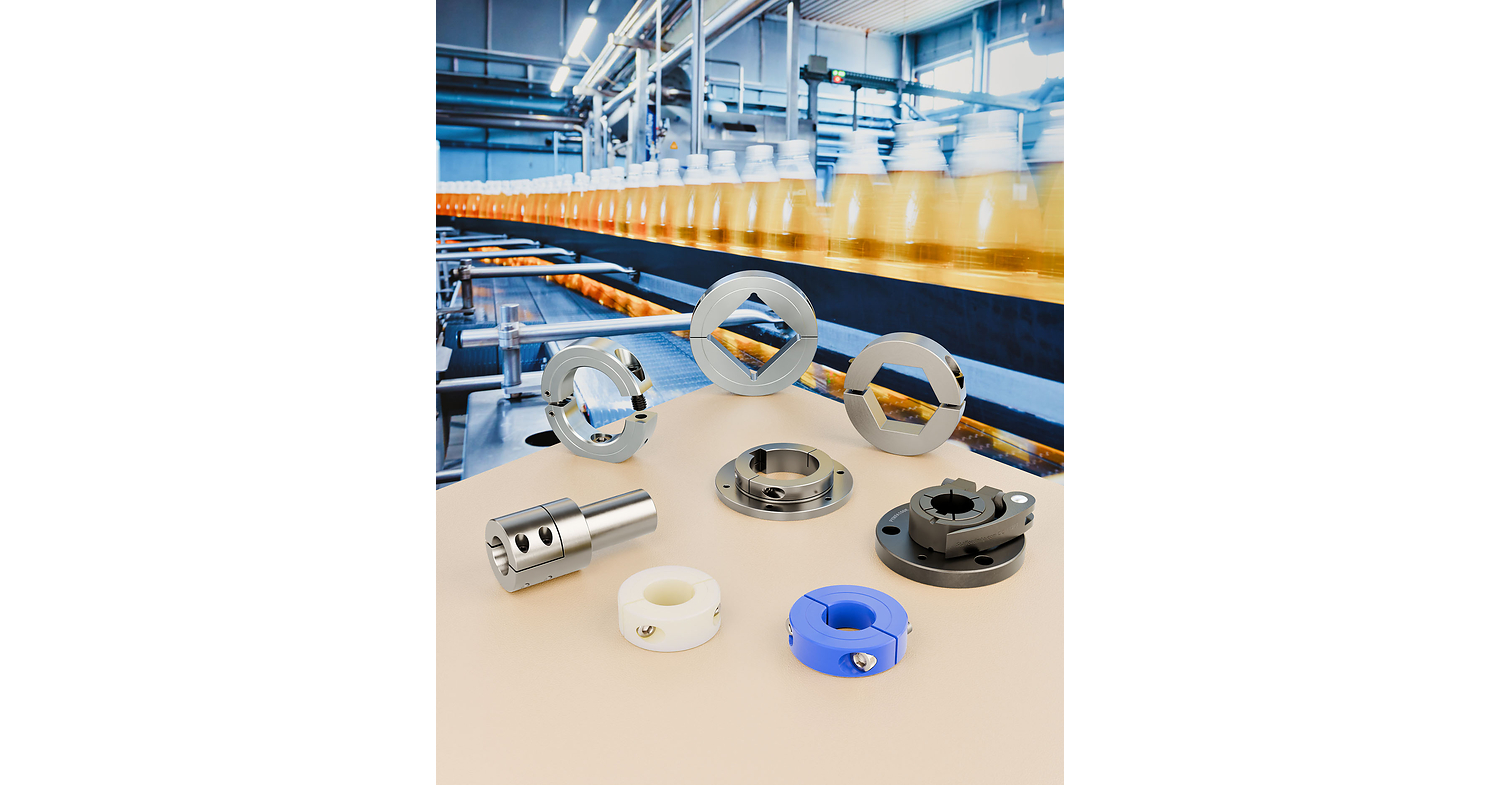
Stafford Manufacturing introduced a line of shaft collars, couplings and flange mounts for food and beverage conveyor and packaging systems. The products use stainless steel or food-grade engineered materials, offer 0.25-inch to 16-inch inside-diameter sizing depending on material, and are USDA- and FDA-approved for frequent wash-down applications. The release is a routine product announcement with stock availability and no disclosed financial impact.
Analysis
This is not investable as a standalone catalyst: it is a private supplier’s catalog expansion with no disclosed capacity, customer wins, pricing, or revenue contribution. The relevant signal is modestly supportive of maintenance, sanitation, and automation spend in food processing, but replacement components are low-ticket and typically reflect plant uptime requirements rather than a meaningful change in capital-expenditure cycles.
If demand proves real, the more liquid beneficiaries are diversified automation and conveyor-system providers such as Rockwell Automation (ROK), Emerson (EMR), Regal Rexnord (RRX), and Intralox parent candidates are not publicly accessible. The second-order effect is favorable aftermarket mix: wash-down compliance raises replacement frequency and shifts specifications toward corrosion-resistant components, but the value capture is likely distributed across OEMs, distributors, and installers rather than concentrated in commodity component makers.
Over the next 1-3 months, monitor food-and-beverage end-market order commentary from ROK, EMR, RRX, and distributors including Applied Industrial Technologies (AIT) and W.W. Grainger (GWW). A broader sanitation-driven retrofit cycle would show up first in organic sales and backlog conversion, not in product announcements. The thesis is falsified if these companies continue to cite weak discrete automation orders, inventory destocking, or delayed customer projects; without corroboration, there is no basis for multiple expansion.
Contrarian view: investors may overread food-safety equipment announcements as evidence of new plant construction. Existing facilities can adopt these parts during routine maintenance, making the likely economic impact replacement-driven and margin-neutral for most public automation suppliers. Treat this as a watch item rather than evidence of an investable food-processing capex upcycle.
AllMind Terminal
AI-powered research, real-time alerts, and portfolio analytics for institutional investors.
Request TrialMarket Sentiment
Overall Sentiment
neutral
Sentiment Score
0.10
Key Decisions for Investors
- No immediate position based on this release; do not extrapolate private-company product breadth into public-equity earnings estimates.
- Create a 1-3 month monitoring basket of ROK, EMR, RRX, AIT, and GWW; upgrade only if at least two report improving food-and-beverage orders, maintenance MRO demand, or wash-down/sanitation retrofit activity in the next earnings cycle.
- If corroborating order data emerge, favor long AIT over ROK as a lower-duration expression of replacement-parts demand; target a 5-10% relative move over 3-6 months, with exit if AIT organic sales or industrial MRO commentary weakens.
- Avoid a broad long in food-processing automation ETFs or capital-goods cyclicals until evidence distinguishes recurring maintenance demand from new-project backlog; the latter is required for a sustained earnings and valuation catalyst.
More News
- Here’s the ‘core economic flaw’ in the AI bull case as stock and bond trades unravel, according to a top economist
- How Pepsi fell behind in the cola wars—and then lost KFC
- 5 big analyst AI moves: ’Uniquely catalyst-rich’ months ahead for SpaceX
- The experience economy keeps defying expectations. Maybe we’ve been looking at it all wrong
- Braskem creditors, shareholders near deal on $11bn debt restructuring
- Xencor reports phase 1 data for cancer drug XmAb819
From AllMind Research
- Anthropic IPO Preview: Valuation, Timing, and What to Watch
- Shein After the IPO: Venue, Valuation, and What Must Be Proved
- What AI Research Tools Should a Small Hedge Fund Buy First?
- The $4.7 Trillion Bet: When Does AI Capex Become AI Revenue?
- Equity Research Automation Statistics: A 2026 Evidence Check