
China Confirms Xi’s First Trip to the US in Nearly Three Years
Source: Bloomberg
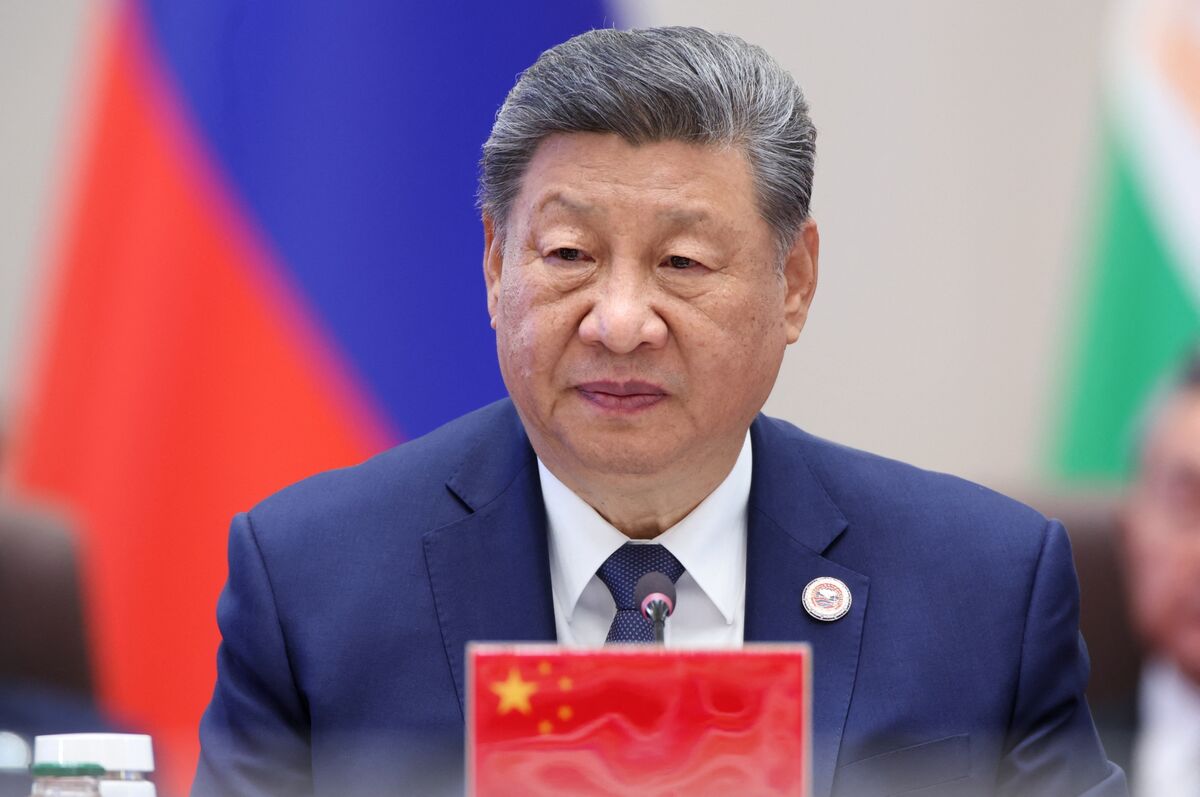
China confirmed that President Xi Jinping will make a state visit to the US from Sept. 23-25 to meet President Donald Trump, Xi's first US trip in nearly three years. The meeting comes as a one-year US-China trade truce approaches expiry, making potential discussions on tariff and trade-policy extension a material catalyst for global supply chains and risk assets.
Analysis
The market will price the probability of a tariff pause before it can price any durable agreement. The cleanest near-term beta sits in tariff-exposed US importers and China-revenue cyclicals: lower landed-cost uncertainty supports gross-margin estimates for AAPL, NKE, YETI and RH, while CAT, DE and EMR benefit if Chinese industrial demand and order visibility improve. The second-order effect is potentially more important: a credible détente would reduce customers' incentive to maintain redundant inventory and expedite freight, pressuring premium airfreight and selected near-shoring beneficiaries even if headline tariff rates remain unchanged.
A summit-level reset is unlikely to remove the strategic constraints that matter most for semiconductor equipment, advanced AI chips, critical minerals and outbound investment. That makes an indiscriminate rally in SOXX, ASML and China internet ADRs vulnerable; export-control architecture and Chinese substitution spending can persist independently of broader trade language. The better relative expression is consumer/importer margin recovery versus strategic-tech exposure, rather than a wholesale long-China trade.
Over the next 2-5 trading days, headline risk favors owning defined upside rather than shorting geopolitical volatility. Over 1-3 months, the investable catalyst is a written extension with measurable tariff exclusions, procurement commitments, or critical-mineral licensing—not diplomatic optics. A renewed tariff threat, tightened chip restrictions, or a failure to establish an enforcement timetable would quickly reverse cyclicals; treat any post-meeting move without those details as tradable but not structural.
AllMind Terminal
AI-powered research, real-time alerts, and portfolio analytics for institutional investors.
Request TrialMarket Sentiment
Overall Sentiment
neutral
Sentiment Score
0.10
Key Decisions for Investors
- Buy a 1-3 month basket of AAPL, NKE and RH versus a short equal-dollar SOXX position after confirmation that talks include tariff relief or a formal extension. Target 5-8% relative upside if tariff-risk premia compress; exit if no written trade framework emerges within one week or if new technology restrictions are announced.
- Use defined-risk calls on FXI or KWEB rather than outright ADR exposure into the event: buy 1-month 5-7% out-of-the-money call spreads, funded only partially by higher-strike calls. This captures a positive surprise while limiting downside from policy disappointment, capital-control headlines, or renewed US listing-risk concerns.
- Maintain caution on long ASML, AMAT and LRCX into any broad risk-on response. Do not add on summit headlines alone; upgrade only if export-license policy changes are explicitly included, since Chinese domestic equipment substitution remains a 6-18 month competitive risk regardless of tariff détente.
- Monitor USDCNH and the XLI/SPY relative ratio in the 48 hours following the meeting. A stronger yuan alongside XLI outperformance would validate a genuine de-escalation signal; failure of both despite positive rhetoric is a signal to fade cyclical and China-beta rallies.
More News
- Treasury yields ease as global borrowing costs tumble
- U.S.-listed Greenland stocks surge after Trump agrees security deal with Denmark
- Iran’s military says US preparing to resume strikes
- Iran vows 'painful' retaliation as Trump piles on pressure ahead of UN General Assembly meeting
- European gas slides; ECB warns of quicker inflation impact
- US Diesel Tops $6.50 a Gallon as Wars Worsen Global Fuels Crunch