
Here's Why You Should Retain DexCom Stock in Your Portfolio for Now
Source: zacks.com
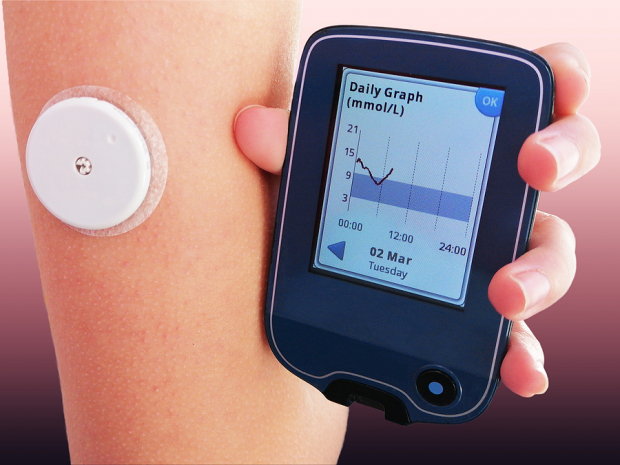
DexCom reported second-quarter global revenue growth of 13% year over year to $1.31 billion, including 11% U.S. growth and 19% international growth, while gross margin expanded 400bps to 64.1%. The company is targeting conversion of nearly 50% of its U.S. customer base to its G7 15 Day system by year-end, supporting differentiation and margins. A CMS decision by year-end on CGM coverage for non-insulin Type 2 patients is a major upside catalyst, though implementation is not expected until mid-2027 and reimbursement, physician adoption, tougher international comparisons and FX remain key risks.
Analysis
DXCM’s near-term equity setup is less about incremental CGM demand than whether product mix can convert revenue growth into durable operating leverage. Longer-wear sensors lower fulfillment and manufacturing cost per patient-day, but the benefit can be diluted if payer contracts pass savings through or if conversion creates temporary channel friction. The key Q3-Q4 read-through is gross-margin progression alongside U.S. new-patient additions; margin expansion without patient growth would imply a less valuable efficiency story, while both advancing supports upward 2027 EPS revisions.
The CMS decision is a valuation catalyst rather than an immediate revenue catalyst. A favorable outcome by year-end could pull forward estimates and expand DXCM’s multiple despite a long implementation lag; restrictive eligibility or administrative delay would expose how much of the premium valuation rests on an addressable-market option not reflected in current sales. Abbott (ABT) is the principal competitive loser from a Dexcom reimbursement win, but it has greater contracting scale and could respond with pricing or Libre product upgrades, making category growth less synonymous with DXCM share gains.
Consensus may be underweight the risk from tougher international comparisons and FX because they can create a reported-growth miss even if underlying adoption remains sound. Conversely, the market may be over-crediting consumer metabolic-health initiatives: until paid conversion, retention and customer-acquisition cost are disclosed, these businesses should be valued as strategic optionality rather than an earnings leg. For the next 1-3 months, reported growth and guidance matter more than the CMS opportunity; over 6-18 months, reimbursement breadth and competitive pricing determine whether the category’s growth translates to excess returns.
AllMind Terminal
AI-powered research, real-time alerts, and portfolio analytics for institutional investors.
Request TrialMarket Sentiment
Overall Sentiment
moderately positive
Sentiment Score
0.42
Ticker Sentiment
Key Decisions for Investors
- Maintain a modest long DXCM only through Q3 results if channel checks support U.S. new-patient growth and gross margin can sustain at or above the recent level; target a 10-15% upside on continued 2027 EPS revision, with a 7-8% stop if revenue growth decelerates below consensus or margin gives back materially.
- Use a long DXCM / short ABT pair over the CMS decision window (through year-end) for reimbursement-driven relative upside while reducing broad medtech beta. Size small: an adverse CMS outcome likely hurts DXCM disproportionately, while ABT retains diversified earnings support.
- Do not underwrite Stelo/Nutrisense into base-case DXCM estimates. Add only after management discloses independently verifiable paid-user growth, retention and contribution margin; absent those metrics, treat incremental consumer spend as a margin-risk watch item.
- Set an alert on Q3 international organic growth and FX guidance: a material miss versus the low-double-digit growth expectation is a reason to reduce DXCM exposure, as it would challenge the market’s assumption that reimbursement gains can offset tougher comparisons.
- Avoid treating VCYT, GMED and WST as direct read-through trades; their cited earnings strength does not share DXCM’s reimbursement, sensor-cycle or payer-contract mechanism.
More News
- What investors need to know about Alphabet's stock-busting earnings report
- Our next steps for Alphabet stock after earnings disappoint at nearly every turn
- Fortinet’s stock is taking a dive after earnings. Here’s why.
- Wendy's shares jump 15% as Nelson Peltz's Trian offers $1.4 billion to buy burger chain
- Microsoft's Big Bets on AI Start to Pay Off
- Asian shares fall as Alphabet earnings miss drags Wall St futures lower