
Angolan President Revamps Security Forces Leadership Before Vote
Source: Bloomberg
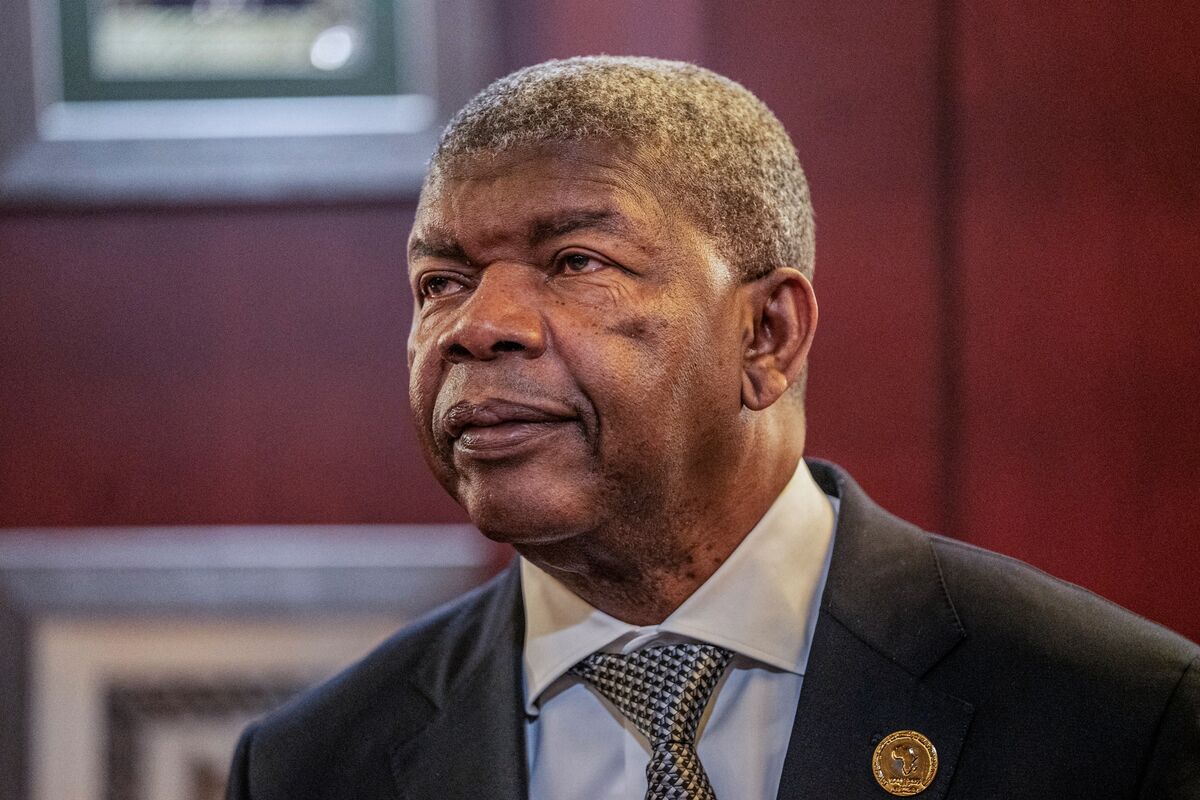
Angolan President João Lourenço reshuffled security leadership ahead of his final year in office, removing 14 senior police officers and 29 generals and admirals. He reassigned and promoted dozens across units including military intelligence, special forces, logistics, and law enforcement via a presidential decree. The move may increase short-term political and operational uncertainty around the security apparatus ahead of upcoming political developments.
Analysis
This reads as regime-risk management more than a macro shock: the incumbent is likely trying to reduce the odds of internal disloyalty while tightening the security perimeter ahead of a politically sensitive period. That is usually mildly supportive for near-term continuity, but it increases the probability of heavier-handed enforcement, which is the real market negative for sovereign spread investors because it can delay policy credibility, reform sequencing, and external financing discussions.
The first-order market impact should show up in Angola-linked credit rather than equities: any perceived rise in repression or post-vote friction can widen hard-currency spreads for frontier sovereign baskets, lift USD funding costs for state-related entities, and pressure local banks through dollarization and deposit caution. The second-order effect is on oil-sector execution: even without a supply outage, tighter internal security often raises procurement frictions and delays capex decisions, which matters for a fiscally oil-dependent sovereign. If the election passes without unrest, that risk premium can mean-revert quickly over 1-3 months; if not, the move can become a 6-18 month structural discount.
Contrarian take: the market often overprices "coup risk" from cabinet and security reshuffles when the more relevant variable is whether the leadership is preserving elite cohesion. If this is a pre-emptive loyalty refresh, the eventual outcome may be less volatility than headlines imply. The key falsifier is simple: if post-vote rhetoric stays calm and external funding access remains intact, any spread widening should fade; if you see delayed IMF/multilateral steps, FX rationing, or public protests met with force, the credit trade should be pressed.
AllMind Terminal
AI-powered research, real-time alerts, and portfolio analytics for institutional investors.
Request TrialMarket Sentiment
Overall Sentiment
mildly negative
Sentiment Score
-0.20
Key Decisions for Investors
- Do not force a direct Angola trade absent a liquid local instrument; keep this as a watchlist event unless post-vote unrest or funding stress emerges.
- For a tactical expression on a 1-4 week horizon, buy a small EMB put spread or short EMB against cash as a hedge for frontier sovereign spillover; stop if Angola headlines normalize and EMB recovers the recent drawdown.
- If you want a cleaner risk-on/risk-off pair, stay overweight XLE vs. frontier sovereign credit baskets like EMB over the next 1-3 months; the oil complex is less exposed to a localized African political premium than hard-currency debt is.
- Add an alert on Angola USD bond spreads and local FX availability: if spreads widen >50 bps or FX controls tighten, treat that as the signal to reduce frontier EM credit exposure more broadly.
- If post-vote conditions remain orderly for 2-6 weeks, fade any knee-jerk Angola risk premium rather than chasing it; the likely reward/risk after the initial move is better on the rebound than on the first panic leg.
More News
- How a US Diesel Export Ban Can Impact Prices, Oil Market
- Paramount settles states’ challenge to Warner Bros merger, Bloomberg News reports
- How oil, gas losses have shrunk Iran’s GDP by 10 percent during war
- What’s the US–China AI ‘hotline’ that Trump plans to pitch to Xi Jinping?
- US-China Have Time to Discuss Trade Truce Extension, Greer Says
- Is it a missile? Is it a drone? What’s the Pelican used by Ukraine?