
Asuri.ai Launches Multi-Agent AI Platform for Persistent Business Workflows
Source: PR Newswire
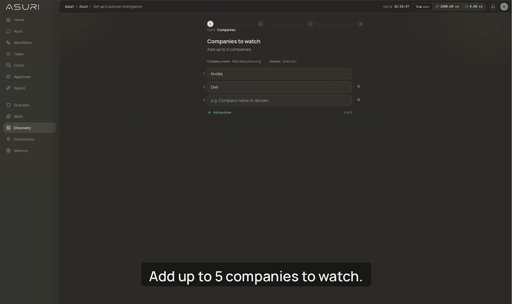
Asuri launched a multi-agent enterprise AI platform that lets nontechnical teams build governed, persistent workflows across more than 1,000 existing application integrations. The company says the platform can reduce repetitive work and save employee time; it also introduced prebuilt customer-intelligence workflows. The announcement provides no revenue, customer adoption, or other commercial performance figures.
Analysis
This is a competitive signal, not yet an investable earnings event: Asuri is private, and the release provides no customer, deployment, retention, or realized-savings data. The key economic test is whether persistent agents reduce labor and software-seat demand without creating enough review, security, and exception-handling work to erase the savings. If that balance is favorable, workflow vendors face pressure to bundle agent orchestration and defend seat pricing; if not, the launch adds to a crowded category without changing incumbents’ economics.
Over 1–3 months, watch for independently verifiable deployments, paid usage, and named customer references. “1,000 integrations” measures potential connectivity, not reliable execution or production adoption. Over 6–18 months, permissioning, auditability, and failure recovery may matter more than model capability, potentially favoring established platforms such as Microsoft, Salesforce, ServiceNow, and UiPath, which can distribute workflow features through existing customer relationships. Conversely, successful cross-platform execution could weaken the value of standalone automation tools. No public-equity exposure to Asuri is identified in the supplied data. The contrarian angle is that agent launches may be overinterpreted as immediate labor displacement: enterprise approval cycles and human oversight can delay seat or headcount savings. A material reversal would be evidence of repeatable production use and measurable customer savings; failed deployments, security incidents, or weak paid conversion would undermine the thesis.
AllMind Terminal
AI-powered research, real-time alerts, and portfolio analytics for institutional investors.
Request TrialMarket Sentiment
Overall Sentiment
mildly positive
Sentiment Score
0.25
Key Decisions for Investors
- No direct trade on this announcement: Asuri is not mapped to a public ticker, and the release lacks adoption or financial evidence.
- Add Microsoft, Salesforce, ServiceNow, and UiPath to a relative-performance watchlist rather than initiating positions. Look for agent-related disclosures alongside seat growth, renewal pricing, and workflow/automation bookings over the next 1–3 months.
- Treat software-seat displacement as a 6–18 month scenario, not a near-term base case. Revisit only if customer evidence shows sustained production automation and reduced labor or seat requirements without offsetting review costs.
- Set a downside alert for credible reports of permission failures, data exposure, or costly agent errors; these would raise the value of incumbent governance and distribution, while also slowing category-wide enterprise adoption.
More News
- The U.S. market has never been more focused on one single bet—but AI’s payoff will likely take decades
- Meta put out an ambitious roadmap to Muse monetization after strong quarter and guide
- CoreWeave’s market confidence erodes as bond yields spike and stock sinks
- Why is Tesla stock falling after-hours today?
- Meta ordered to pay $25 billion in case related to Cambridge Analytica scandal
- Zuckerberg told Meta directors he might leave California, where he could lose billions to a wealth tax. Meta answered with a new class of stock