
Will mortgage rates stay above 7% in 2027?
Source: MarketWatch
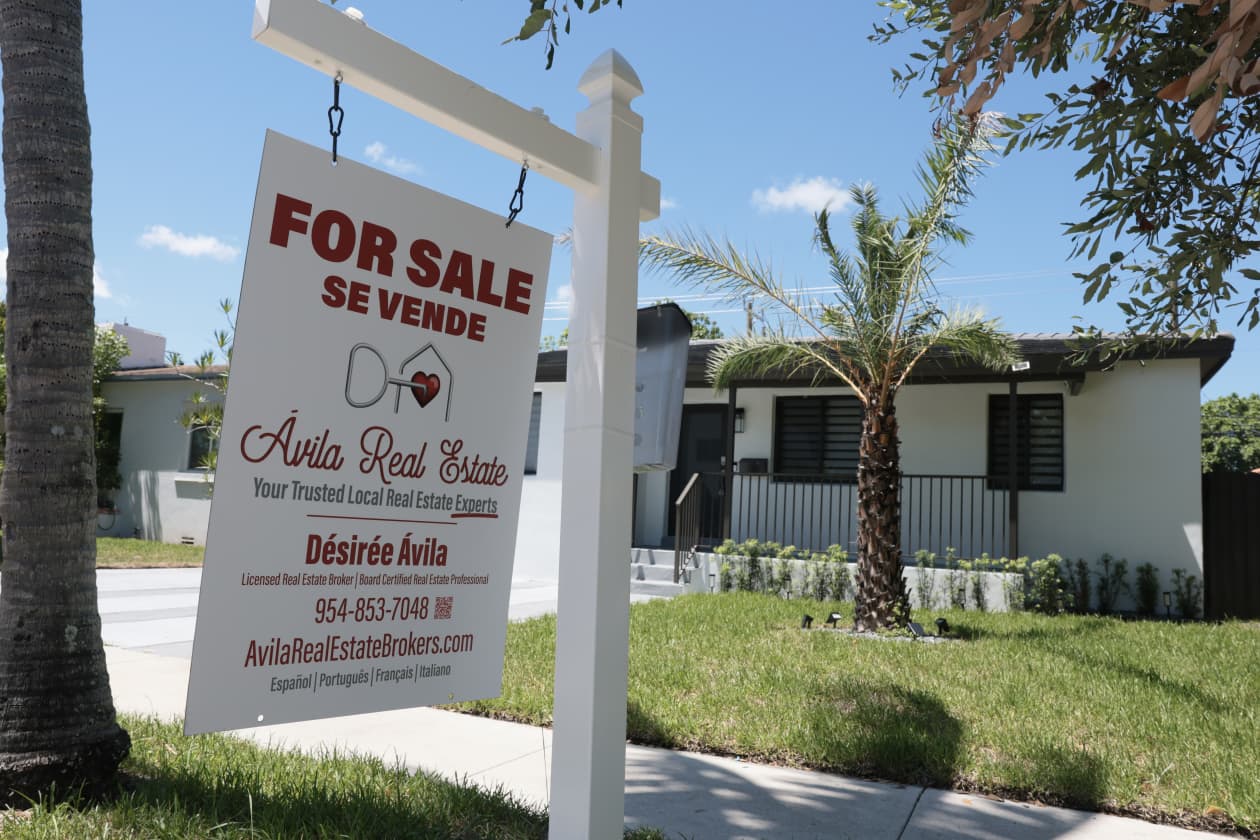
Fannie Mae forecasts the 30-year fixed mortgage rate will average 7.4% in the final three months of this year, then rise to 7.5% and remain there throughout 2027. Persistently high borrowing costs could weigh on home buyers and sellers.
Analysis
The forecast matters less as a standalone catalyst than as a stress test for housing demand: if mortgage costs remain elevated, affordability constrains transaction volume and refinancing, while owners with low-rate loans have less incentive to move. That freezes existing-home inventory and can redirect demand toward new builds, where builders can use incentives or mortgage buydowns—supporting share gains but potentially at the expense of margins. The effect is therefore not uniformly bearish for homebuilders.
For Fannie Mae (FNMA), persistently high rates could weigh on purchase and refinance activity and reduce guarantee-volume growth; the countervailing factor is that rates alone do not establish deterioration in credit performance or earnings. Watch actual origination volumes, guarantee-fee revenue, delinquencies, and housing prices rather than infer impact from the rate forecast.
Near term, this is not a reliable trading catalyst without confirmation from Treasury yields, mortgage spreads, and market pricing. Over 1–3 months, a sustained rise in mortgage rates alongside weaker pending sales or builder orders would strengthen the negative housing-demand signal. Over 6–18 months, prolonged low turnover could favor builders over resale-dependent businesses, but affordability stress and weaker home prices would eventually broaden the downside. The contrarian risk: constrained resale supply and household formation may keep new-home demand more resilient than a rate-only thesis implies.
AllMind Terminal
AI-powered research, real-time alerts, and portfolio analytics for institutional investors.
Request TrialMarket Sentiment
Overall Sentiment
mildly negative
Sentiment Score
-0.30
Ticker Sentiment
Key Decisions for Investors
- No standalone trade on this forecast: verify the second forecast referenced in the article and compare both with market-implied rates before treating 2027 pricing as new information.
- Set a conditional underweight on broad housing beta (e.g., XHB) only if mortgage rates remain elevated and pending sales, builder orders, or housing-price data weaken together; reassess if new-home demand holds up or rates fall.
- For FNMA, monitor quarterly purchase/refinance volumes, guarantee-fee revenue, delinquencies, and home-price trends. A forecast alone is insufficient to establish an earnings or credit thesis.
- Falsification: a sustained decline in mortgage rates, improving transaction indicators, or stable home prices and credit performance would undermine the bearish housing-demand case.
More News
- Fannie Mae sharply raises mortgage rate forecast for 2027
- Why is Samsung Electronics stock plunging today?
- SK Hynix plunges 8% amid Asia tech rout as Fed rate hike fears, AI funding worries mount
- Bonds Pay the Price for India’s Rupee Defense as Rate Bets Build
- Hot September CPI Spurs Fed Rate Hike Fears
- Dell stock plunges 11%, leading data center sell-off on concerns about 'enterprise AI timing'
From AllMind Research
- Anthropic IPO Preview: Valuation, Timing, and What to Watch
- Shein After the IPO: Venue, Valuation, and What Must Be Proved
- What AI Research Tools Should a Small Hedge Fund Buy First?
- How to Evaluate AI Report Writers for Financial Analysis
- Weekly Update: Sector Analysis, Improvements on Research Data, and Performance Enhancements