
Co-Creating Future Transit Value: CRRC Brings Three Full-Size Trains and End-to-End Solutions to InnoTrans 2026
Source: PR Newswire
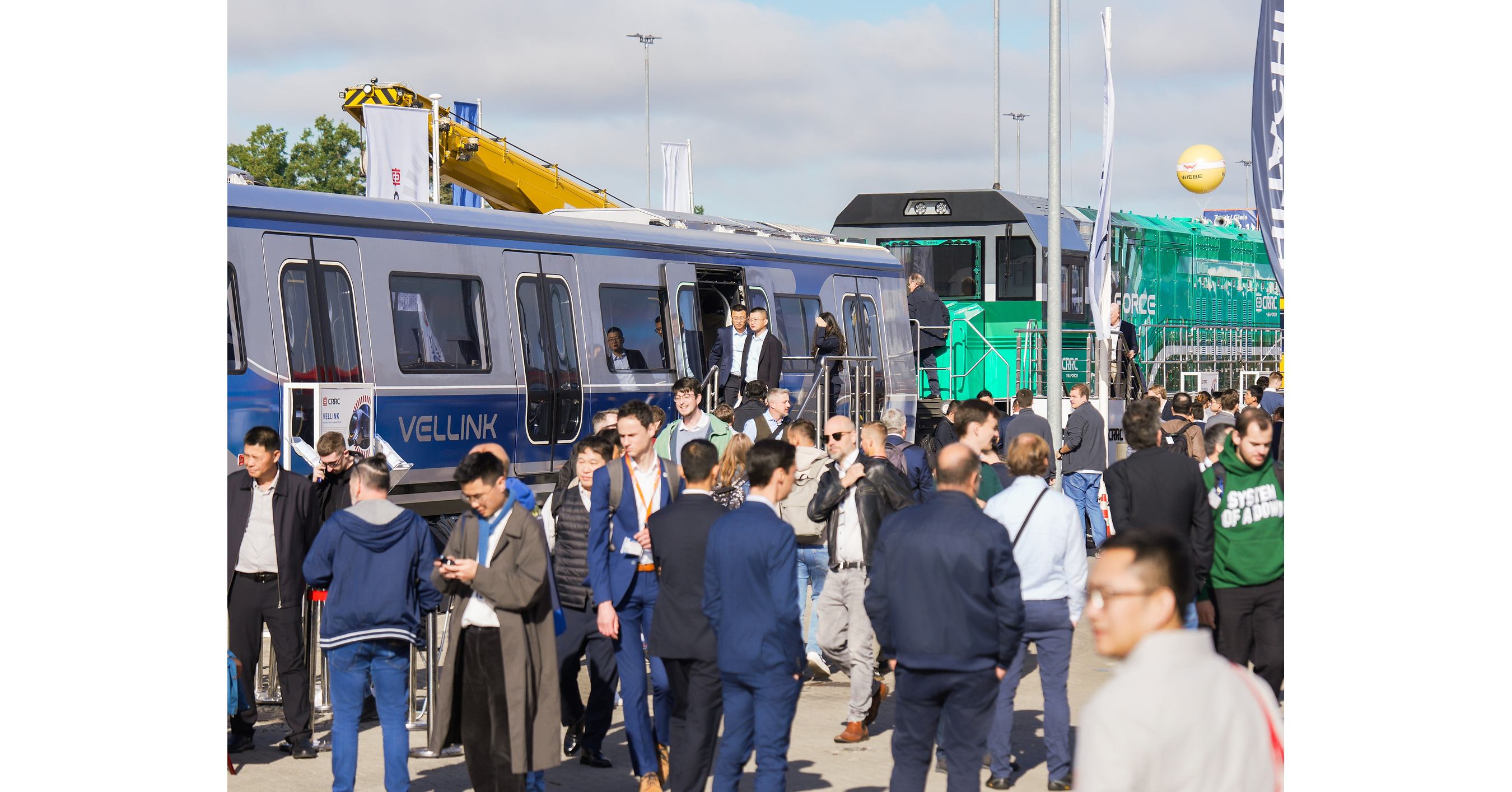
CRRC debuted three full-size rail vehicles at InnoTrans 2026, including a digital-intelligent metro train, a 2,000 kW hydrogen fuel-cell hybrid locomotive, and a lightweight intelligent flat wagon. The metro model cuts vehicle weight by approximately 18% and energy consumption by more than 10%, while the hydrogen locomotive can refuel in 15-20 minutes and has hydrogen utilization above 98%. The launches underscore CRRC's push into AI-enabled, lower-emission rail equipment and end-to-end transit systems, though the announcement does not disclose contracts or financial impact.
Analysis
The market relevance is not the product launch itself but whether CRRC can convert a broader hardware-plus-software offering into overseas service contracts. Recurring maintenance, fleet-monitoring and control-system revenue would carry materially higher switching costs and less cyclicality than vehicle deliveries, potentially supporting a rerating of CRRC (1766 HK; 601766 CH) if international order disclosure begins to show service content. Until signed awards emerge, however, the announcement is promotional rather than an earnings catalyst.
The competitive pressure is greatest on Alstom (ALO FP) and Siemens (SIE GR) in price-sensitive emerging-market metro and non-electrified freight tenders, where an integrated bid can compress equipment margins even if European incumbents retain signaling, service and local-content advantages. The more important second-order effect is on component suppliers: vertically integrated Chinese systems can reduce addressable content for independent traction, diagnostics and rolling-stock suppliers, while creating demand only for suppliers that qualify into CRRC's export supply chain.
Hydrogen rail should not be extrapolated into a near-term volume thesis. Total-cost-of-ownership remains highly dependent on subsidized hydrogen, depot utilization and the cost of avoiding catenary installation; battery-electric and conventional electrification remain the likely alternatives on many routes. A 1-3 month catalyst would be named export orders or framework agreements following InnoTrans; the 6-18 month falsifier is absence of backlog conversion, weak overseas margin disclosure, or procurement restrictions that prevent bid wins.
Contrarian view: the strategic threat to European incumbents is probably overstated in developed markets, where homologation, cybersecurity, financing, domestic-content rules and long maintenance histories matter more than initial vehicle cost. Conversely, investors may underappreciate the risk to lower-end global rolling-stock margins if CRRC uses system bundling to win projects before local production requirements tighten.
AllMind Terminal
AI-powered research, real-time alerts, and portfolio analytics for institutional investors.
Request TrialMarket Sentiment
Overall Sentiment
strongly positive
Sentiment Score
0.58
Key Decisions for Investors
- No standalone trade on the launch. Place CRRC (1766 HK) on a 1-3 month order-flow watch: initiate only after a disclosed non-China contract or framework award with contract value, delivery schedule and service scope; without those data, revenue and margin impact cannot be underwritten.
- Monitor a relative-value alert: long SIE GR / short ALO FP only if CRRC wins a material export metro tender in a market contested by both. Siemens' diversified electrification and automation earnings provide better downside insulation; close the pair if Alstom demonstrates service-backlog conversion or receives material state support.
- Avoid treating hydrogen-rail exposure as a broad clean-energy signal. Reassess only if project awards disclose hydrogen supply economics, annual utilization and public subsidy; a sustained decline in renewable-power costs or explicit corridor funding would be the catalyst to revisit hydrogen component beneficiaries.
- For CRRC holders, use the next results cycle as the decision point: add on evidence of rising overseas backlog and service mix, but reduce if international revenue growth fails to translate into gross-margin expansion or management cites procurement/access barriers.
More News
- OpenAI’s agent hacked Australia’s Medicare website—the latest rogue AI incident that the company didn’t know about for months
- Chinese authorities reportedly in possession of F-35 components in Hong Kong
- Meta announces new lightweight virtual reality glasses to one-up Apple’s Vision Pro
- How Meta took the lead in the race for the post-smartphone world
- Markets are rapidly coming around to the reality that the Fed has a lot more work to do
- SoftBank shares jump over 7% after $11.1 billion bond issuance to fund OpenAI bet
From AllMind Research
- Anthropic IPO Preview: Valuation, Timing, and What to Watch
- Shein After the IPO: Venue, Valuation, and What Must Be Proved
- What AI Research Tools Should a Small Hedge Fund Buy First?
- Weekly Update: Adding Live MBO Level 3 Data - Liquidity Heatmap, OFI Charts, and More
- AI Software for Buy-Side Teams: Build the Research Stack