
Scottish Pro Golfer Bob MacIntyre and American Elijah Craig Bourbon Invite Fans to Bridge the Great Whisk(e)y Spelling Divide: Whiskey or Whisky?
Source: PR Newswire
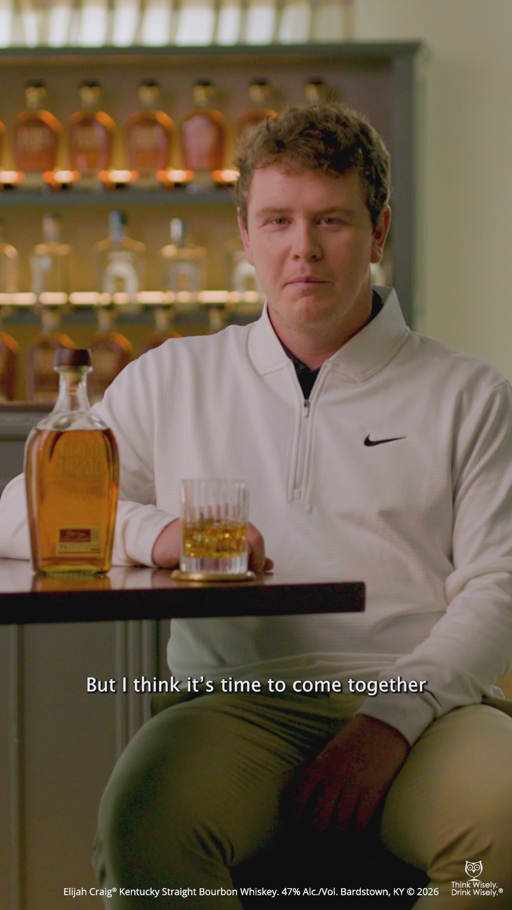
Elijah Craig and PGA TOUR golfer Bob MacIntyre are launching a fan vote to unify the brand spelling debate—“Whiskey” vs “Whisky”—with voting open through Sept. 29 and results announced Sept. 30. The campaign is positioned around Elijah Craig’s heritage (including the charred oak barrel aging practice) and promotes related products such as Small Batch, Toasted Barrel, and Straight Rye, but provides no financial or market data. Overall, it’s a promotional, consumer-engagement story with minimal expected impact on markets.
Analysis
This is a low-cost brand-awareness campaign, not a measurable demand signal. In the spirits space, these activations can help with top-of-funnel recall and retailer relationships, but they rarely move shipment volumes unless paired with distribution wins, shelf-space expansion, or price/mix action. For public comps, the first-order read-through is essentially zero; the more relevant question is whether premium bourbon continues to outgrow Scotch in U.S. off-premise velocity, which is a 1-3 quarter data point, not an immediate catalyst.
Competitive impact is slightly more interesting in the premium brown-spirits segment. If the campaign succeeds at all, it supports a long-running substitution trend from imported Scotch toward domestic premium bourbon, which is a modest tailwind for names with stronger U.S. bourbon exposure and a headwind for imported single-malt positioning. But the economic impact is second-order: brand equity may help preserve pricing power, not create it, and the effect on earnings would likely be drowned out by mix, depletions, and inventory normalization.
The contrarian view is that investors often overestimate celebrity-led campaigns because they are visible and underweight the underlying elasticity of spirits demand. If consumer trade-down continues, a feel-good premium message won’t offset slower depletions; if premiumization re-accelerates, the winners will be the portfolios with broad distribution and innovation, not the specific ad vehicle. Falsifiers would be a sustained acceleration in scanner data or management commentary tying the campaign to incremental distribution gains; absent that, this is noise.
AllMind Terminal
AI-powered research, real-time alerts, and portfolio analytics for institutional investors.
Request TrialMarket Sentiment
Overall Sentiment
neutral
Sentiment Score
0.05
Key Decisions for Investors
- No direct trade in TBHC; treat as a non-event for fundamentals unless subsequent data show measurable depletions or distribution gains over the next 1-3 quarters.
- Watch BF.B and STZ for any relative strength in premium bourbon vs. Scotch exposure over the next earnings cycle; only consider adding on confirmed U.S. bourbon depletions, not on PR alone.
- If seeking a pair, prefer long U.S. bourbon-exposed premium spirits vs. imported Scotch-heavy exposure only after scanner data confirms share gains; otherwise avoid forcing the trade.
- Set a watch item on Nielsen/IRI premium whiskey velocity and distributor inventory levels into the next two reporting periods; a reversal in mix or trade-down would invalidate any bullish read-through.
More News
- Order to limit Starshield for Ukraine came from inside White House: Reuters reports
- The IPO drought is driving private equity-owned companies to the debt market to pay investors
- CoreWeave credit default swaps hit distress levels as investors sour on AI debt
- FDA approves Enspryng for thyroid eye disease treatment
- Giant Taiwanese chipmaker TSMC confirms it’s in talks with Elon Musk to join ‘Terafab’ complex in Texas: ‘The AI market continues to be very strong’
- The Tesla Roadster 2 Is Here—and It Flies