
Bond yields suddenly retreat from recent highs as buyers step back into the Treasury market
Source: MarketWatch
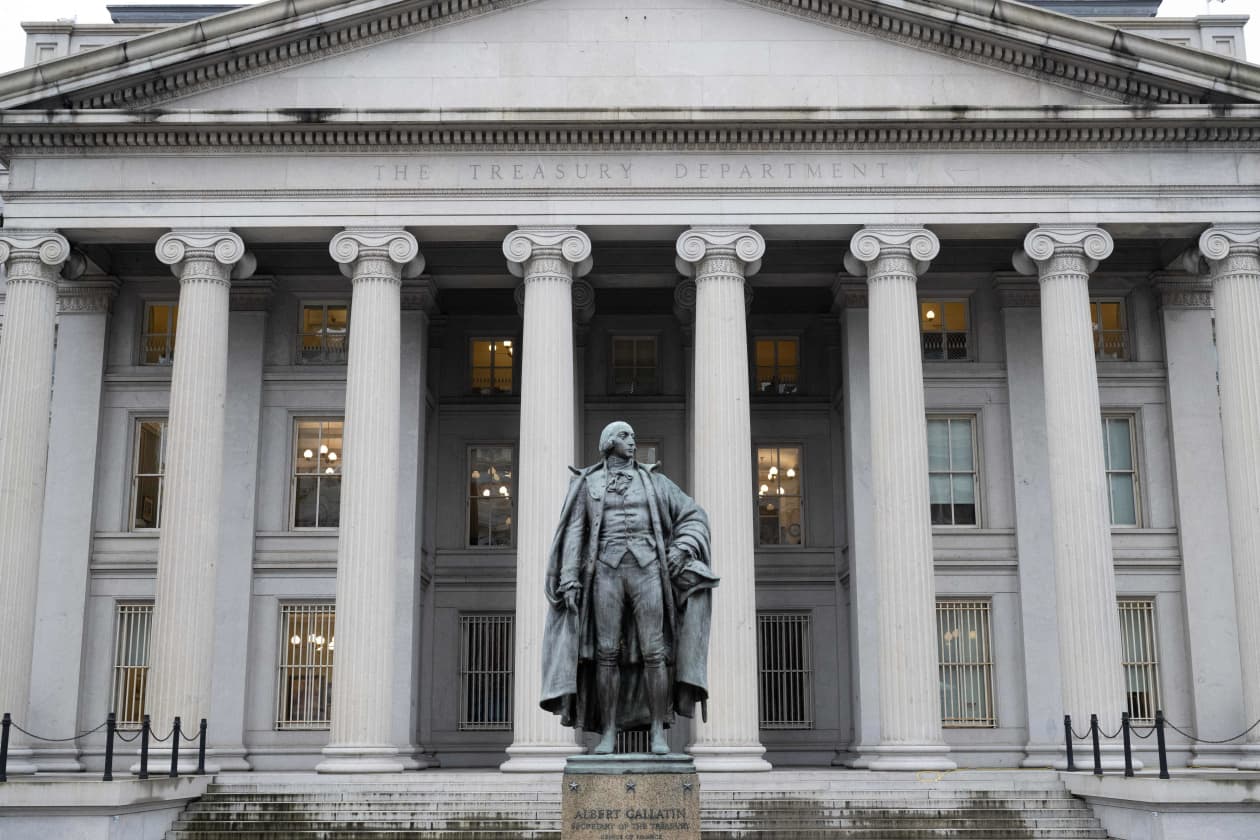
U.S. Treasury yields retreated sharply from their highest levels since 2002 after intense buying emerged in policy-sensitive and longer-dated securities. The reversal followed stronger economic news that initially pressured the battered $31.5 trillion Treasury market, underscoring a volatile tug-of-war between growth-driven selling and buyers stepping back into bonds.
Analysis
The reversal is more informative as a positioning signal than a macro signal: it suggests leveraged duration shorts may be crowded and that real-money buyers are beginning to lock in nominal yields. That can drive a sharp 1-3 week rally in IEF/TLT even without a deteriorating growth outlook, as dealers cover hedges and mortgage convexity flows turn less adverse. It is not yet evidence of a durable peak in yields; a sustained decline requires softer inflation/labor data and orderly Treasury auction absorption rather than a single-session flow event.
The highest-beta equity beneficiaries over the next 1-3 months are long-duration cash-flow sectors—XLU, VNQ and profitable software—where lower discount rates can support multiple expansion. Regional banks (KRE) are a more ambiguous beneficiary: mark-to-market pressure on securities portfolios eases, but a material yield decline also reduces asset yields faster than deposit costs, limiting NIM upside. Credit is the key second-order read-through: if Treasury yields fall while HYG spreads remain contained, the move is growth-neutral and supportive for risk assets; if spreads widen concurrently, the duration rally is a recession warning and defensives should outperform cyclicals.
Contrarian risk is that investors extrapolate a technical squeeze into a policy pivot. Continued resilient data could quickly rebuild term premium, especially if auctions tail or foreign demand is weak, producing another yield spike and renewed pressure on rate-sensitive equities. The clean falsifier for a tactical duration long is a recovery in benchmark yields above the session high accompanied by widening bid-to-cover weakness at intermediate- and long-dated auctions.
AllMind Terminal
AI-powered research, real-time alerts, and portfolio analytics for institutional investors.
Request TrialMarket Sentiment
Overall Sentiment
mixed
Sentiment Score
0.05
Key Decisions for Investors
- Initiate a tactical long IEF versus short HYG in equal-dollar risk over the next 1-3 weeks only if Treasury yields remain below the reversal-day high and HY spreads stop tightening. This captures a risk-off duration bid while limiting exposure to a broad equity rally; exit if IEF breaks the reversal low or HYG spreads widen materially.
- Add a 1-3 month relative-value position long XLU / short XLI after confirmation from the next inflation release: utilities retain duration upside if yields compress, while industrials face greater downside if the move reflects slowing nominal growth. Size modestly because a renewed yield breakout would reverse the factor trade quickly.
- Do not chase TLT outright after a one-day reversal. Use a 2-3 month TLT call spread only after the next long-bond auction shows solid demand; the defined-risk structure is preferable while term-premium risk remains elevated.
- Keep KRE on watch rather than buying the rate move. Upgrade only if lower yields are accompanied by stable deposit costs and no deterioration in credit provisions; otherwise, NIM compression and commercial-real-estate uncertainty can dominate the securities-book benefit over the next 6-18 months.
More News
- Dollar at 17-month high as global bond rout hits euro
- Can Trump Oust Powell From the Fed Board? What to Know
- US borrowing costs hit 24-year high as global bond sell-off intensifies
- Fed’s Cook sees AI buildup as top inflation risk for 2027
- The September jobs report will be released Friday. Here's what to expect
- U.S. stock futures drift higher with nonfarm payrolls in focus
From AllMind Research
- Anthropic IPO Preview: Valuation, Timing, and What to Watch
- Shein After the IPO: Venue, Valuation, and What Must Be Proved
- What AI Research Tools Should a Small Hedge Fund Buy First?
- Weekly Update: New Reporting Features and More Sources for Document Search
- How to Evaluate AI Report Writers for Financial Analysis