
Biman Bangladesh Airlines Orders 11 More Boeing Jets to Expand Fleet
Source: PR Newswire
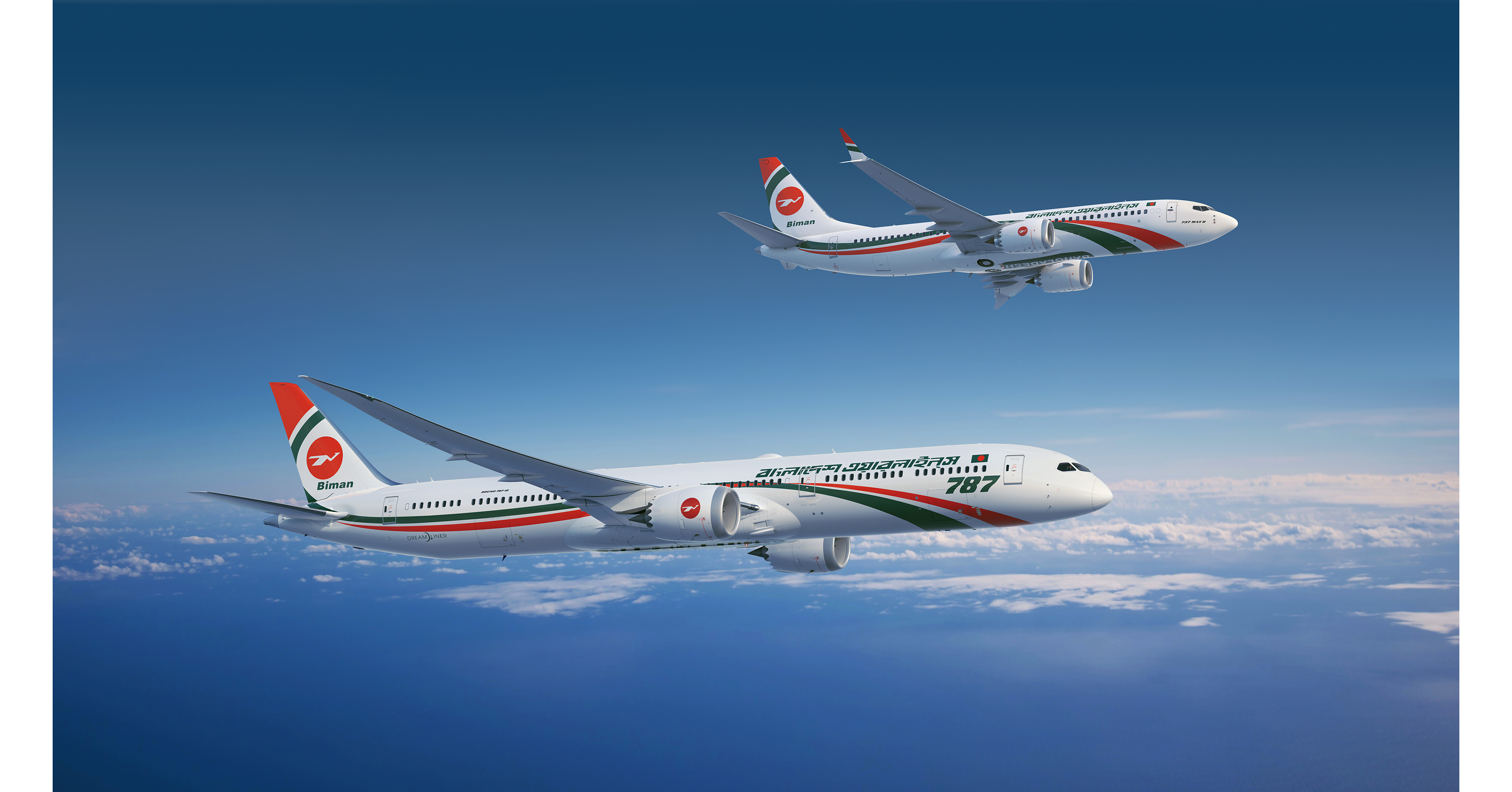
Biman Bangladesh Airlines signed a supplemental agreement with Boeing for additional 737-8 and 787-10 aircraft, advancing its fleet-renewal and international-network expansion strategy. The aircraft are intended to provide 20-25% better fuel efficiency than the planes they replace, while adding single-aisle range and widebody capacity. The order strengthens Biman's Boeing fleet commonality and supports Bangladesh's connectivity with Middle Eastern, Asian and European hubs.
Analysis
The economic value to BA is determined less by the announcement than by whether the commitment converts into a financed, firm backlog entry with near-term delivery positions. Incremental widebody demand is strategically more valuable than another narrowbody order because it supports BA's production-rate credibility and higher-margin services attach; however, a state carrier's financing and sovereign foreign-exchange capacity make cancellation or deferral risk materially higher than for investment-grade private airlines. Near-term equity impact should therefore be modest unless Boeing discloses aircraft quantities, delivery years, deposits, and financing support.
The second-order beneficiary is GE Aerospace (GE), given likely GEnx exposure on the 787 and CFM International exposure on the 737 MAX, although engine selection remains unconfirmed. The order also marginally reinforces Boeing's installed-base advantage in South Asia, raising switching costs for Airbus on future replacement cycles and creating recurring parts, training, and maintenance revenue over 15-25 years. Conversely, accelerated aircraft deliveries into Bangladesh could pressure regional yields if Biman adds capacity faster than diaspora and transit demand grows, limiting the carrier's ability to take additional aircraft.
Consensus should not treat this as a standalone earnings catalyst: the market has repeatedly discounted commercial-order headlines when delivery timing is constrained by certification, supply-chain, and engine availability. The more investable read-through is whether this signals U.S.-Bangladesh trade-policy alignment that unlocks additional aviation, defense, or export-credit transactions over the next 6-18 months. Thesis is falsified if the order is absent from Boeing's next backlog update, delivery slots fall beyond the airline's planning horizon, or Boeing again reduces commercial delivery guidance due to supplier disruption.
AllMind Terminal
AI-powered research, real-time alerts, and portfolio analytics for institutional investors.
Request TrialMarket Sentiment
Overall Sentiment
moderately positive
Sentiment Score
0.45
Ticker Sentiment
Key Decisions for Investors
- Maintain BA as a watch-to-buy rather than chase on the announcement; initiate only after the next monthly orders-and-deliveries release confirms firm backlog inclusion and management reaffirms annual delivery guidance. A confirmed order plus stable guidance can support a 3-6 month rerating; a deferral or non-booking should remove the catalyst.
- Consider a 6-12 month relative-value long GE / short BA in equal dollar risk if aircraft and engine selections are confirmed. GE captures aftermarket annuity economics with less airframe certification and delivery-liability exposure; exit if GE is not selected for either platform or Boeing demonstrates sustained delivery-rate improvement.
- Monitor BA's next earnings call for supplier bottlenecks, 787 delivery timing, and customer-financing commentary. If management identifies export-credit or third-party financing backing, upgrade the order's probability-weighted value; absent that disclosure, assign limited near-term EPS value and avoid adding directional exposure.
- For existing BA longs, use any order-driven strength to reduce concentration unless it is accompanied by a broader backlog conversion trend. The key downside trigger is a cut to commercial delivery or free-cash-flow guidance, which would outweigh the value of a single emerging-market customer commitment.
More News
- Turkish Airlines orders up to 150 Boeing 737 MAX aircraft
- Boeing and Turkish Airlines Finalize Order for up to 150 737 MAX Jets
- Bond yields spike and stocks drop — plus, why Boeing is bucking the trend
- Oil falls on report Asia will import highest volume of crude since start of Iran war
- America’s Asian allies want a Trump-Xi truce — but not at their expense
- Chinese authorities reportedly in possession of F-35 components in Hong Kong