
FDA APPROVES GORE® VIABAHN® VBX BALLOON EXPANDABLE ENDOPROSTHESIS FOR EXPANDED USE IN FEVAR AND BEVAR
Source: PR Newswire
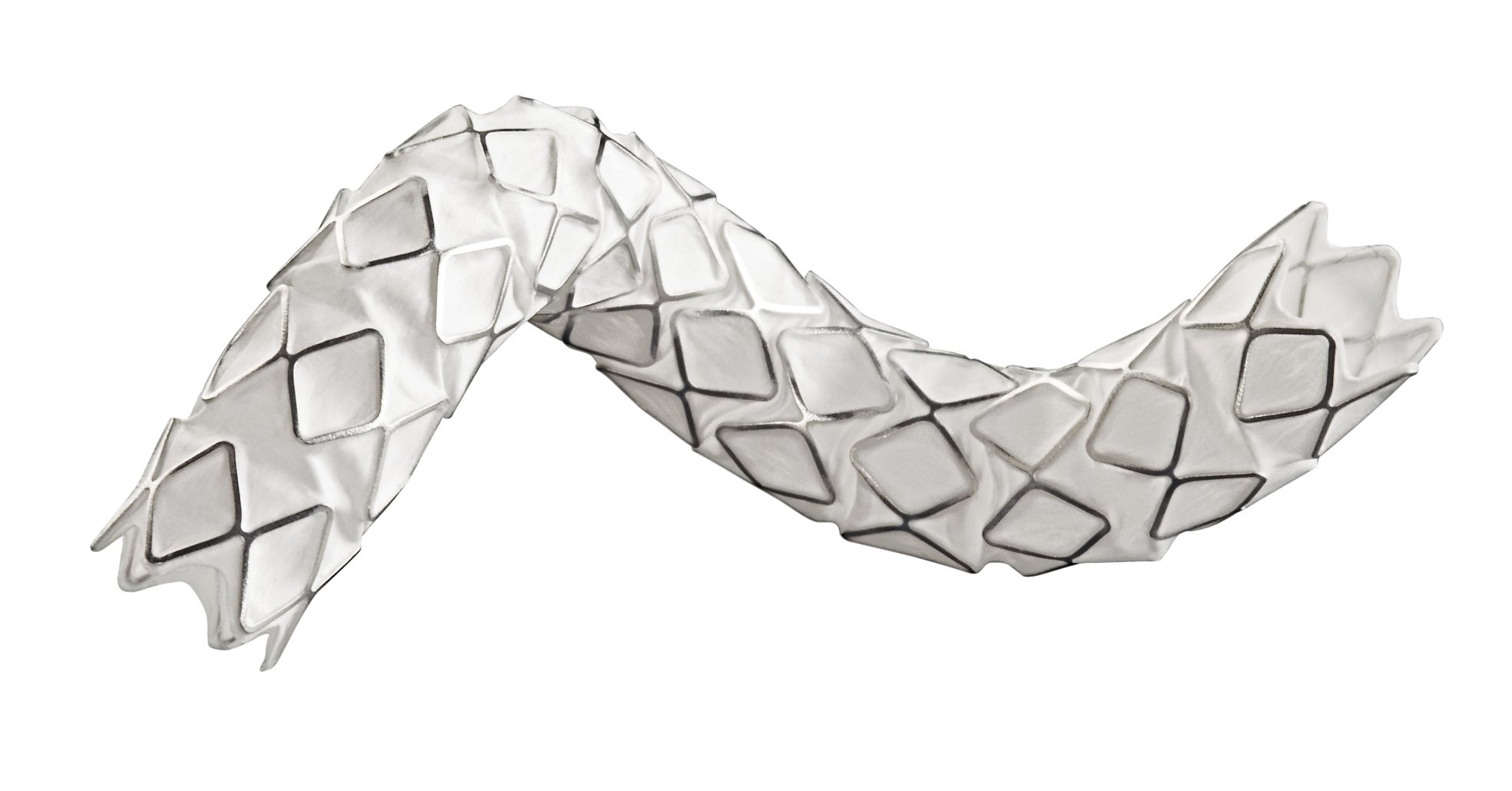
The FDA approved an expanded U.S. indication for Gore’s VBX Stent Graft as a bridging stent in both fenestrated and branched endovascular aortic repair (FEVAR and BEVAR). Three-year EMBRACE Registry results showed vessel-level primary patency of 97.5% for FEVAR and 94.0% for BEVAR; freedom from target vessel instability was 93.9% and 88.4%, respectively. The approval and longer-term clinical evidence support use in complex aortic procedures, though the article gives no financial forecast or market reaction.
Analysis
Investment view: Strategically positive for Gore, but not a standalone public-equity catalyst: Gore is privately held and the supplied data identifies no listed issuer. The commercial mechanism is lower adoption friction—an on-label option plus longer follow-up may make surgeons and hospitals more comfortable standardizing VBX in eligible FEVAR/BEVAR cases. That could shift share from alternative bridging devices, but the label is limited to specified 6–8 mm fenestrations/branches and qualifying aortic graft systems, so the addressable pool is not all complex aortic repairs.
Evidence caveat: The registry supports durability, but it is observational, and vessel-level patency/freedom from instability is not equivalent to randomized comparative benefit or fewer patient-level reinterventions. The BEVAR results are weaker than the FEVAR results on both reported measures; do not extrapolate a uniform adoption response across procedures. The company-sponsored surgeon survey is directional, not proof of demand or purchasing intent.
Timing and risks: Near term, likely a modest competitive signal rather than a broad medtech earnings event. Over 1–3 months, watch surgeon uptake, hospital contracting and competitor responses; over 6–18 months, follow registry updates and any independently reported durability or reintervention data. Adoption could disappoint if the indication’s device-system constraints, anatomy, price or operator preferences limit use. A safety signal or worsening longer-term patency would reverse the thesis. No revenue, share, pricing or public valuation data are supplied, so quantify neither sales uplift nor competitor losses.
AllMind Terminal
AI-powered research, real-time alerts, and portfolio analytics for institutional investors.
Request TrialMarket Sentiment
Overall Sentiment
moderately positive
Sentiment Score
0.62
Key Decisions for Investors
- No direct equity trade: Gore is private, and this narrowly scoped approval does not by itself support a sector-wide medtech position.
- Add competing aortic-device makers to a watchlist rather than shorting them on the announcement. Look for explicit guidance on FEVAR/BEVAR share, lost bids or changes to their evidence and product strategy before sizing a relative-value trade.
- Over the next 1–3 months, monitor physician adoption and hospital procurement; verify procedure volumes, eligible-case share and whether use expands beyond early adopters before underwriting material revenue impact.
- Reassess the positive thesis if subsequent follow-up shows deteriorating patency or more reintervention, or if uptake remains limited by the label’s anatomy and graft-system requirements.
More News
- Anthropic's third-quarter revenue is said to hit $16.8 billion ahead of IPO
- SK Hynix seeks U.S. chip equipment exports to China tied to new factory
- Dell stock plunges 11%, leading data center sell-off on concerns about 'enterprise AI timing'
- UBS considers leaving Switzerland over capital rule plans, WSJ reports
- Bank of America Has 'Accountability' in Face of Fines, Says Moynihan
- Why is Netwealth stock sliding today?