
Pathology's Future Is Connected. Hyland Is Bringing It Into Focus.
Source: PR Newswire
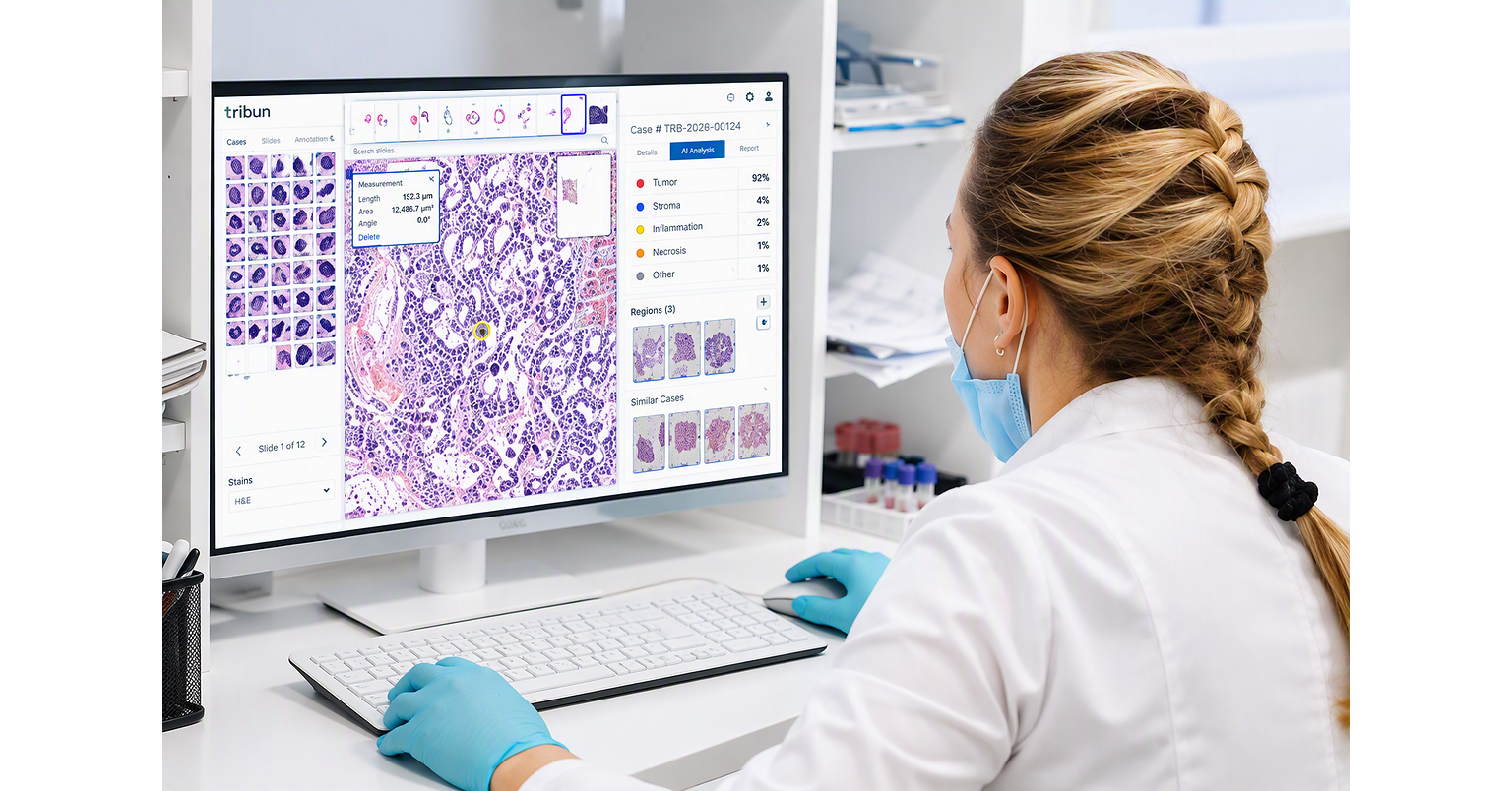
Hyland launched Hyland Digital Pathology, powered by Tribun Health’s CaloPix, for primary diagnosis; the product is FDA-cleared, Health Canada licensed, CE-marked, and registered as a Class 1 software IVD in Australia. The announcement cites approximately 90% of pathology labs still relying on glass slides amid a 42% surge in diagnostic workloads, and presents the platform as a way to integrate pathology with other medical imaging specialties. No financial results or measured adoption outcomes were reported.
Analysis
This is an adoption-enablement signal, not yet evidence of revenue acceleration. Regulatory clearance and integration into an enterprise imaging stack reduce two meaningful barriers, but they do not resolve the harder bottlenecks: scanner and storage budgets, laboratory workflow validation, LIS/EMR integration, pathologist acceptance, and procurement cycles. The claimed efficiency and cost benefits remain vendor assertions until health systems disclose deployment rates, turnaround-time improvements, or measurable archive-cost savings.
If the bundle gains traction, the second-order risk is to standalone pathology platforms and fragmented imaging archives: enterprise buyers may favor fewer vendors and shared governance over point solutions. Established imaging vendors such as Philips, GE HealthCare, and Sectra could face stronger bundling competition, while scanner and storage suppliers may still benefit from digitization even if archive spending consolidates. These are conditional competitive effects, not demonstrated contract wins. No company identities or tickers are supplied, so there is no clean direct equity expression here.
Near term (days to weeks), the launch and RSNA demonstrations are unlikely to establish commercial scale. Over 1–3 months, watch for named health-system deployments, conversion of pilots into enterprise contracts, and evidence of interoperability in live workflows. Over 6–18 months, adoption could support recurring software and archive demand, but implementation costs and data growth may offset customer savings. The contrarian point: “90% analog” signals a large theoretical market, not an imminent revenue pool; the analog base may persist because clinical change management and capital budgets move slowly. Thesis weakens if deployments remain pilot-only or buyers continue selecting specialist systems rather than enterprise bundles.
AllMind Terminal
AI-powered research, real-time alerts, and portfolio analytics for institutional investors.
Request TrialMarket Sentiment
Overall Sentiment
mildly positive
Sentiment Score
0.25
Key Decisions for Investors
- No immediate trade: the announcement provides no disclosed bookings, pricing, customer commitments, or mapped listed issuer, so it is not a basis for a directional position.
- Set a 1–3 month alert for named health-system wins and pilot-to-production conversion; treat broad adoption claims without customer-level evidence as marketing, not a catalyst.
- Monitor Philips, GE HealthCare, Sectra, and specialist pathology vendors for competitive responses or disclosed displacement. Reassess only if evidence shows enterprise bundling is changing win rates or recurring-software growth.
- For a 6–18 month thesis, seek verification of deployment economics: scanner and storage spend, archive consolidation, diagnostic turnaround changes, and implementation time. Failure to show production rollouts or customer savings would falsify the adoption-led upside case.
More News
- Anthropic's IPO could be 'speculative fiction' or a 'generational moment' — investors are split
- VCs will make billions on Anthropic’s IPO, but Amazon is set to make much (much) more
- Indian investors rush to Nvidia, SpaceX, Apple as local trading apps roll out access to U.S. stocks
- SK Hynix Q3 profit jumps more than 7-fold, beats forecasts
- Ultra Clean Holdings soars 11% on strong Q3 beat, upbeat outlook
- Meta Boosts Equity Offering to $98 Billion, Raising Its AI Bet