
Boeing Lands $20B Navy Deal for Next-Gen Fighter Jet: ETFs to Watch
Source: zacks.com
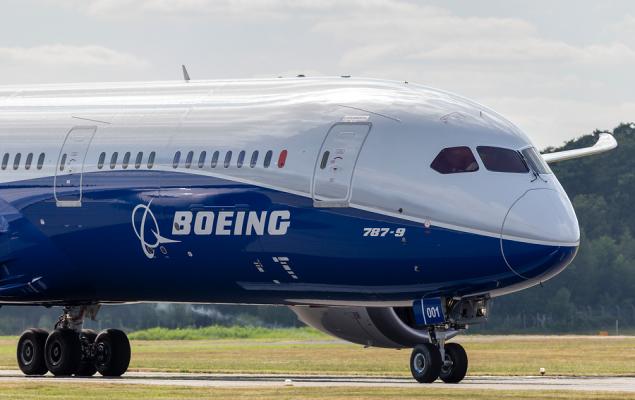
Boeing won a U.S. Navy contract exceeding $20 billion to develop the sixth-generation F/A-XX fighter, its second consecutive major fighter-jet win, with the program potentially worth hundreds of billions of dollars over its lifecycle. It also received a $2.38 billion award for 22 additional F-15EX aircraft, while Turkish Airlines ordered up to 150 737 MAX jets and Korean Air finalized a 103-aircraft order. BA rose about 0.5% premarket despite being down 14.3% year-to-date; analysts' $275.32 average target implies 48.0% upside from the $186.05 Sept. 30 close.
Analysis
The defense award improves Boeing's backlog quality but is unlikely to repair the near-term equity case on its own: development programs consume cash and typically carry lower/volatile margins before production ramps. The more important 1-3 month catalyst is whether management can translate commercial demand into higher delivery guidance without renewed supplier, rework, or FAA-related disruption. A certification acceleration would be economically meaningful only if it preserves delegated-authority rigor; a rushed process would raise the probability of another grounding-type event and further multiple compression.
Northrop's loss is not simply foregone revenue: it concentrates NOC's tactical-aircraft exposure in legacy programs and heightens pressure to defend margins elsewhere in its classified and space portfolio. Conversely, BA's win supports second-order demand for propulsion, mission systems, avionics and structures—GE Aerospace (GE), RTX and L3Harris (LHX) are cleaner ways to express a production-cycle upside with less company-specific certification and balance-sheet risk. The market is likely over-attributing nominal lifetime program value to present NAV; the key unknowns are development funding profile, cost-plus versus incentive structure, and the timing of low-rate initial production.
Consensus optimism is unusually crowded relative to BA's execution burden. Commercial order announcements are not cash flow until financing, delivery slots, and production rates convert; therefore, the relevant falsifier for a bullish BA thesis is sustained improvement in monthly deliveries, inventory unwind, and free-cash-flow guidance—not backlog additions. Over 6-18 months, a credible recovery in deliveries can drive substantial operating leverage, but another quality incident or a supplier bottleneck would make the defense narrative immaterial to valuation.
AllMind Terminal
AI-powered research, real-time alerts, and portfolio analytics for institutional investors.
Request TrialMarket Sentiment
Overall Sentiment
moderately positive
Sentiment Score
0.62
Ticker Sentiment
Key Decisions for Investors
- Do not chase BA on the initial contract headline. Establish a 3-6 month starter long only after monthly delivery data show two consecutive clean improvements and management reaffirms or raises free-cash-flow guidance; use a 10-12% stop because certification/quality setbacks can overwhelm defense upside.
- Preferred expression: long GE and LHX versus short BA in equal beta-adjusted notional for 3-6 months. This captures fighter and commercial aerospace content growth while hedging BA-specific execution; exit if BA demonstrates delivery recovery plus positive FCF guidance, which would close the execution discount.
- For diversified defense exposure, favor ITA over BA outright for the next quarter; it limits single-name certification and fixed-price-development risk. Reduce if appropriations negotiations imply a defense spending interruption or if program funding details show material near-term cost exposure.
- Monitor NOC following its next earnings call for a tactical-aircraft margin/guidance reset. A material cut to segment backlog or margin expectations would support a tactical short, but absent that disclosure the contract loss alone is insufficient for a new short position.
More News
- Boeing engineers and technical workers approve new contract, avoiding strike
- Boeing white-collar workers approve latest contract offer, averting strike fears
- The People of Utah vs. Kevin O’Leary
- Pilots of crashed Amazon cargo plane were unaware of wind conditions
- More Signs This Defense ETF Can Take Off
- How was the Flydubai pilot who attacked his co-pilot cleared to fly?