
RIGHT CARE, RIGHT PLACE: NUHS MARKS A DECADE OF ADVANCING VALUE-BASED CARE, SAVING 18,225 BED DAYS
Source: PR Newswire
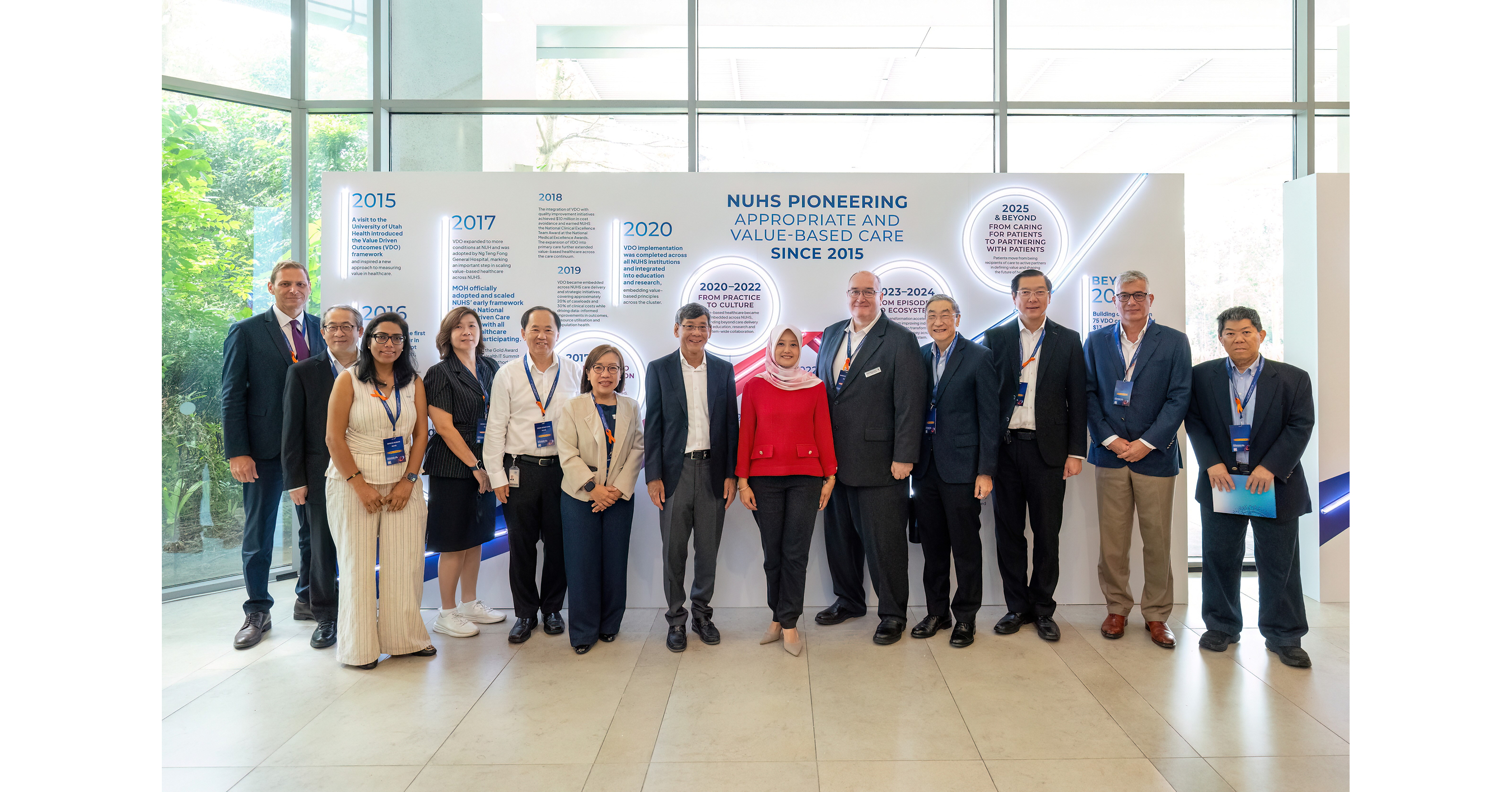
Singapore's NUHS reported that its decade-long value-based-care programme has benefited more than 300,000 patients, avoided SG$13 million annually in costs, prevented 793 30-day emergency readmissions and saved 18,225 bed days. Its NUHS@Home programme has treated over 11,400 patients since 2020 and saved more than 68,200 bed days, with 87% completing care at home without hospital return and a 9.3% 30-day readmission rate. The results support broader adoption of outcome-based, home-first and virtual-care delivery models, although the announcement is operational rather than directly market-moving.
Analysis
This is a policy-validation signal rather than an investable company catalyst. Singapore’s care-at-home, virtual triage and outcome-measurement architecture supports a multi-year shift of healthcare spending away from incremental acute-bed capacity toward remote monitoring, workflow software and community-care infrastructure. The most direct listed beneficiaries are global vendors with hospital-at-home exposure—Philips (PHG), ResMed (RMD), Teladoc (TDOC), Amwell (AMWL), Oracle Health (ORCL) and cloud/data vendors—but Singapore alone is immaterial to revenue and should not move estimates.
The non-obvious effect is on local hospital-capacity economics: avoiding admissions improves system throughput but can dilute utilization-dependent revenue pools in private-provider models. That makes the read-through more favorable for capitated/publicly funded systems and technology vendors than for hospital operators whose economics rely on occupied beds; broadly, it reinforces a long-term preference for medtech and care-enablement over acute-facility expansion. PROM-driven care also increases demand for interoperable data capture and analytics, though procurement cycles, clinical integration and cybersecurity requirements mean monetization is likely 12-36 months out.
No directional trade is warranted from this release. The key falsification point for the broader theme is whether scaled home care preserves or improves 30-day readmission, adverse-event and total-cost metrics; if higher-acuity deployment raises escalations, payer reimbursement and hospital adoption will remain limited. Near-term catalysts are reimbursement-code changes, large health-system contracts and reported recurring-revenue growth at remote-care vendors—not additional pilot-program announcements.
AllMind Terminal
AI-powered research, real-time alerts, and portfolio analytics for institutional investors.
Request TrialMarket Sentiment
Overall Sentiment
moderately positive
Sentiment Score
0.58
Key Decisions for Investors
- No immediate position: treat this as a thematic data point, not an earnings-revision catalyst; Singapore’s addressable spend is too small to affect PHG, RMD, TDOC, AMWL or ORCL valuation over the next 1-3 months.
- Maintain a 6-18 month watchlist on PHG and RMD for hospital-at-home/remote-monitoring contract disclosures and recurring-revenue growth; initiate only if segment growth accelerates while gross margin holds, as this would validate scalable economics rather than pilot adoption.
- Avoid using TDOC or AMWL as clean proxies without evidence of improved enterprise bookings and cash-flow trajectory; both retain material execution and reimbursement risk, and policy enthusiasm does not resolve competitive pricing pressure.
- For healthcare allocations, favor care-enablement and interoperability suppliers over acute-care facility expansion exposure where reimbursement is utilization-linked; reassess if home-care readmission/escalation metrics deteriorate or regulators impose tighter virtual-care clinical standards.
More News
- Grab aims for 'next level' in financial services with purchase of buy-now pay-later platform Atome
- China's AI leaders keep quiet despite U.S. 'publicity' on tech risks
- Exclusive-Malaysia talks to rival airlines as it monitors AirAsia’s financial health, sources say
- Karin Rådström is steering Daimler Truck in a new direction as the world’s biggest truckmaker faces a growing challenge from China
- China’s slower loan growth is the new normal, central bank governor says
- AWS says it can't restore service to Bahrain, UAE facilities 6 months after Iran strikes