
Can Keurig Dr Pepper's Innovation Pipeline Reignite Coffee Growth?
Source: zacks.com
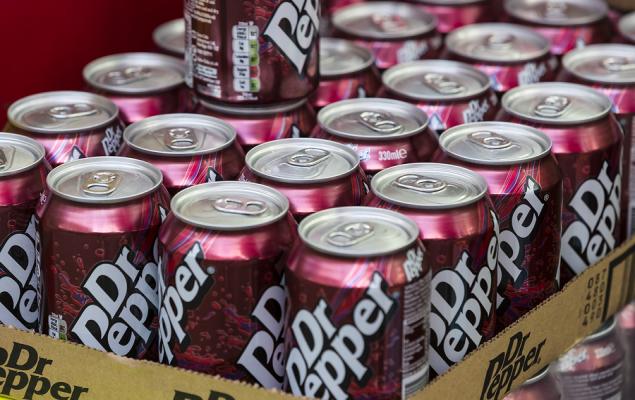
Keurig Dr Pepper's U.S. Coffee net sales fell 3.2% in Q2 as an 8.2-percentage-point volume/mix decline outweighed pricing, while pod shipments dropped 11.6% reported (8.3% excluding the Peet's reporting shift). Brewer shipments returned to growth, rising 2.1%, and KDP expects a significant second-half improvement from marketing, brewer and pod innovation, normalized inventory dynamics and easing costs. The JDE Peet's integration supports joint promotions and the upcoming Keurig Alta brewer launch, while La Colombe retail sales grew more than 50% and gained over 1 percentage point of share; however, weak pod demand, private-label shifts and cautious consumers remain headwinds.
Analysis
KDP’s investment question is not whether promotional activity can stabilize shipment data, but whether new hardware expands the installed base without diluting the high-margin consumables annuity. A next-generation brewer with a broader compatible ecosystem can increase switching costs and pod attach over 6-18 months; however, household acquisition spending, retailer slotting and launch discounts will likely depress near-term Coffee segment margin before any mix benefit appears. The critical read-through is incremental households and pods per active brewer—not gross brewer shipments or retail-sales anecdotes.
JDE Peet’s integration creates a potentially underappreciated distribution and shelf-space advantage for KDP versus smaller single-serve and RTD coffee brands. Joint selling could consolidate retailer coffee-set negotiations and direct promotions toward KDP-owned brands, pressuring private label and smaller branded suppliers. Conversely, compatibility expansion can cannibalize legacy K-Cup economics if consumers trade down or if the system becomes more promotionally elastic; this makes the thesis less clean than a conventional installed-base refresh.
The near-term consensus risk is that a seasonal improvement is mistaken for a demand inflection. Coffee is a discretionary repeat purchase where private-label substitution is difficult to reverse under continued consumer pressure, and a hardware-led recovery can create channel inventory before it creates consumption. A durable rerating requires evidence over the next two earnings reports that volume/mix improves while Coffee gross margin holds, rather than merely easier comparisons and lower input costs.
MNST remains the cleaner innovation expression: rapid velocity in zero-sugar and differentiated sub-lines can compound distribution gains without requiring a hardware subsidy or ecosystem conversion. PEP and KO have broad innovation pipelines, but their earnings sensitivity is too diversified for coffee or functional-beverage launches alone to drive a material multiple catalyst. The contrarian view is that KDP’s weak coffee expectations may already be low enough that even modest sequential pod stabilization can outperform, but that is a tactical earnings setup rather than proof of structural recovery.
AllMind Terminal
AI-powered research, real-time alerts, and portfolio analytics for institutional investors.
Request TrialMarket Sentiment
Overall Sentiment
mixed
Sentiment Score
0.12
Ticker Sentiment
Key Decisions for Investors
- Maintain KDP as a watch-list long into the next two earnings prints; initiate only if reported pod volume improves sequentially and Coffee segment margin is at least stable despite launch investment. Target a 6-12 month rerating on recurring consumables growth; exit if volume/mix remains materially negative after the key launch period or management reduces its second-half outlook.
- Express relative quality through long MNST / short KDP over a 3-6 month horizon, sized beta-neutral. MNST offers a more direct volume-and-share innovation catalyst, while KDP carries installed-base conversion, promotional and integration execution risk; cover if KDP demonstrates sustained positive pod sell-through rather than shipment normalization.
- Do not add PEP or KO solely on this theme. Reassess after North American scanner data show that functional, protein and zero-sugar launches are producing incremental category consumption rather than cannibalizing core SKUs; absent that evidence, innovation spend is more likely a margin headwind than an earnings catalyst.
- Set data alerts for KDP household penetration, pod attach rates, retailer inventory days, promotional depth and Coffee gross margin. These are the decision variables missing from management’s qualitative launch narrative; a divergence between brewer sell-in and pod sell-through would be a short-risk signal within 1-3 months.
More News
- Friday's rally in the S&P 500 might not be enough, but Linde is out of this world
- Stocks remain under the thrall of higher yields and higher oil. Here's what's ahead
- Dow Lags as Wall Street Turns the Page on Mixed Q3
- Mark Ruffalo says Paramount’s $111 billion Warner Bros. deal ‘Will stifle creativity, weaken free speech, and cost people their jobs’
- David Ellison says combined Paramount and Warner Bros. Discovery will be named Skydance
- Anthropic warns government attitudes may hurt customer ties, IPO prospectus shows: Reuters