
Yarbo donne vie à la série M à l'IFA 2026 : du prototype du CES à un produit bien réel, entre vos mains
Source: PR Newswire
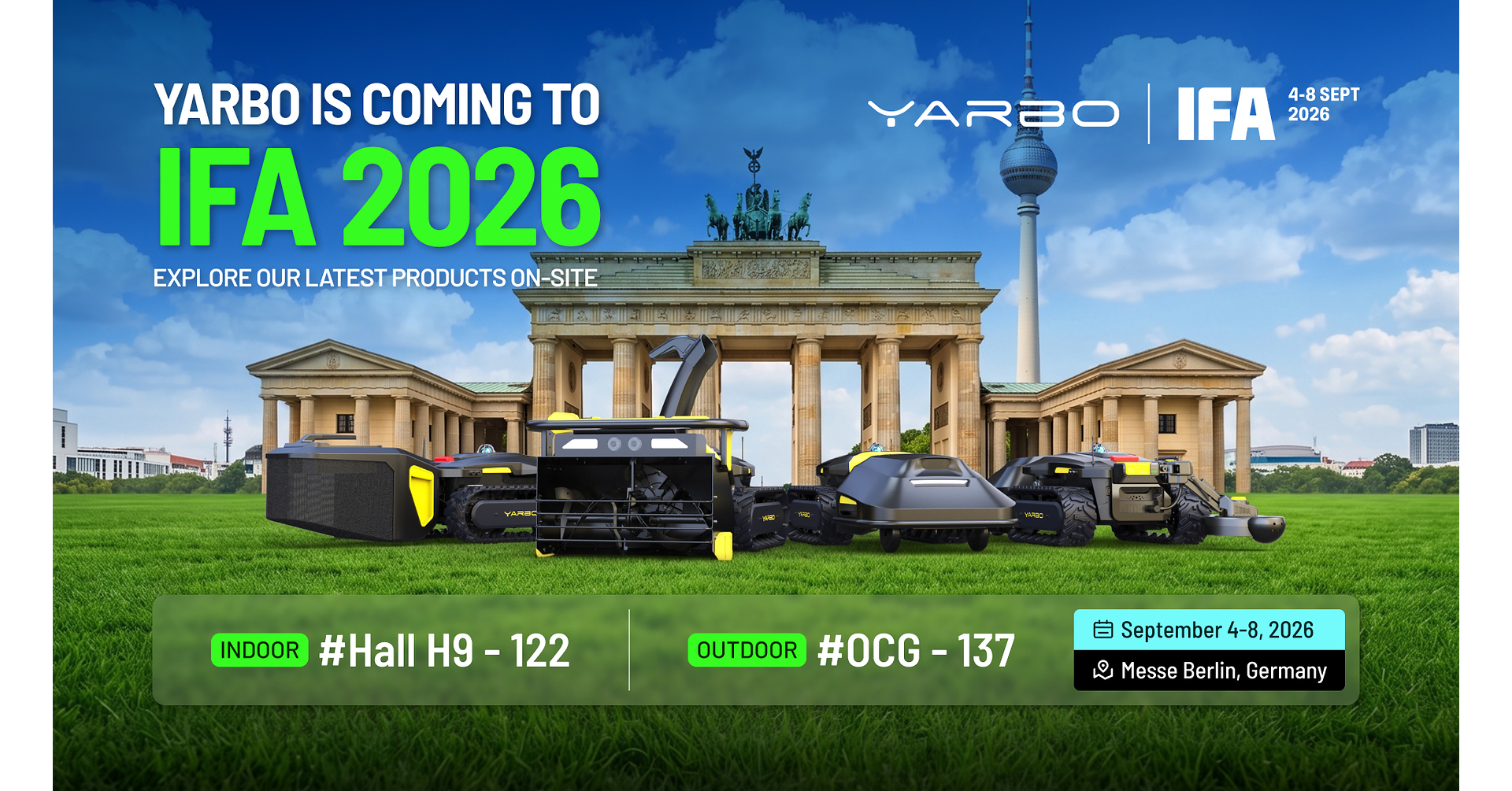
Yarbo annonce la mise en avant à l’IFA 2026 de la version définitive de sa série M de robots modulaires pour l’entretien du jardin, avec un démarrage/positionnement et une cartographie initiaux annoncés en ~30 minutes (Data Center Gen2/NetRTK, LiDAR optionnel) et une recharge 10%→90% en ~65 minutes. Le communiqué met aussi en avant une capacité de tonte jusqu’à ~1,5 acre/jour pour les modèles M20/M20i et une traction permettant des pentes d’environ 35° (70%). La demande est illustrée par plus de 3,6 M$ levés auprès de 850 contributeurs via crowdfunding cette année, ce qui soutient un signal positif mais sans élément financier ou de guidance marché immédiat.
Analysis
This is better read as a category-validation event than a meaningful earnings catalyst. The important mechanism is not one more robot mower; it is whether modular, no-perimeter-wire outdoor automation can lower the adoption hurdle enough to broaden the premium lawn-care market beyond early adopters. If that works, the first beneficiaries are not the incumbents’ top lines immediately, but the ecosystem around positioning, batteries, sensors, and contract manufacturing; the risk for incumbents is margin, because a more capable entrant can force more bundle-heavy pricing while raising customer expectations.
Near term, the market will likely over-index on the crowdfunding number, but that is weak evidence for scalable demand. The real 1-3 month catalyst path is field performance: setup friction, edge-case reliability, service burden, and delivery cadence after the IFA demos. If real-world install/support costs are high, the economics deteriorate fast; if the company can prove sub-1-hour onboarding and low return rates, it could pressure premium robotic mower positioning across HUSQY and smaller niche brands.
The contrarian view is that year-round modularity is simultaneously the product’s moat and its Achilles’ heel. More modules increase lifetime value only if the base platform is durable and the attach rate is high; otherwise the company is just multiplying SKUs and warranty complexity. Over 6-18 months, the falsifier is not press coverage but shipped units, repeat module purchases, and service economics—without those, this is sentiment, not a business model.
AllMind Terminal
AI-powered research, real-time alerts, and portfolio analytics for institutional investors.
Request TrialMarket Sentiment
Overall Sentiment
mildly positive
Sentiment Score
0.25
Key Decisions for Investors
- No immediate direct trade: treat Yarbo/IFA as a watch item for 1-3 months until independent reviews, shipment dates, and return rates are visible; the current signal is too early to underwrite a durable competitive shift.
- If the theme attracts a sympathy bid in robotic outdoor equipment, fade HUSQY/HUSQ.B on strength rather than buy it; use any post-IFA rally as an opportunity to short into valuation expansion, with a 1-2 month horizon and a stop if channel checks show real preorder conversion.
- For a higher-conviction expression, pair long DE against short HUSQY/HUSQ.B only if broader consumer automation enthusiasm spills into the space; this isolates the thesis that category growth is real but the direct beneficiary is still the diversified incumbent with superior service and distribution.
- Set an alert on public evidence of fulfillment quality: if independent teardowns/reviews show reliable autonomous operation and low support burden, re-rate the sector exposure; if not, expect the enthusiasm to mean-revert within weeks after the trade show.
- Avoid chasing options in the absence of a listed direct beneficiary; the risk/reward is poor until there is verifiable sell-through data, at which point the better trade is likely a small-cap robotics or lawn-care pair rather than a standalone directional bet.
More News
- CoreWeave credit default swaps hit distress levels as investors sour on AI debt
- Penske Automotive agrees to be taken private by Penske, Mitsui
- Supermicro promised a new CFO in December 2024. A $2.5 billion smuggling case and a co-founder’s arrest later, it has one
- Blackstone President Jon Gray Bets Big on AI Boom
- What's behind the sell-off in AI neocloud stocks like CoreWeave and Nebius
- Giant Taiwanese chipmaker TSMC confirms it’s in talks with Elon Musk to join ‘Terafab’ complex in Texas: ‘The AI market continues to be very strong’