
Transformácia hodnoty siete pre nový rast v ére AI
Source: PR Newswire
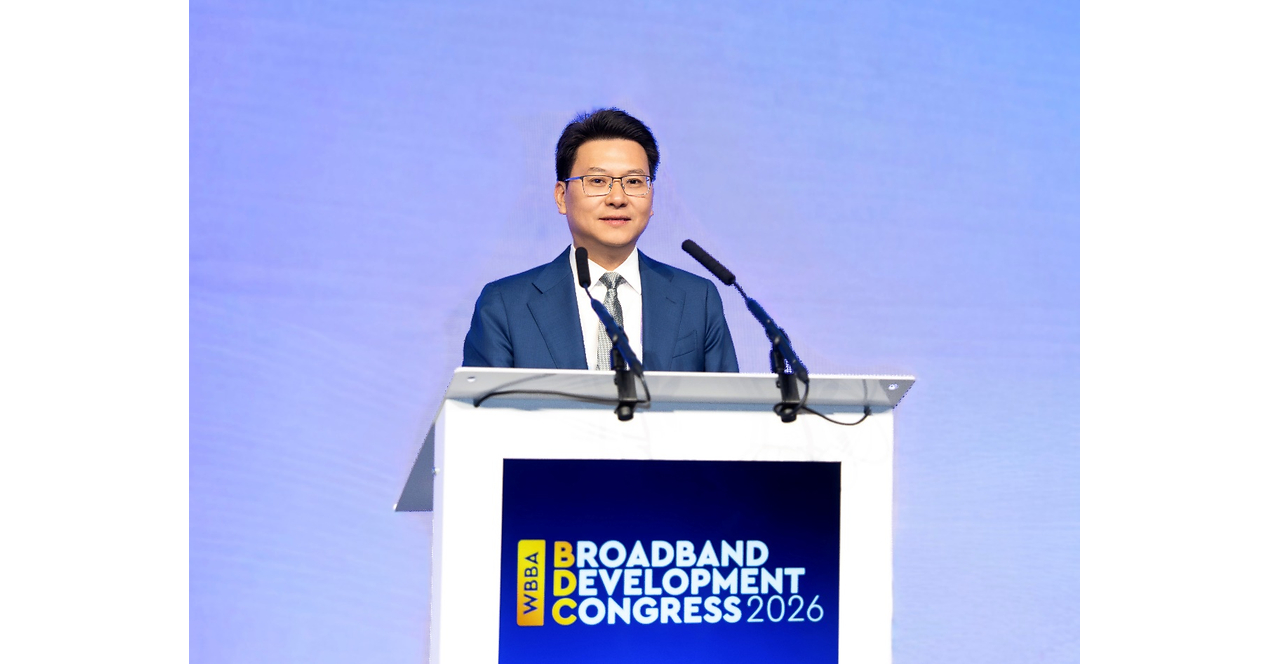
At a Vienna broadband congress, Huawei optical-products executive Bob Chen urged operators to redesign networks for AI, citing AI models nearing 10 trillion parameters and token consumption up almost 50-fold over the past year. He described a shift toward AIDC-centered networks, commercial offers combining bandwidth, latency and reliability, and AI-enabled operations; Huawei says AI Wi-Fi tuning can improve speeds by about 20% in interference-prone settings and dynamic power management can cut equipment energy use by more than 20%. The remarks are strategic industry commentary, not reported financial results or a new commercial deal.
Analysis
The investment signal is not “AI means more bandwidth”; it is whether network owners can capture value from low-latency, high-reliability connections rather than absorb the traffic as undifferentiated capex. If enterprises pay for service-level guarantees and integrated compute-network offers, operators could improve revenue per connection. But that requires proven willingness to pay and deployment economics; Huawei’s examples and efficiency gains are vendor claims, not independent evidence of industry-wide returns.
Near term, treat this as positioning, not an earnings catalyst. Over 1–3 months, the useful confirmations are operator disclosures of AI-related private-network bookings, data-center interconnect orders, and monetized SLAs. Over 6–18 months, optical transport and switching suppliers could benefit if AI clusters drive sustained inter-DC capacity upgrades. Ciena, Nokia, and Corning are relevant names to monitor, without assuming equal exposure. The counterweight is that hyperscalers may build or control their own interconnects, limiting carrier take rates; workload efficiency and compute localization could also temper long-haul traffic growth. Operators face a capex-versus-monetization risk, while automation-driven energy and service-cost savings would accrue only if deployed at scale.
Contrarian view: the presentation may overstate the addressable value for telecom operators. AI traffic growth does not automatically translate into carrier pricing power, especially where capacity is commoditized or hyperscalers own the connection. No immediate trade is justified by this announcement alone.
AllMind Terminal
AI-powered research, real-time alerts, and portfolio analytics for institutional investors.
Request TrialMarket Sentiment
Overall Sentiment
mildly positive
Sentiment Score
0.25
Key Decisions for Investors
- No event-driven position from the announcement. Add Ciena, Nokia, and Corning to a watchlist; consider a staged long in optical/network infrastructure only after order growth or guidance independently confirms AI-related demand.
- Prefer a relative-value expression over a broad telecom long: monitor optical infrastructure suppliers versus incumbent carriers. Enter only if supplier order/backlog trends strengthen while carriers show limited capex recovery; exit the thesis if orders weaken or operators’ AI-network capex rises without disclosed service revenue.
- Track operator earnings over the next 1–3 months for enterprise private-network bookings, SLA pricing, and data-center interconnect demand. Treat household AI broadband and home-network claims as non-investable until operators report adoption, incremental ARPU, or lower support costs.
- Falsification checklist for the 6–18 month thesis: optical vendor order or backlog deterioration, carrier capex rising without AI-linked revenue, hyperscalers shifting more interconnect in-house, or evidence that workload efficiency/localization is offsetting network traffic growth.
More News
- Why did CoreWeave stock get crushed this week? Look to this corner of the debt market for clues
- AI stock sell-off ramps up over debt-fueled data center spending fears: ‘Full-blown crisis of confidence'
- Dow falls 189 points as AI stocks slide and oil prices surge
- Wall Street Anxiety Spreads as AI Rout Meets $110 Oil Shock
- Wall Street's fear gauge is ripping. Traders see it going even higher
- All the news about the iPhone Duo
From AllMind Research
- Anthropic IPO Preview: Valuation, Timing, and What to Watch
- Shein After the IPO: Venue, Valuation, and What Must Be Proved
- What AI Research Tools Should a Small Hedge Fund Buy First?
- How to Evaluate AI Report Writers for Financial Analysis
- Weekly Update: Sector Analysis, Improvements on Research Data, and Performance Enhancements