
PhotoShelter Launches AI Assistant, Turning Hours of Manual Content Work Into a Simple Request
Source: PRWeb
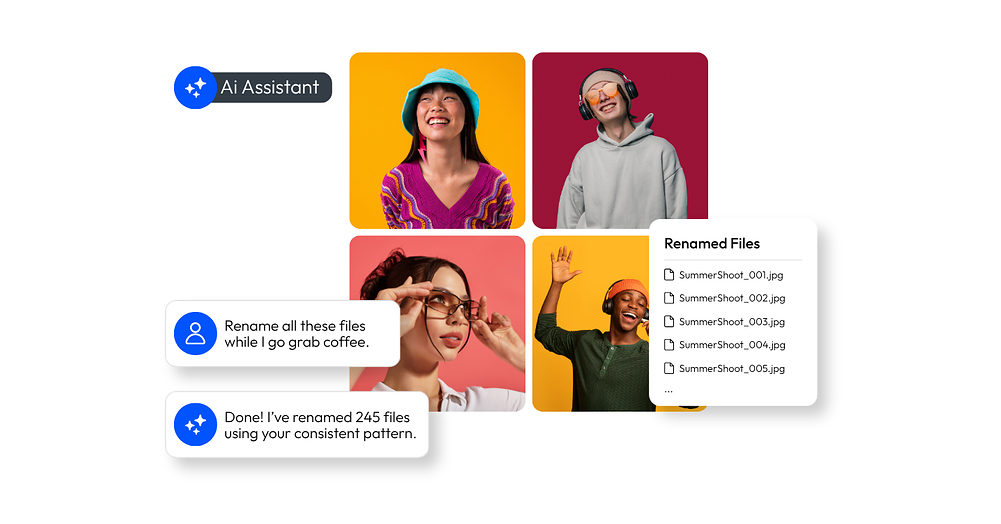
PhotoShelter launched AI Assistant for its Brands digital-asset-management customers, enabling plain-language batch file renaming, gallery creation, metadata cleanup, sorting and asset discovery with required user approval before changes are made. The company estimates marketers lose 3.5 work weeks annually searching for files, equivalent to $5,000 or more in productivity per employee, positioning the tool as a workflow-efficiency product. Guardrails include no file deletion, permission-bound access, transparent action plans and human approval; PhotoShelter says its AI features process more than 50 million images and videos annually.
Analysis
This is strategically relevant to the DAM category but not yet financially material for public equities. The product’s likely value is lower implementation friction rather than a new technical moat: reducing configuration and governance work can improve seat expansion and retention among decentralized marketing teams, where traditional DAM deployments fail during onboarding. That pressures enterprise-oriented DAM vendors that monetize services, customization, and IT-led rollouts; the closest public read-through is modestly negative for BOX only at the margin, while ADBE is insulated by its much broader Creative Cloud workflow and distribution.
For WEN, the customer reference is not a revenue or demand catalyst. The more relevant second-order implication is that easier asset governance can shorten campaign-production cycles and reduce duplicate-content storage, but neither effect is likely large enough to move restaurant-level margins or corporate opex. Treat the reference as evidence of vendor adoption in multi-location consumer brands, not evidence of incremental Wendy’s spend.
The near-term risk to PhotoShelter’s adoption claim is accuracy and trust: metadata errors, incorrectly applied naming conventions, or slow approval workflows can negate the promised labor savings and reinforce buyers’ preference for deterministic rules engines. Over 6-18 months, successful deployment could shift DAM purchasing criteria from feature breadth toward low-friction natural-language administration, creating pricing pressure for vendors whose implementations require professional services. The key falsifier is whether this launch produces measurable expansion signals—customer case studies with reduced administration hours, net retention improvement, or enterprise wins—rather than promotional usage metrics.
AllMind Terminal
AI-powered research, real-time alerts, and portfolio analytics for institutional investors.
Request TrialMarket Sentiment
Overall Sentiment
moderately positive
Sentiment Score
0.48
Key Decisions for Investors
- No standalone WEN trade: the named relationship has no disclosed contract value, spending change, or margin linkage; maintain existing fundamental positioning and do not treat this as a catalyst.
- Monitor ADBE and BOX over the next 1-3 quarters for DAM-adjacent competitive signals: rising implementation costs, weaker enterprise retention, or increased AI-administration features would indicate category pressure. Absent those datapoints, avoid a short based on this launch.
- Set an alert for a disclosed PhotoShelter financing, acquisition process, or material enterprise-customer expansion. A credible scale inflection could make ADBE’s content-management ecosystem and BOX’s workflow positioning more relevant pair-trade inputs, but current evidence is insufficient for a position.
- For private-market diligence, test whether buyers are replacing incumbent DAM platforms versus merely adding an assistant layer. Replacement-driven adoption would be structurally negative for implementation-heavy DAM vendors; overlay adoption would instead validate incremental AI feature demand across the category.
More News
- Here’s the ‘core economic flaw’ in the AI bull case as stock and bond trades unravel, according to a top economist
- Biotech stocks are surging. How investors can play the new drug innovation boom
- AI funding fears rattle Wall Street. Here's how we're adjusting our portfolio
- Braskem creditors, shareholders near deal on $11bn debt restructuring
- Instacart reportedly discussed selling itself with DoorDash and Uber
- Nvidia's role as AI financier faces first big test as neoclouds take market hit