
Nullspace Simulation Powers Eclipse Space's AI-Driven Satellite Antenna Design
Source: PR Newswire
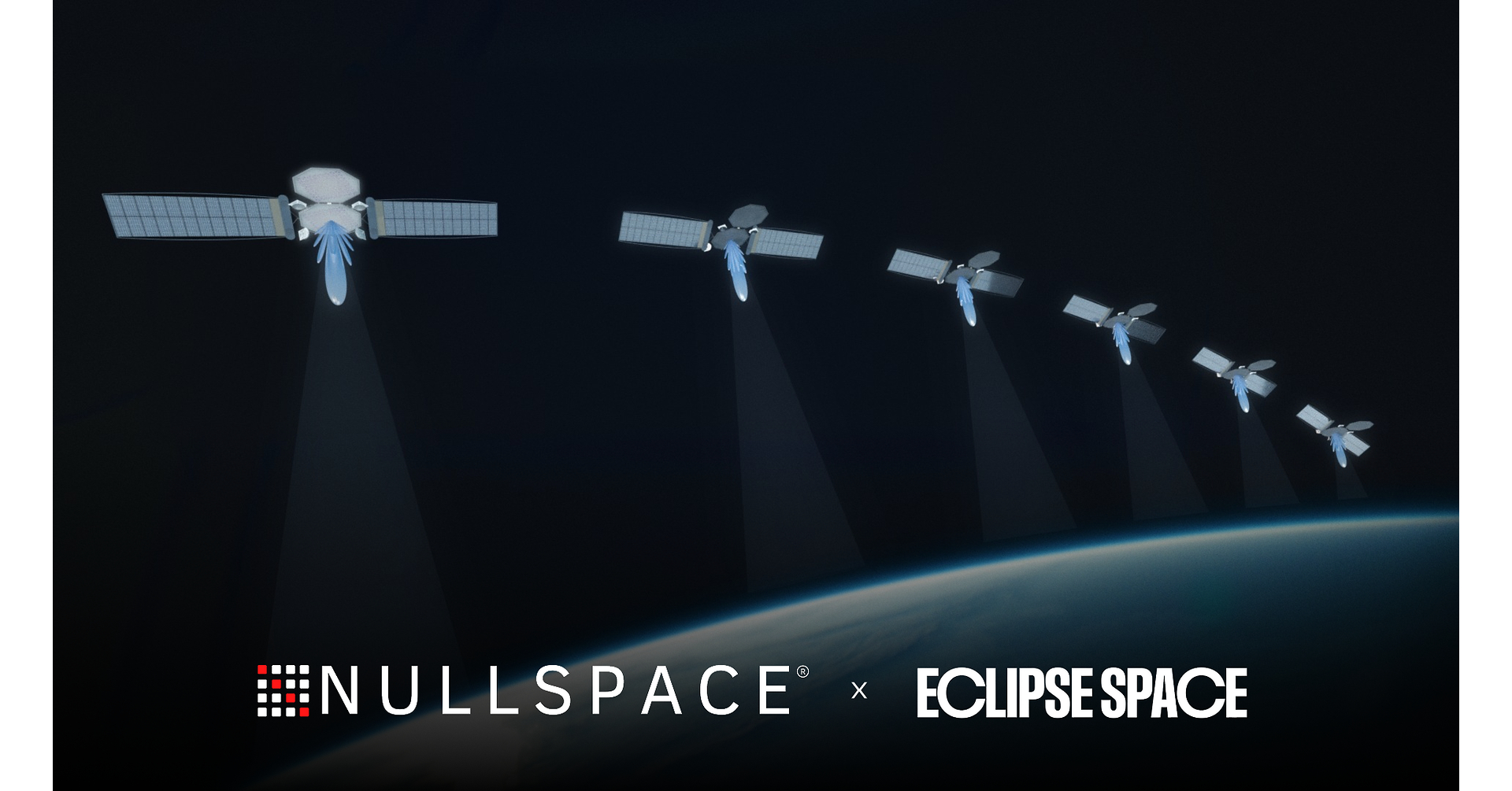
Nullspace and Eclipse Space announced a partnership using Nullspace’s physics-based electromagnetic simulation software in Eclipse’s AI-driven satellite antenna design workflow. Agents can run simulations in parallel, allowing an RF engineer to direct dozens of design explorations; the companies did not disclose quantified development-time or cost savings. Eclipse is also using Nullspace’s consumption-based licensing, which is scheduled to launch publicly early next year.
Analysis
The investable signal is workflow adoption, not yet demonstrated revenue or satellite-production acceleration. If agent-driven simulation proves reliable, it can raise engineer throughput and simulation demand—but consumption pricing may trade predictable seat revenue for usage-sensitive revenue, while parallel runs could make compute and support costs more important. The benefit may therefore accrue to the workflow owner and customers before it reaches software margins.
The key second-order constraint is downstream: faster antenna iteration does not itself shorten hardware qualification, component lead times, launch scheduling, or government procurement. More customer-specific designs could also weaken manufacturing scale economies. Incumbent engineering-software vendors face a credible product-pressure signal, but one customer deployment does not establish displacement or a material competitive hit.
Near term, treat this as a modest positive validation signal, not a public-equity catalyst: both named companies are absent from the supplied ticker mapping, and the release gives no contract value, usage, savings, or independently verified benchmark. Over 1–3 months, watch the public launch of consumption licensing and evidence of repeat deployments. Over 6–18 months, the thesis strengthens only if customers demonstrate shorter qualified-design cycles and convert that speed into delivered constellations. Reversal signals include weak repeat usage, poor simulation-to-test correlation, or qualification and procurement remaining the binding schedule constraints. Contrarian point: AI may multiply design options faster than teams can validate and manufacture them, shifting rather than removing the bottleneck.
AllMind Terminal
AI-powered research, real-time alerts, and portfolio analytics for institutional investors.
Request TrialMarket Sentiment
Overall Sentiment
mildly positive
Sentiment Score
0.35
Key Decisions for Investors
- No immediate directional trade: the partnership announcement has no mapped public ticker and discloses no economics. Avoid treating the press release’s productivity claims as realized earnings impact.
- Set a 1–3 month watch item on Nullspace’s consumption-license launch: seek disclosed recurring customers, simulation volumes, realized pricing, renewal behavior, and evidence that agent-driven runs are incremental rather than replacing seat revenue.
- For exposure to engineering simulation incumbents, monitor customer wins and product response rather than shorting on this announcement alone. Escalate only if multiple customers validate faster design-to-qualification cycles and incumbent retention or pricing shows deterioration.
- Falsify the adoption thesis if repeat usage is limited, simulated results do not hold up in physical testing, or hardware qualification and procurement timelines fail to improve despite faster design iteration.
More News
- Explosions hit Iran’s Qeshm Island as US media report US strikes in Hormuz
- Marvell to buy Lumentum in $115 billion deal in AI data-center bet
- Oil price falls amid hope of a breakthrough to end Iran war
- Marvell, Lumentum tout historic $115B deal to create ‘category leader' in AI connectivity
- Palantir reports booming U.S. commercial revenue growth, topping government for first time
- Anthropic releases amended IPO prospectus with third-quarter financials