
Your smartwatch is lying to you about how many calories you burned, FIU study finds
Source: PR Newswire
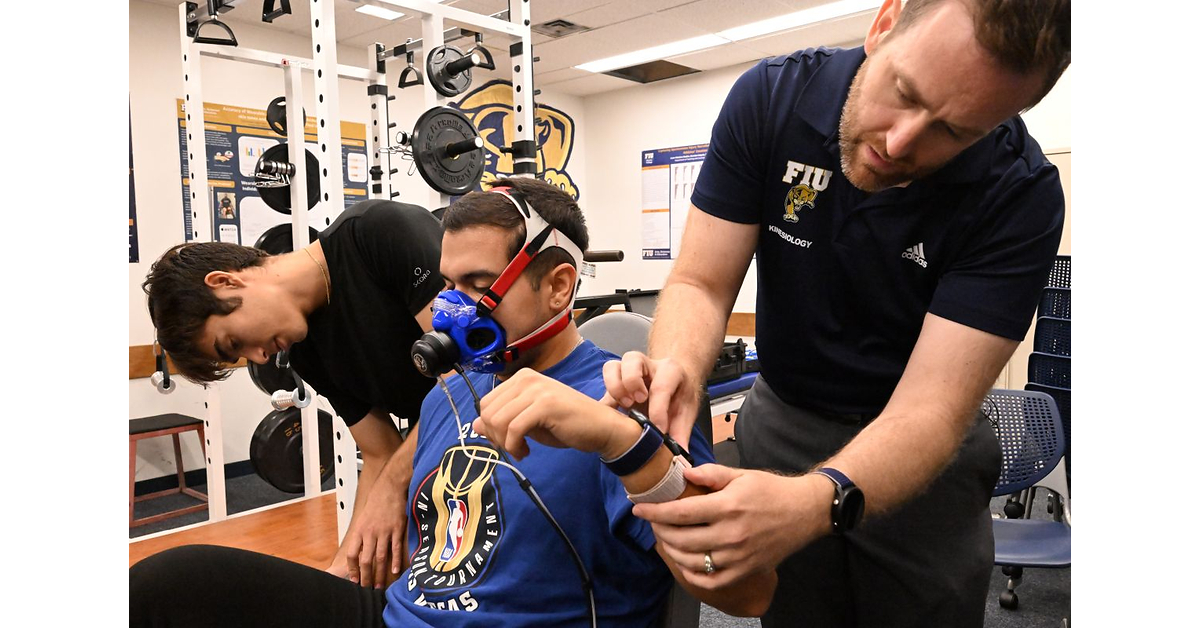
A Florida International University study in PLOS One found fitness trackers can significantly overestimate exercise calories: typical smartwatch errors were ~15% to 25%, and for worst performers the gap could be much larger (e.g., a displayed 500 calories could be closer to ~350). Accuracy worsened as body fat increased, and Fitbit showed reported glitches including implausibly low or missing readings. Researchers advise using calorie-burn numbers as an upper bound and focusing on safer signals (heart rate/heart-rate zones) and personal trends rather than single-day totals.
Analysis
This is more relevant for positioning than for immediate fundamentals. The main mechanism is not unit demand for wearables, but trust: calorie burn is a key “behavior change” feature, and if users conclude it is noisy, engagement can shift toward heart-rate, recovery, and subscription coaching—areas where platform ecosystems monetize better than hardware alone. That is modestly supportive for AAPL because the study reinforces the premium-brand perception around sensor quality, while it is a relative negative for GRMN if consumers start to view its calorie story as less credible than its sport-specific strengths.
The second-order risk for Garmin is not a sudden sales hit, but softer conversion in health/weight-loss use cases, which are the most elastic and most likely to justify upgrades. In the next 1-3 months, the market may not care unless this gets repeated in mainstream media or product-review channels; over 6-18 months, the larger effect is that wearables may shift marketing emphasis away from “you burned X calories” toward longitudinal metrics and coaching, compressing the value of any vendor whose messaging leans on simplistic calorie math.
Contrarian view: this is probably overread as a consumer-demand signal. Most buyers do not purchase a watch primarily for calorie precision, and the study may even validate Apple as the least-disputed premium option rather than create a broader negative on the category. The clean falsifier is whether app engagement, wear-time, or guidance from AAPL/GRMN management changes; absent that, this is a sentiment item, not a hard earnings catalyst.
AllMind Terminal
AI-powered research, real-time alerts, and portfolio analytics for institutional investors.
Request TrialMarket Sentiment
Overall Sentiment
mildly negative
Sentiment Score
-0.20
Ticker Sentiment
Key Decisions for Investors
- If GRMN sells off on the headline, use it to initiate a small AAPL/GRMN pair: long AAPL, short GRMN into strength in the next 1-2 weeks; thesis is modest relative outperformance, not absolute downside. Risk/reward is about 1:2 if GRMN multiple compresses while AAPL stays insulated.
- Do not chase AAPL higher on this alone; treat any move as confirmation of quality rather than a new catalyst. Best entry would be on a market-driven dip over the next month, with the thesis invalidated if Apple Health engagement metrics or wearables attach rates do not improve.
- For conservative accounts, this is a watchlist item rather than a standalone trade. Set an alert on GRMN if the stock underperforms the consumer-tech basket by >3-4% over 5 trading days, which would suggest the market is starting to price in a trust/messaging headwind.
- If you need a tactical expression, consider a short-dated relative-value trade: long AAPL / short XLY for 1-3 months. The expected payoff is limited but skewed toward modest outperformance if the market rewards premium ecosystem credibility.
More News
- Apple’s $1,999 iPhone Duo puts the company's status-symbol power to the test
- Chip Rout Intensifies and Tesla Showcases Flying Roadster
- All the news about the iPhone Duo
- I watched Nvidia's Jensen Huang work the room in London. He brought big checks — and a blunt message
- iPhone Duo in Short Supply After Shipments Slip Into 2027
- What we want to see when Capital One and Meta report earnings next week
From AllMind Research
- Anthropic IPO Preview: Valuation, Timing, and What to Watch
- Shein After the IPO: Venue, Valuation, and What Must Be Proved
- What AI Research Tools Should a Small Hedge Fund Buy First?
- Can ChatGPT or Claude Replace a Research Platform?
- How the 2026 Milan-Cortina Winter Olympics Will Reshape Company Revenues and Stock Performance