
52 Hazmat Violations. 27,000 Hazmat Loads. How the Government Data Gets Misread Every Time.
Source: PR Newswire
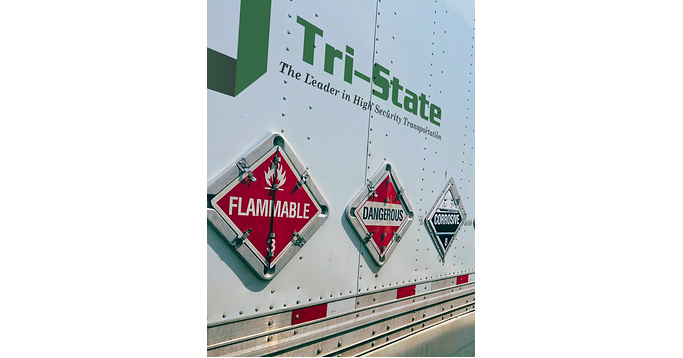
Tri-State (Roadmaster Group) highlights a FMCSA Safety Measurement System problem: 52 hazmat violations on 27,399 hazmat loads equate to a 0.18% rate, but the same 52 counts can map to ~6% for a carrier with hazmat on only 5% of loads. The article argues the scoring is volume-blind and also misattributes many hazmat violations to carriers even though shippers are responsible for placarding. Tri-State cites a prior multi-million-dollar fine exposure that was resolved after it proved its per-load violation rate was far lower, implying potential compliance and contracting risk for shippers using raw violation counts.
Analysis
This reads less like a safety breakthrough and more like a procurement reset: if shippers start normalizing violations by hazmat exposure, the advantage shifts to carriers with scale, documentation depth, and a clean audit trail. That would modestly widen the moat for specialized operators and raise the cost of doing hazmat for opportunistic general freight carriers that only touch it occasionally. The immediate public-market read-through is limited, but the second-order effect is tighter vendor screening and potentially longer tender cycles as shippers add their own compliance overlays.
Near term, I would not trade the headline itself; this is a private-company advocacy piece, not a verifiable change in loss rates or regulation. The actionable catalyst is 1-3 months of shipper RFP language and FMCSA commentary, with 6-18 months for any meaningful scorecard redesign or insurance repricing. The main tail risk is a high-profile hazmat incident, which could accelerate enforcement and raise claims costs across trucking, rail, and warehouse handling chains.
The contrarian view is that most buyers will not do the math, and the procurement process may remain anchored to legacy SMS tiers because they are easy to use. If so, the benefit to specialist carriers is overstated and the only real winner is whoever can package compliance as a service. For public names, there is no clean immediate signal in CARR or STT; the more relevant watchlist is large carriers and logistics intermediaries with hazmat-adjacent exposure and strong compliance infrastructure.
AllMind Terminal
AI-powered research, real-time alerts, and portfolio analytics for institutional investors.
Request TrialMarket Sentiment
Overall Sentiment
mildly negative
Sentiment Score
-0.15
Key Decisions for Investors
- No immediate trade in CARR or STT; the article has no direct fundamental linkage, so avoid forcing a position on headline noise.
- Watch KNX, JBHT, and SNDR over the next 1-3 months for any disclosure that shippers are changing carrier scorecards or requiring exposure-adjusted hazmat metrics; if confirmed, that would support a relative long in scaled carriers vs weaker peers.
- Do not short the truckload group on this headline alone; the likely market impact is procurement friction, not a near-term earnings hit, and the signal is too weak without third-party data.
- Set a regulatory alert on FMCSA SMS revisions and any insurer commentary on hazmat underwriting; a formal move toward per-load normalization would be the real catalyst, not this PR.
- If a second-party carrier incident or enforcement action hits the tape, revisit a long large-scale compliance-heavy transporter vs short small general-freight hauler pair; until then, keep it on the watchlist.
More News
- US forces disable ship ‘attempting to run’ Iran blockade in Gulf of Oman
- Attack on Saudi airport kills 12 people and wounds more than 300—the deadliest strike in any Gulf Arab country since the start of the Iran war
- Musk says Terrafab chip factory could outperform rivals despite challenges
- Will Warner Bros. kill Skydance — or will David Ellison kill Warner Bros?
- Last-Minute Lawsuit Upends Cable One’s $480 Million Mega Broadband Deal
- Ship captains and crews transiting the Strait of Hormuz make so much danger pay that they’re ‘almost being viewed as mercenaries’