
Am Rande der Gateway Gulf 2026: Mumtalakat und die ARP Group schließen sich zusammen, um eine KI-basierte Großbank in Bahrain zu gründen
Source: PR Newswire
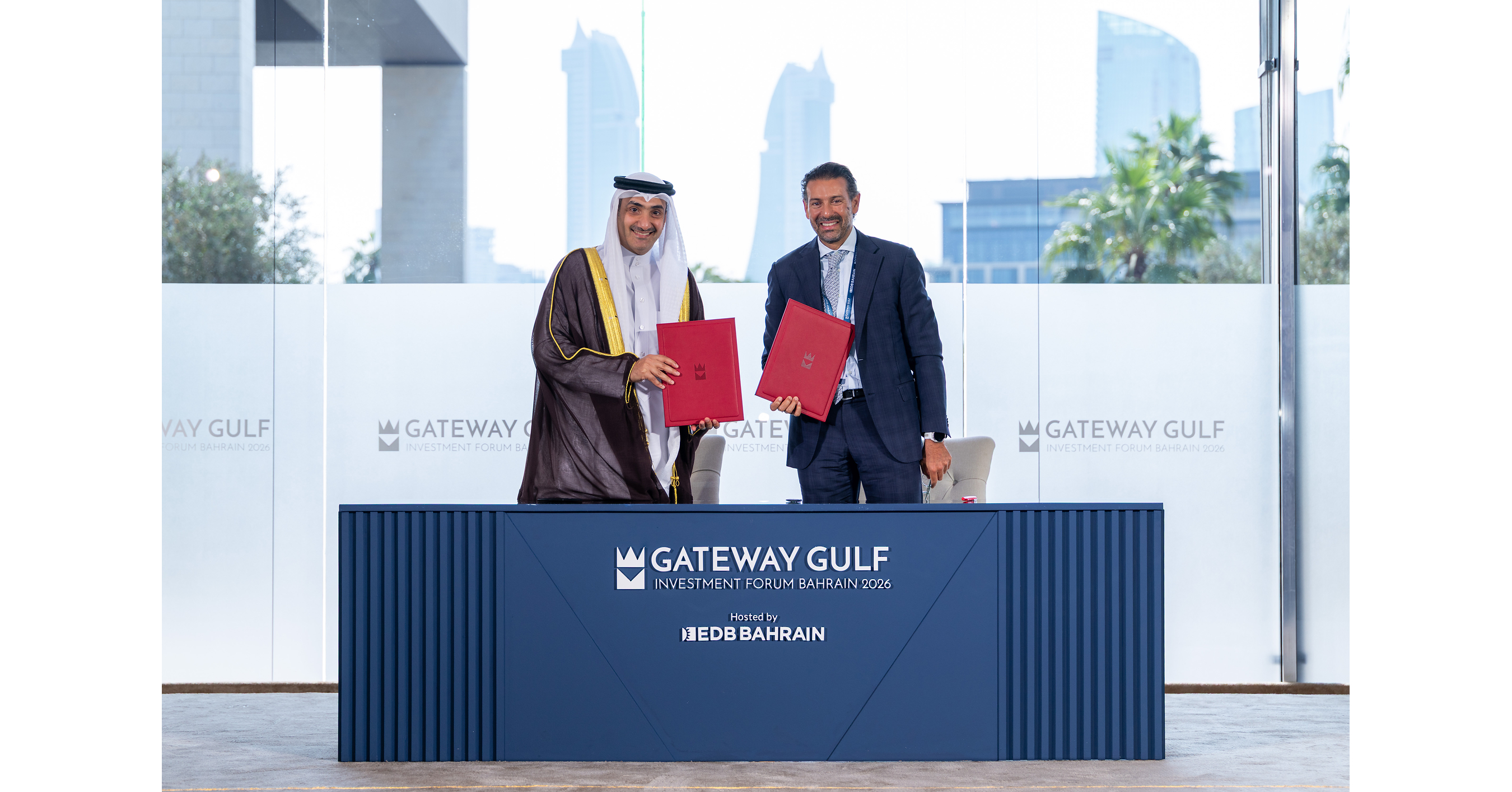
Bahrain’s Mumtalakat and ARP Group are partnering to establish an AI-based, blockchain-enabled wholesale bank headquartered in Bahrain, targeting institutional clients with cross-border banking needs. The Central Bank of Bahrain has granted in-principle approval, but the bank cannot begin regulated operations until it receives final approval; products and services are planned for gradual rollout. The partners cite potential efficiency gains and support for Bahrain’s financial sector, but no investment amount or launch timetable was disclosed.
Analysis
The competitive threat is less “AI replaces banks” than a possible repricing of cross-border banking as an API-led service. If this venture wins institutional payment and treasury flows, established providers such as HSBC, Standard Chartered, Emirates NBD and Qatar National Bank could face pressure on service fees and retention at the margin; the larger risk is that clients use the platform to route more activity across multiple banks, shifting bargaining power toward the interface rather than eliminating incumbent balance sheets. Conversely, regulated banks with correspondent access, liquidity and established compliance controls retain advantages that software alone cannot replicate.
Near term, the announcement is not an earnings catalyst: preliminary regulatory approval is not permission to operate, and the product rollout, customer commitments, capital base and funding model remain unverified. Over 1–3 months, watch for final licensing, named anchor clients, and clarity on permitted activities and connectivity to correspondent networks. Over 6–18 months, successful integration could pressure transaction-service economics; execution, cyber, model-governance, sanctions and operational risks could instead limit adoption or raise costs. The key contrarian point: the hard constraint is likely trust, regulatory permissions and balance-sheet access—not AI capability. There is insufficient evidence to underwrite a direct competitor trade today.
AllMind Terminal
AI-powered research, real-time alerts, and portfolio analytics for institutional investors.
Request TrialMarket Sentiment
Overall Sentiment
mildly positive
Sentiment Score
0.35
Key Decisions for Investors
- No immediate directional position: treat this as a strategic signal, not evidence of material revenue displacement or a near-term earnings change.
- Set a catalyst watch for final Central Bank of Bahrain authorization, launch scope, anchor institutional customers, and evidence of correspondent-bank access; without these, the thesis remains aspirational.
- Reassess regional bank exposure only if customer wins or transaction-flow data indicate measurable share loss, pricing pressure, or weaker transaction-banking guidance at incumbents such as HSBC, Standard Chartered, Emirates NBD or Qatar National Bank.
- Falsify the disruption thesis if approvals stall, rollout remains limited, or institutional adoption fails to extend beyond pilots; upgrade the risk if the venture demonstrates repeat usage and material cross-border volumes while incumbents flag fee or retention pressure.
More News
- As Trump eyes new attack, Iran vows to retaliate beyond the Mideast and target financial assets, while oil markets brace for generational damage
- Why AI is boosting Meta's ad business while hurting Google search
- Binance sees outflows stabilising as exchange returns online after $6.3 billion heist
- Binance sees $3.64 billion in net outflows as withdrawals resume after massive hack
- 2026 was meant to be the Philippines’ year—yet the country remains stuck in an ‘recurring cycle of underachievement’
- Here are 3 big things we're watching in the stock market in the week ahead