
Nvidia: Stop The Bubble Talk
Source: seekingalpha.com
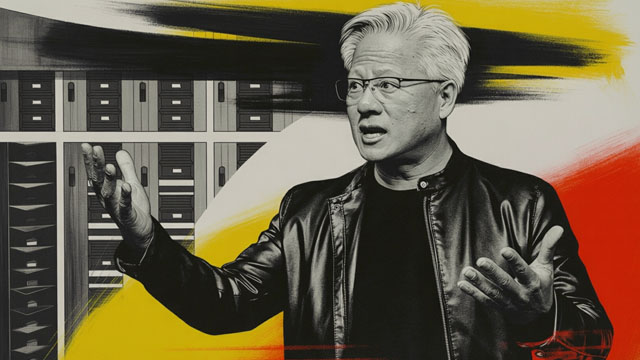
Nvidia was upgraded to Buy with a $300 fair-value estimate after Q2 revenue reached $96.2B, including $89B in data-center sales, and free cash flow totaled $21.3B. Management indicated approximately 70% fiscal-2028 revenue growth, with demand still constrained by supply. Hyperscaler capital spending and backlog, neocloud expansion, and memory scarcity are viewed as reinforcing Nvidia's AI-platform pricing power and durability.
Analysis
The investable implication is not simply higher accelerator demand: platform standardization raises switching costs and shifts the debate from unit growth to sustained gross-margin durability. If enterprise inference and sovereign AI workloads increasingly require the CUDA/software stack rather than interchangeable hardware, NVDA can preserve premium pricing even as custom ASIC deployments at GOOGL, AMZN and META grow. The key 6-18 month risk is that supply normalization converts today’s backlog into a more conventional replacement cycle, exposing the stock to multiple compression before revenue decelerates.
Memory tightness is a favorable near-term constraint for NVDA’s system economics but a cleaner earnings lever for Micron (MU), whose HBM mix and pricing should improve through the next two to four quarters. The second-order beneficiaries are power and thermal bottlenecks—Vertiv (VRT), Eaton (ETN) and Schneider Electric (SU.PA)—because rack-level power density requires spending that cannot be deferred as easily as accelerator purchases. These infrastructure names offer a less crowded way to express AI capex, albeit with greater sensitivity to data-center construction timing.
Consensus appears to extrapolate hyperscaler capex without sufficiently distinguishing deployed compute from economically productive compute. A pause in cloud AI monetization commentary, rather than a reduction in announced capex, would be the first meaningful warning signal and could trigger a 15-25% de-rating in high-duration AI equities over 1-3 months. Falsify the constructive thesis if NVDA’s next guidance implies material gross-margin erosion, lead times normalize while inventories rise, or aggregate capex guidance from MSFT, AMZN, GOOGL and META turns negative sequentially.
AllMind Terminal
AI-powered research, real-time alerts, and portfolio analytics for institutional investors.
Request TrialMarket Sentiment
Overall Sentiment
strongly positive
Sentiment Score
0.78
Ticker Sentiment
Key Decisions for Investors
- Maintain/establish NVDA long only on post-earnings or broad-tech pullbacks; use a 6-12 month horizon and size for a potential 20% drawdown. Do not chase a momentum gap without current valuation, forward gross-margin, and backlog-conversion data.
- Pair long MU / short SOXX for the next 2-4 quarters as HBM scarcity and pricing create more direct operating leverage at MU than at diversified semiconductor peers. Exit if HBM supply additions materially reduce contract pricing or MU guides gross-margin expansion below expectations.
- Buy VRT or ETN on weakness as a 6-18 month AI physical-infrastructure expression; prefer a basket over a single name given execution and valuation risk. The trade fails if hyperscalers delay data-center commissioning, evidenced by weaker backlog conversion or order-growth deceleration.
- Use NVDA downside protection around the next hyperscaler earnings cycle via 3-6 month put spreads rather than reducing strategic exposure outright; the catalyst is a monetization-related capex pause, and the hedge should be reassessed if aggregate hyperscaler capex guidance remains resilient.
More News
- On the ground at Nvidia GTC Berlin: Jensen Huang, robot ducks and neocloud distress
- After previous day’s slump, trading is quieter among AI shares
- Can Nvidia’s stock become a safe haven as Wall Street rethinks the AI trade?
- Forget Mars, SpaceX's Most Important Business Has Nothing To Do With Space (At Least For Now)
- Wayve, Stellantis and Nvidia team up with France on self-driving cars
- Here's the AI Chip Stock That Hedge Funds Are Loading Up On