
CTM y Huawei se asocian para reforzar la seguridad de la red en la era de la IA
Source: PR Newswire
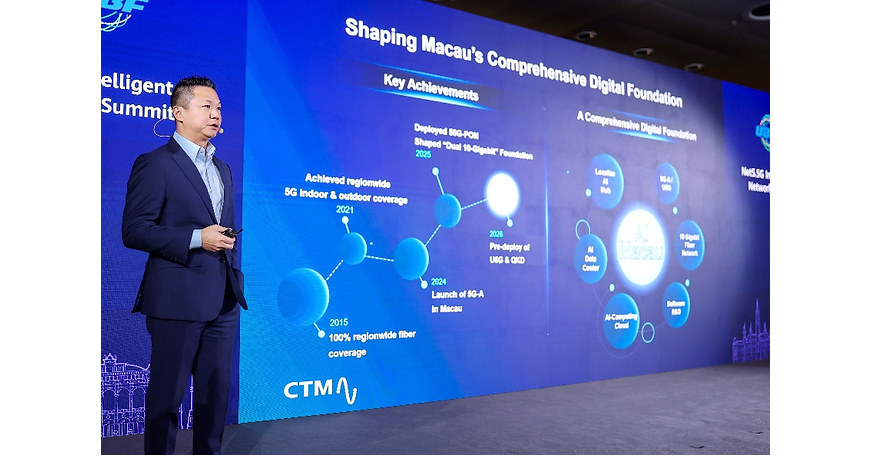
At Network X 2026, CTM outlined plans to build an intelligent, deterministic and secure network for Macao, using AI-enabled gateways and telemetry to route traffic and move toward automated optimization. CTM and Huawei are also jointly developing an IP architecture integrating quantum key distribution (QKD), which they say could reduce O&M costs and support secure data transmission in critical sectors. The announcement describes technology plans and potential benefits but provides no financial figures or implementation timetable.
Analysis
This is a roadmap announcement, not evidence of booked revenue or deployed, independently validated performance. The investable question is whether operators can turn network telemetry and security functions into paid enterprise service tiers—not whether AI or QKD appears in the architecture. If customers pay for differentiated latency, availability, or managed DDoS/IPS, operators could defend enterprise economics and reduce reliance on connectivity pricing. But automated traffic routing that lowers international bandwidth costs may initially benefit margins more than top-line growth; savings could also be competed away in customer pricing.
The nearer-term competitive pressure is on commoditized network-security offerings: carrier bundles could displace some standalone perimeter products, while complex security operations and endpoint protection remain harder to substitute. Huawei may gain a reference deployment, but adoption outside Macau is constrained by procurement and geopolitical considerations; this limits how broadly the announcement can be extrapolated. QKD is a particularly weak near-term monetization thesis: operators still need to demonstrate customer demand and total-cost advantage versus post-quantum cryptography.
Over 1–3 months, look for deployment scope, enterprise contracts, and evidence of paid service uptake. Over 6–18 months, the structural test is whether automation lowers operating costs without degrading service or triggering price competition. No company identities or tickers are supplied, and the announcement alone does not support a directional equity trade.
AllMind Terminal
AI-powered research, real-time alerts, and portfolio analytics for institutional investors.
Request TrialMarket Sentiment
Overall Sentiment
mildly positive
Sentiment Score
0.25
Key Decisions for Investors
- No trade on the announcement alone. Treat it as a technology roadmap and require evidence of commercial deployment before underwriting revenue or multiple expansion.
- Watch for CTM disclosures on paying enterprise customers, security-service attach rates, service-level pricing, and realized bandwidth or operating-cost savings; distinguish pilots and technical validation from recurring revenue.
- Monitor incumbent security vendors for signs that telecom bundles are winning commodity DDoS, IPS, or phishing budgets. Do not assume displacement of broader cybersecurity spend without customer or contract evidence.
- Treat QKD as a long-dated option, not a near-term catalyst. Reassess only if CTM and Huawei disclose deployment scale, customer demand, and a cost comparison with post-quantum cryptography.
- Falsifiers for the commercial thesis include delayed deployment, no paid enterprise uptake, savings passed through as lower connectivity prices, or procurement restrictions that prevent Huawei-related deployments from scaling beyond Macau.
More News
- Why did CoreWeave stock get crushed this week? Look to this corner of the debt market for clues
- AI stock sell-off ramps up over debt-fueled data center spending fears: ‘Full-blown crisis of confidence'
- Dow falls 189 points as AI stocks slide and oil prices surge
- Wall Street Anxiety Spreads as AI Rout Meets $110 Oil Shock
- Wall Street's fear gauge is ripping. Traders see it going even higher
- All the news about the iPhone Duo