
Huntington Beach Becomes California's First Sensory-Inclusive Destination, Certified by KultureCity
Source: PR Newswire
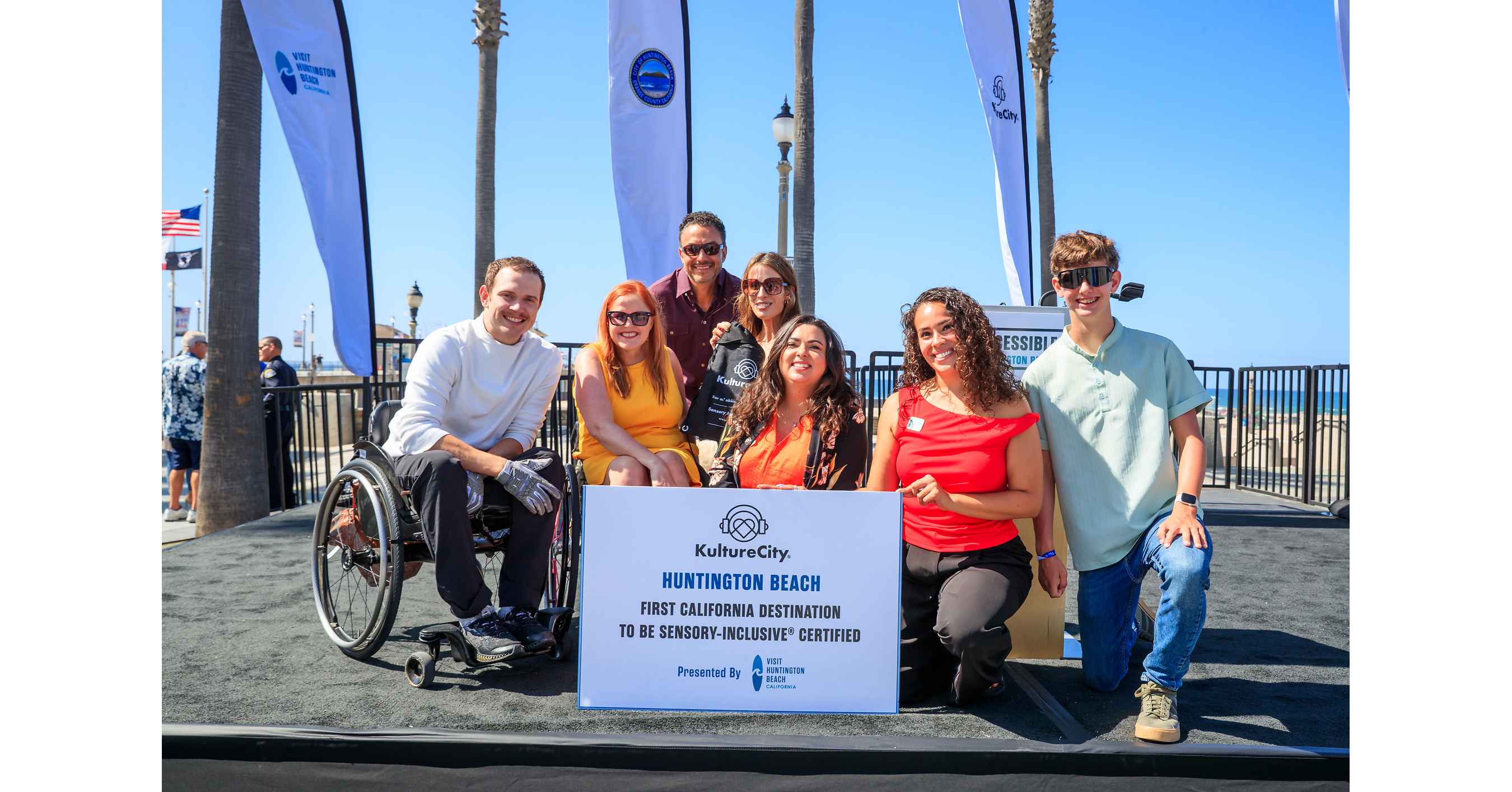
Huntington Beach became California's first destination to receive KultureCity's Sensory Inclusive Certification, with more than 1,538 tourism, city and public-safety staff completing specialized training. The initiative complements three years of accessibility mapping with Wheel the World, which has assessed nearly 30 hotels, attractions and venues and generated 1,141 accessibility data points. The program broadens accessible tourism offerings, including beach wheelchairs, Mobi-mats, adaptive surfing and accessible bonfires, but is unlikely to have material market impact.
Analysis
This is not a listed-equity catalyst and should not be treated as one. The likely economic effect is diffuse: improved conversion among travelers requiring verified accessibility information may modestly raise occupancy and ancillary spend for participating properties, but any revenue lift will be immaterial relative to Southern California lodging demand drivers such as airline capacity, convention calendars, consumer discretionary budgets, and coastal weather.
The more investable second-order implication is for private travel-tech platforms that convert accessibility data into bookable inventory. Wheel the World's value proposition improves only if verification translates into higher booking conversion, lower trip-disruption/refund rates, and repeat demand; those metrics are not disclosed. Larger online travel agencies such as BKNG, EXPE and ABNB could eventually absorb accessibility filters and standardized property data, limiting the platform's differentiation and bargaining power.
Over 6-18 months, destination-wide accessibility standards can become a procurement and reputational requirement for hotel operators, attractions, and municipalities rather than a demand differentiator. That favors scaled lodging brands with centralized training and property-data systems, including MAR, HLT and H, while independent operators face incremental compliance and staffing costs. The near-term market impact remains below tradable thresholds absent evidence of measurable occupancy, ADR, or booking-conversion uplift.
AllMind Terminal
AI-powered research, real-time alerts, and portfolio analytics for institutional investors.
Request TrialMarket Sentiment
Overall Sentiment
moderately positive
Sentiment Score
0.42
Key Decisions for Investors
- No standalone trade: the stated impact is too small and there is no public-company exposure directly tied to the initiative.
- Add a watch item for BKNG, EXPE and ABNB: monitor whether accessibility attributes become prominent searchable/bookable inventory fields over the next 1-3 quarters; a platform-wide rollout could improve conversion in an underserved segment but would require disclosed booking or engagement data before positioning.
- For hotel exposure, retain preference for asset-light MAR and HLT over smaller independent-lodging proxies on a 6-18 month horizon if accessibility requirements proliferate; thesis is falsified if training and verification costs fail to scale or franchisee adoption remains voluntary and fragmented.
- Do not extrapolate this announcement into a Southern California lodging-demand call. Any long lodging position should instead await high-frequency evidence of Orange County RevPAR acceleration versus Los Angeles/San Diego and confirmation that ADR gains are not offset by leisure-demand normalization.
More News
- Pokémon card curbs send shares of Japanese online marketplace Mercari on a bumpy ride
- How record diesel prices will rip through the U.S. economy. Trucks and rails are only the start
- Rising oil, rates and yields brew up stagflation cocktail for markets
- ‘Stronger together’: Carney welcomes EU invite for Canada to become first-ever associate member
- EPA immediately sued over plans to repeal climate rules for power plants
- Oil is back above $100—but economists say that number isn’t the real threat to the U.S. economy
From AllMind Research
- Anthropic IPO Preview: Valuation, Timing, and What to Watch
- Shein After the IPO: Venue, Valuation, and What Must Be Proved
- What AI Research Tools Should a Small Hedge Fund Buy First?
- Research Workflows, Report Format Selection, and Interactive Synthesis
- Can ChatGPT Analyze a 10-K? A Verification Workflow