
CEG Stock Outperforms Industry in 3 Months: Time to Buy or Hold Now?
Source: zacks.com
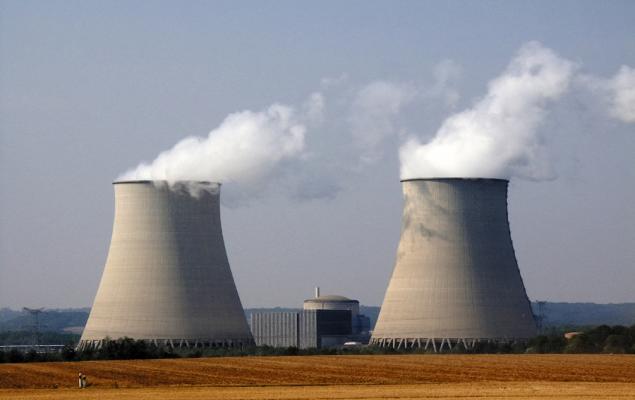
Constellation Energy shares gained 0.4% over three months while its industry fell 14%; its nuclear fleet recorded a 93% capacity factor in Q2 2026, and analyst EPS estimates rose 0.91% for 2026 and 0.46% for 2027 over 60 days. Google and Amazon power agreements, a 14.89% trailing ROE, and a forward P/E of 20.22x support the outlook, but forced outages rose to 6.2% from 4.5% sequentially and debt-to-capital is 43.32%, slightly above the industry's 42.93%. The article characterizes CEG as a Zacks #3 (Hold), citing debt, outage, regulatory and earnings-growth risks.
Analysis
The market is pricing CEG partly as an AI-power beneficiary, but contract headlines are not equivalent to attractive incremental returns: verify pricing, delivery shape, congestion exposure, duration, and required capital before assigning a premium to the Google and Amazon agreements. The key near-term distinction is whether the higher forced-outage measure reflects acquired-fleet mix or deteriorating performance at legacy plants. If it is primarily mix, the headline may overstate operating risk; if outages persist, lost generation and replacement-power costs could erode the very earnings visibility investors are underwriting.
Over 1–3 months, watch plant-level availability, integration costs, and guidance for acquired assets—not the aggregate capacity factor alone. The reported EPS estimate revisions favor CEG over Vistra, but are small and do not establish a durable earnings divergence. CEG’s industry-relative P/E discount is not a clear margin of safety without comparable business mix, debt, and capital-return assumptions. Over 6–18 months, data-center load growth supports nuclear bargaining power, while large capex and higher rates raise the hurdle for uprates, storage, and other growth projects. A reversal in data-center buildouts, weaker power prices, or adverse policy changes would challenge the demand thesis. The contrarian risk is that investors are treating contracted demand as de-risked growth while underweighting delivery and balance-sheet execution; equally, acquired-asset outage noise could be mistaken for a structural fleet problem.
AllMind Terminal
AI-powered research, real-time alerts, and portfolio analytics for institutional investors.
Request TrialMarket Sentiment
Overall Sentiment
mixed
Sentiment Score
0.10
Ticker Sentiment
Key Decisions for Investors
- Do not chase CEG solely on the AI-power narrative. Keep it on a catalyst watchlist and reassess after the next operating update discloses like-for-like outage performance, acquired-fleet integration costs, and contract economics.
- Consider a relative-value CEG-versus-VST position only if the next estimate cycle confirms persistent earnings divergence and the outage gap narrows; avoid treating the small current revision spread as sufficient signal. Revisit or exit if CEG revisions turn negative or VST revisions recover materially.
- Use a sustained deterioration in CEG availability, a guidance reduction tied to replacement power or integration costs, or rising net debt as thesis-falsification signals. Conversely, improving comparable outage metrics alongside maintained guidance would reduce the operational-risk discount.
- For the 6–18 month thesis, monitor data-center power contracting and financing costs. Slower customer buildouts, weaker wholesale power prices, or higher rates that impair project returns would undermine the growth case; verify contract-level disclosures before attributing meaningful earnings upside.
More News
- Asia stocks rebound as SpaceX, Super Micro results lift chipmakers
- This Janus Henderson fund manager owns CoreWeave debt — here's why he's sticking with it
- SpaceX posts first operating profit as public company as AI revenue nearly triples to $7.6 billion—cruising past Starlink
- Anthropic in talks with neocloud Nscale over second multibillion-dollar deal, source tells CNBC
- Obsessed with CoreWeave and the AI trade? You're missing out on some great stocks
- Why is Netflix stock sliding today?