
Russian Drones Are Already Killing People Within EU Territory
Source: Bloomberg
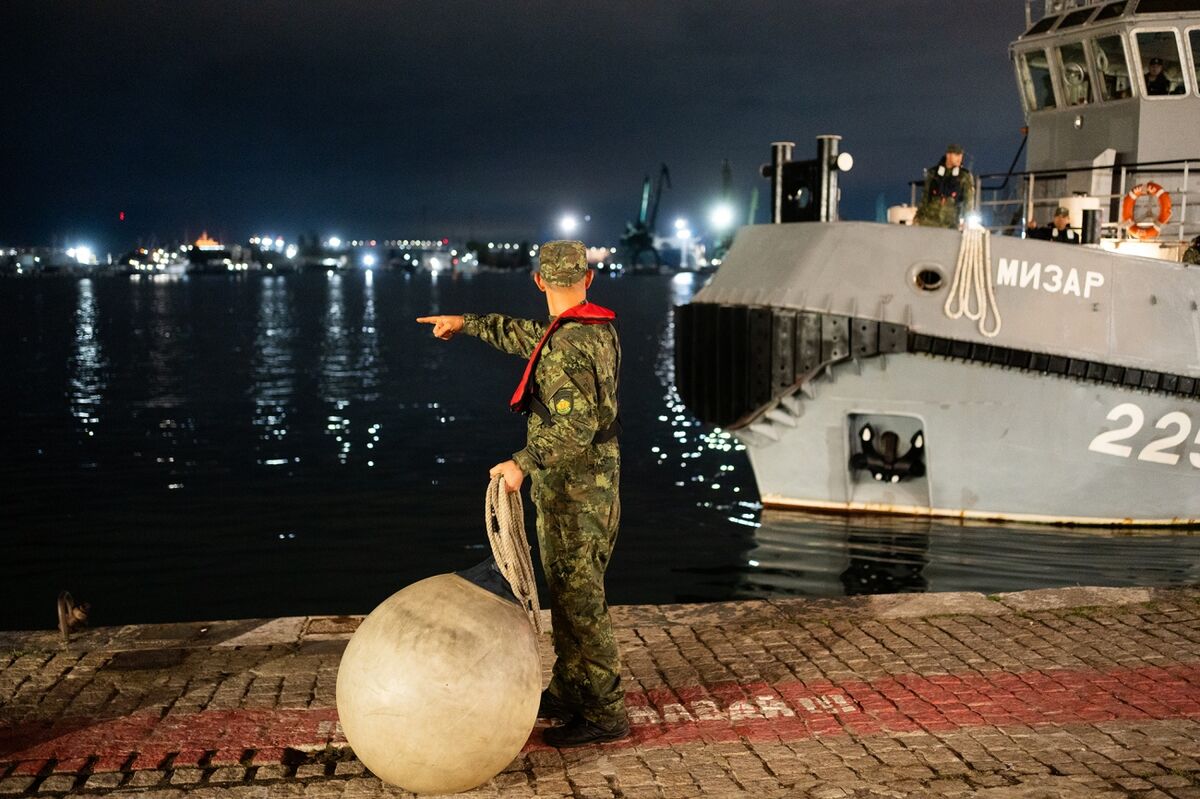
Seven commercial ships have been attacked by Russian drones off Bulgaria and Romania since the start of October, killing more than two dozen sailors, according to the two countries’ authorities. Bulgarian shipbroker Yordan Petrov says he no longer sends vessels into the Black Sea, calling those who still do “kamikazes.”
Analysis
The investable channel is not a broad European growth shock; it is a localized repricing of route access, war-risk cover, and operational continuity. If underwriters raise premiums or restrict cover, exposed voyages become uneconomic before any measurable hit appears in reported earnings. Longer detours or vessel avoidance could tighten available capacity and lift freight costs for Black Sea cargoes, with downstream pressure on traders and importers; that is conditional on disruption persisting, not established by the incident count alone.
Near term, markets may price escalation faster than fundamentals. Over 1–3 months, watch for insurer notices, port restrictions, vessel traffic and freight/war-risk quotes. Over 6–18 months, sustained risk could redirect cargo flows and favor alternative ports and routes, while raising costs for operators unable to redeploy. The tail risk is an attack with clearly established NATO-member territorial consequences that triggers a broader security response. Conversely, verified safe passage, limited insurance repricing, or evidence that incidents are geographically contained would weaken the thesis.
Contrarian angle: a serious security event does not automatically make all European transport or trade uninvestable. The economic exposure is likely concentrated by route, cargo and insurance terms; a blanket short of European logistics risks paying for an escalation premium that does not reach consolidated earnings. Attribution, exact locations, affected cargoes and actual insurance changes need verification before sizing a trade.
AllMind Terminal
AI-powered research, real-time alerts, and portfolio analytics for institutional investors.
Request TrialMarket Sentiment
Overall Sentiment
strongly negative
Sentiment Score
-0.60
Key Decisions for Investors
- Do not make a broad European transport short on this report alone. Track war-risk premiums, insurer cover terms, vessel traffic and freight rates; consider reducing exposure only where holdings have demonstrable Black Sea route dependence.
- Set an escalation alert: reassess risk if verified attacks lead to port restrictions, sustained vessel avoidance, or materially tighter insurance terms. Those are stronger evidence of earnings transmission than casualty headlines alone.
- If disruption becomes persistent, evaluate a relative-value position favoring diversified defense exposure over route-sensitive European transport, sized as an escalation hedge rather than a standalone earnings call. Confirm exposure and valuation first; avoid assuming every transport name is affected.
- Falsify the disruption thesis if independent reporting fails to confirm the locations or attribution, shipping and insurance conditions remain stable, and operators maintain normal access. Do not pay for an options hedge without evidence that volatility or implied premiums remain attractive.
More News
- Jio IPO Sees Overwhelming Demand on Day One Even as Nifty Struggles
- Why the stock market’s fragile calm faces a major test starting Friday
- One killed, eight injured in attack on Saudi Arabia’s King Fahd airport
- Futures orbit around SpaceX as Tesla merger talk cheers investors
- US orders departure of personnel from Saudi Arabia, citing Houthi threat
- Sovereign wealth funds' China and Hong Kong investments surge 190% after a bruising slump