
Bind AI Launches the AI Workforce for Insurance, Live With Hundreds of Agencies and Billions in Commercial Premium
Source: PR Newswire
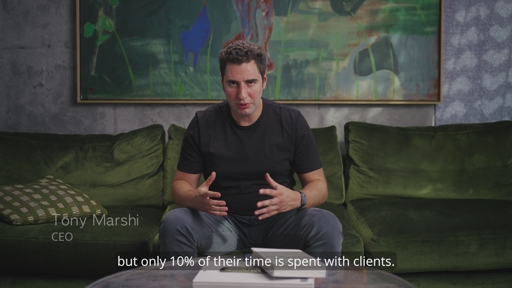
Bind AI announced its public launch with $10 million in venture funding to date from Bonfire Ventures and other investors. The company says it is live with hundreds of insurance agencies representing billions of dollars in commercial premium, and has quoted hundreds of millions of dollars in premium across major carriers. Its AI automates brokers’ email- and portal-based intake, quoting, proposal and binding workflows.
Analysis
The investable question is who captures the productivity dividend—not whether an AI workflow can process paperwork. If agencies use the capacity to serve more accounts, incumbent brokers such as Aon, Marsh McLennan, Arthur J. Gallagher and Brown & Brown could benefit through higher producer throughput and retention without adding equivalent back-office labor. But brokers may pass savings to clients or face faster quote competition, limiting margin capture. More automated submissions could also overwhelm carrier underwriting capacity; the bottleneck may shift from broker processing to carrier appetite, pricing and decision speed.
The competitive threat is to the workflow layer: an inbox-and-portal agent that becomes the broker’s operating interface could weaken the value of standalone agency software. Incumbent systems and carrier portals can respond with their own automation, while integration friction and permission/security concerns may slow displacement. Errors in quoting or binding create E&O and trust risks that demos do not establish away.
Near term, treat the launch and VC backing as weak evidence of commercial scale: premium touched or quoted is not revenue, bound business, or measured labor savings. Over 1–3 months, verify paid agency adoption, retention, implementation effort, task-completion/error rates and whether carriers permit reliable portal automation. Over 6–18 months, the structural test is whether agencies convert saved hours into more revenue per employee and whether Bind AI retains workflow ownership as incumbents respond. There is no clean public-equity exposure to the startup in the supplied data; the productivity thesis is plausible, but no forced trade is warranted.
AllMind Terminal
AI-powered research, real-time alerts, and portfolio analytics for institutional investors.
Request TrialMarket Sentiment
Overall Sentiment
mildly positive
Sentiment Score
0.35
Key Decisions for Investors
- No immediate public-equity trade: the announcement provides no independently verified recurring revenue, unit economics, or public-company exposure. Do not treat premium volume processed as revenue.
- Add a watch item on listed insurance brokers—Aon, Marsh McLennan, Arthur J. Gallagher and Brown & Brown—for explicit evidence of AI-driven producer capacity, service-cost reduction, or improved retention in earnings commentary; only then reassess the productivity upside.
- Track agency-software vendors and carrier workflow providers for evidence of bundling or competing automation. A credible incumbent product launch or broker preference for existing systems would weaken the standalone-AI displacement thesis.
- Falsifiers: low conversion from pilot to paid use, weak renewal/retention, material quote or bind errors, costly integrations, or carrier restrictions on portal automation. Conversely, verified recurring contracts plus sustained time savings and higher agency output would strengthen the longer-term thesis.
More News
- Anthropic's third-quarter revenue is said to hit $16.8 billion ahead of IPO
- Why is Samsung Electronics stock plunging today?
- SK Hynix plunges 8% amid Asia tech rout as Fed rate hike fears, AI funding worries mount
- Elon Musk says Trump is 'ultimately' responsible for any curbs on Ukraine's Starshield systems
- SK Hynix seeks U.S. chip equipment exports to China tied to new factory
- Dell stock plunges 11%, leading data center sell-off on concerns about 'enterprise AI timing'