
AMD: The Easy Money Is Gone
Source: seekingalpha.com
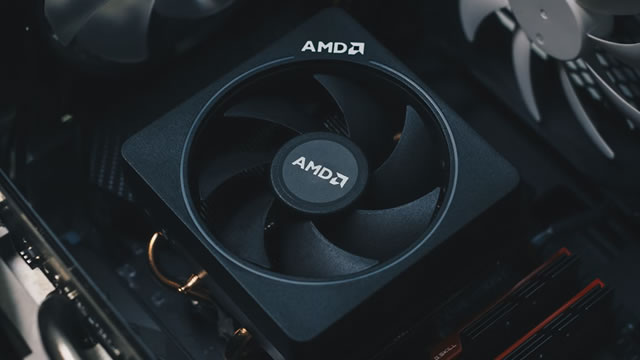
AMD posted record Q2 results and issued robust guidance, supported by Helios ramp and major AI/data-center deployments involving OpenAI, Meta, Anthropic, and Microsoft. Despite the upbeat fundamentals, shares fell as investors grappled with lofty expectations and competitive threats. Risks include customers shifting to in-house chips and SpaceX’s exclusive Nvidia approach, which may pressure AMD’s merchant GPU outlook.
Analysis
The market is treating AMD as a proof-of-durability story, not a beat-and-raise story. In AI hardware, the valuation hinge is whether revenue comes from sticky platform adoption or from one-off capacity fills; the latter supports near-term growth but not a premium multiple. The selloff says investors are discounting the probability that hyperscalers keep migrating toward in-house silicon, which would cap AMD’s long-run merchant GPU share and compress gross-margin mix even if top-line growth stays strong.
NVDA is the cleaner relative winner because the ecosystem, software lock-in, and allocation priority matter more than isolated shipment wins. High-profile customer commitments to one stack reinforce a path-dependent buying pattern: once training clusters standardize, switching costs rise and the incumbent collects disproportionate wallet share. META and MSFT are mixed: they can use custom silicon to lower AI compute cost, but that same behavior shrinks the addressable market for third-party accelerators over 6-18 months.
Near term, the key catalyst is whether AMD converts design wins into visible production revenue faster than the market assumes; if not, the stock likely remains a multiple story even on good execution. The contrarian view is that the move may be overdone if investors are extrapolating custom-chip adoption too quickly—deployment cycles are long, and most AI budgets still require merchant GPUs before internal silicon reaches scale. What would falsify the bearish AMD thesis is a second consecutive quarter of accelerating data-center growth plus evidence that AI revenue is becoming a larger, higher-margin mix rather than just volume fill.
AllMind Terminal
AI-powered research, real-time alerts, and portfolio analytics for institutional investors.
Request TrialMarket Sentiment
Overall Sentiment
neutral
Sentiment Score
-0.05
Ticker Sentiment
Key Decisions for Investors
- Preferred relative-value trade: long NVDA / short AMD into the next 1-2 earnings cycles; thesis is ecosystem durability over incremental share gains. Risk: if AMD shows faster-than-expected production conversion and margin expansion, the spread can snap back.
- Avoid pressing an outright short in AMD immediately after the post-earnings drop; wait for either a failed bounce or a guide check from a hyperscaler before adding. Best entry is on any relief rally that stalls, not on panic weakness.
- For investors wanting exposure to AI capex with lower vendor-specific risk, consider long META or MSFT vs short AMD as a pair; the bet is that in-house chips improve buyer economics while merchant silicon TAM slows. Falsify if cloud capex commentary re-accelerates toward external GPU spend.
- Set an alert for the next two quarterly guides: if AMD does not raise its medium-term AI revenue framework, expect further multiple compression relative to NVDA and SOXX.
- If NVDA momentum remains strong while AMD underperforms, use the divergence to add via a call spread in NVDA rather than buying AMD dips; the market is paying for platform control, not just revenue growth.
More News
- OpenAI projected to bring in $20bn less in revenue than expected
- US suspends Microsoft and Adobe from visa programme amid fraud claims
- Nasdaq 100: Tech Stocks Find Buyers as Dow Holds Firm Premarket
- Trump admin suspends green cards to Microsoft as Vance accuses the company of replacing laid-off workers with ‘foreign indentured servants’
- Nvidia, Oracle, CoreWeave and other AI stocks sink on OpenAI revenue report
- Nvidia-backed Aussie AI firm Firmus withdraws historic IPO, citing market volatility