
ATTACK SHARK annonce un partenariat stratégique avec l'équipe League of Legends de Cloud9 Esports
Source: PR Newswire
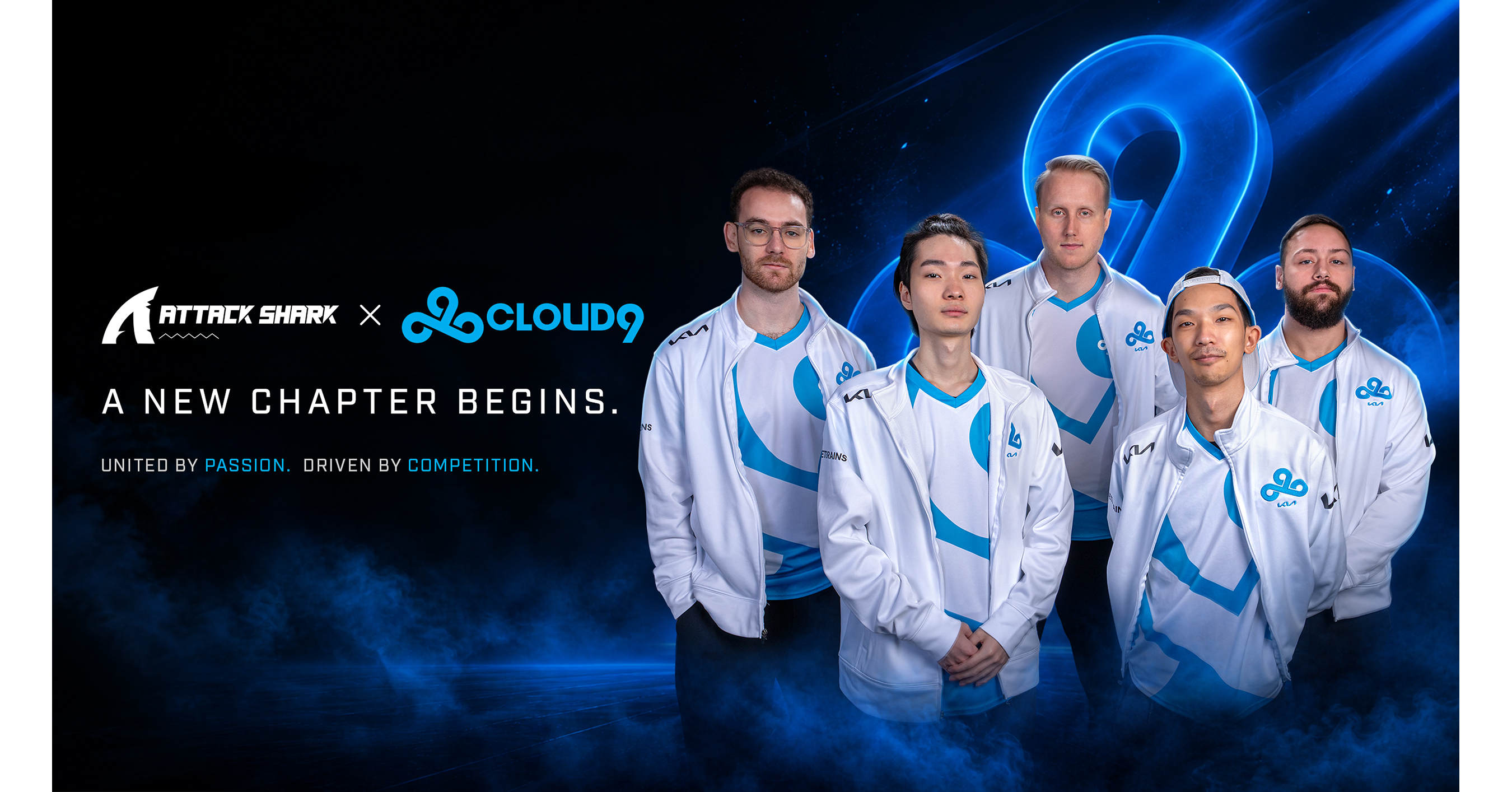
Gaming-peripherals brand ATTACK SHARK announced a partnership with Cloud9 Kia focused on the organization’s League of Legends team. ATTACK SHARK will supply its latest peripherals for professional training and competition while both parties produce esports, gaming-culture and competitive-hardware content across digital, social and e-commerce channels. The deal strengthens ATTACK SHARK’s esports marketing reach, but no financial terms or revenue targets were disclosed.
Analysis
This is primarily a customer-acquisition and brand-credibility exercise for a private, value-oriented peripherals vendor, not a read-through for listed gaming hardware. The relevant public implication is modestly negative at the margin for Logitech (LOGI), Corsair (CRSR) and potentially Razer parent Candele International, if ATTACK SHARK converts esports affiliation into lower-cost social-commerce distribution and takes share in entry-to-mid-tier mice and keyboards. The larger competitive pressure is likely on Amazon marketplace sellers and smaller accessory brands, where product differentiation is already thin and sponsorship-driven conversion can compress pricing and ad-spend returns.
Near term, there is no investable earnings catalyst: no disclosed sponsorship economics, retail channel commitments, sell-through data, or evidence that esports content translates into durable hardware conversion. Over 1-3 months, monitor ATTACK SHARK’s Amazon rankings, promotional intensity, creator-content engagement, and whether Cloud9 integrations expand beyond team equipment into co-branded SKUs. A measurable rise in low-price wireless peripheral share would be more consequential for CRSR than LOGI, given CRSR’s weaker scale, more discretionary customer base, and less room to absorb gross-margin pressure.
The consensus risk is overstating esports sponsorship as a demand engine. Competitive gamers represent influential but narrow demand, and peripheral purchase cycles are long; sponsorship ROI often accrues to awareness rather than incremental unit sales. The thesis becomes relevant only if the partnership supports retail placement, recurring co-branded launches, or sustained pricing discipline—otherwise it is routine promotional spend with little public-market transmission.
For the 6-18 month horizon, the structural issue is continued premium-feature commoditization: lightweight wireless mice, high-polling-rate sensors, and mechanical keyboard features are increasingly available at lower price points. That favors component suppliers with broad OEM exposure more than branded peripheral vendors, but no specific listed supplier read-through is sufficiently clear from this announcement alone.
AllMind Terminal
AI-powered research, real-time alerts, and portfolio analytics for institutional investors.
Request TrialMarket Sentiment
Overall Sentiment
mildly positive
Sentiment Score
0.32
Key Decisions for Investors
- No immediate trade: treat this as a watch item rather than a catalyst for LOGI or CRSR until third-party marketplace data show sustained ATTACK SHARK unit-share gains for at least 6-8 weeks.
- Maintain a relative-quality bias long LOGI versus short CRSR only if peripheral-channel data show renewed discounting below the $80-$100 wireless-mouse price band; LOGI’s diversified productivity mix and distribution scale should better withstand commoditization. Reassess if CRSR delivers gross-margin expansion or accessory growth above guidance.
- Set an alert around CRSR quarterly results for gaming-peripheral revenue, gross margin, inventory reserves, and promotional commentary. A sequential gross-margin decline of roughly 200 bps or explicit marketplace-price pressure would strengthen the downside case; stable margins and improving sell-through would falsify it.
- Avoid using esports exposure as a long thesis for public media or gaming-equipment names. The missing variables—sponsorship cost, attributable conversion, retail distribution, and repeat purchase behavior—prevent credible revenue sensitivity modeling.
More News
- Vertex reports positive IgAN trial data, FDA decision due Nov. 30
- Elon Musk’s dangerous grip on outer space
- Ukraine Says Restrictions on Starlink Speed Have Been Lifted
- AI agents could disrupt bank deposits. Why Wall Street may be overreacting
- Piero Cipollone: Interview with Milano Finanza
- ‘It wasn’t me, and I don’t think it was Elon’: Trump and his cabinet send mixed messages about what led to Ukraine’s Starshield interruptions