
9 in 10 Air Fryer Owners Want to Use it More -- Here's Where to Start
Source: PR Newswire
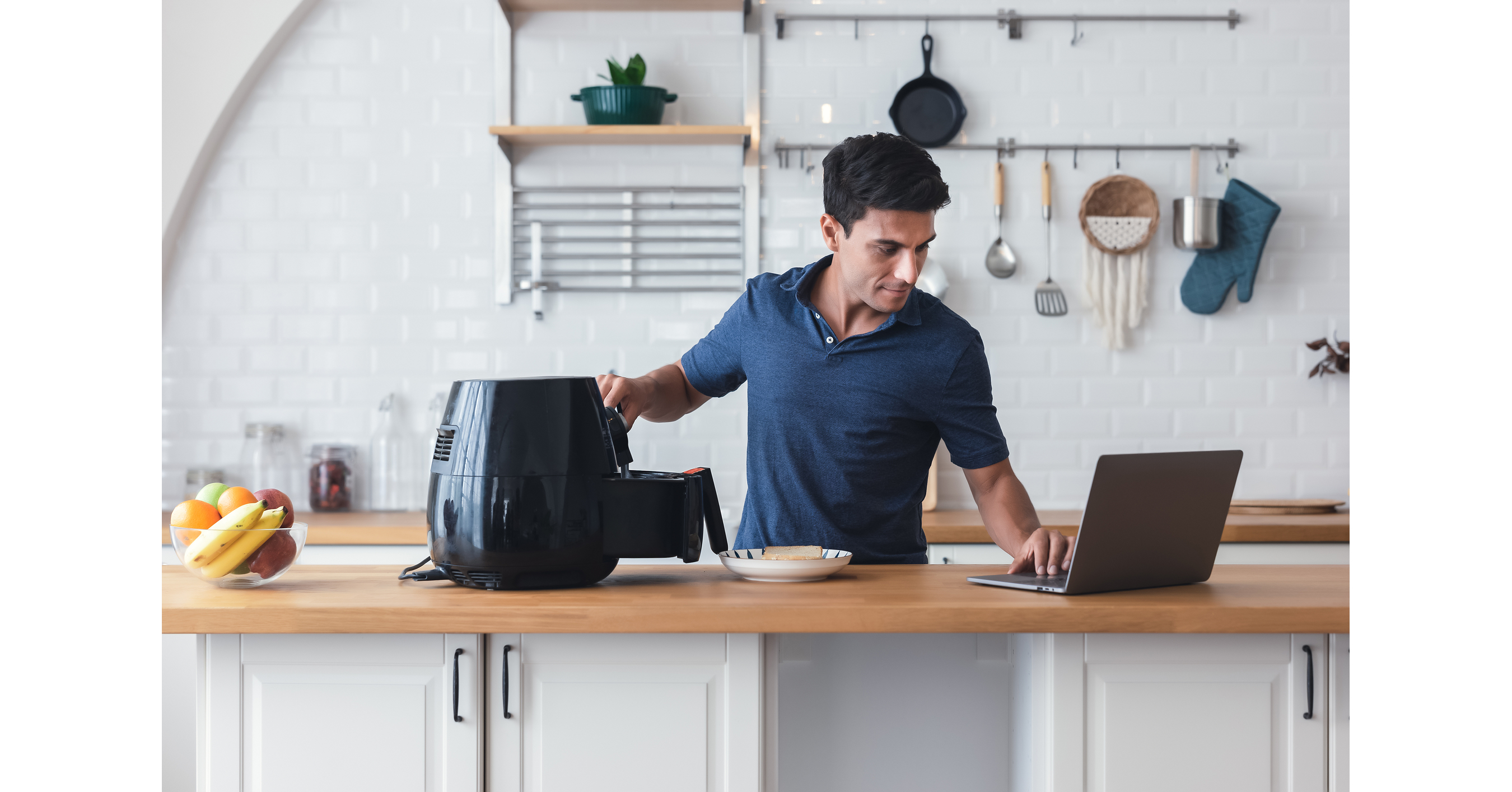
NFRA consumer research says air fryers are present in 70% of U.S. homes, while 90% of owners want to learn additional uses, supporting potential demand for frozen and refrigerated meal products. The association highlights a $6.47 per-occasion cost advantage for home-cooked meals ($1.94) versus restaurant meals ($8.41), alongside high consumer concern over food prices. The release is primarily promotional consumer guidance and is unlikely to materially affect public-market valuations.
Analysis
This is trade-association marketing rather than a demand datapoint, so it should not alter near-term estimates. The investable implication is narrower: improving air-fryer preparation guidance can raise repeat rates and reduce promotional dependence in frozen convenience categories, where ease-of-use is often the constraint on household penetration translating into consumption frequency. The likely beneficiaries are branded, differentiated frozen-food suppliers—Conagra (CAG), Lamb Weston (LW), J.M. Smucker (SJM)—rather than broad grocery retailers, which retain limited category margin upside amid persistent price competition.
Over 1-3 months, watch scanner data for frozen appetizers, potatoes, handheld meals and refrigerated prepared foods versus total store traffic. A sustained velocity improvement without incremental discounting would support modest gross-margin upside for CAG and SJM; for LW, incremental at-home fry demand is helpful but unlikely to offset restaurant-channel volume or potato-cost risk. Packaging conversion to appliance-specific instructions is a low-cost execution lever, but its financial relevance will remain immaterial until it appears in retailer velocity data or company commentary.
The more important 6-18 month second-order effect is competitive: private label can adopt identical preparation cues quickly, limiting branded pricing power. Consumer frugality may also shift spend from restaurants to grocery without expanding total frozen-category dollars, favoring retailers with strong private-label assortments such as Kroger (KR) and Walmart (WMT) more than branded manufacturers. Thesis falsification is straightforward: category unit growth remains negative despite easier comparisons, or branded velocity trails private label while promotional intensity rises.
AllMind Terminal
AI-powered research, real-time alerts, and portfolio analytics for institutional investors.
Request TrialMarket Sentiment
Overall Sentiment
mildly positive
Sentiment Score
0.15
Key Decisions for Investors
- No immediate directional trade; treat this as a scanner-data watch item, not a catalyst. Reassess CAG and SJM after the next 4-8 weeks of Circana/Nielsen frozen-category unit and promotional data.
- Conditional pair trade: long CAG / short KR only if branded frozen-food unit velocity exceeds private-label frozen velocity for two consecutive four-week periods and CAG maintains gross-margin guidance. Target a 8-12% relative return over 3-6 months; exit on a margin-guide cut or renewed promotional escalation.
- Maintain caution on LW despite a superficially favorable at-home potato-use narrative. Do not add until North American restaurant traffic, customer inventory normalization and potato-cost visibility improve; these variables dominate any incremental appliance-driven retail demand.
- For defensive consumer exposure over 6-12 months, prefer KR or WMT to a broad branded-frozen basket if household trade-down accelerates: private-label substitution captures the convenience trend while avoiding branded price-elasticity risk.
More News
- Meta announces new lightweight virtual reality glasses to one-up Apple’s Vision Pro
- Here's what happens to the economy when Treasury yields soar like they are now
- Oil industry warns a diesel export ban will raise fuel prices as Trump weighs restrictions
- Meta's standoff with Amazon over Muse could be a sign of things to come
- Why ASEAN’s coming digital economy trade agreement deserves your attention
- How a Diesel Export Ban Could Impact US Fuel Prices
From AllMind Research
- Anthropic IPO Preview: Valuation, Timing, and What to Watch
- Shein After the IPO: Venue, Valuation, and What Must Be Proved
- What AI Research Tools Should a Small Hedge Fund Buy First?
- Weekly Update: In-App Tutorials, Futures Data, and Watchlist Enhancements
- AI Tools for Independent Research Firms: A Publishing System