
From Industry to Home: TCL Brings Its Wider Energy Vision to IFA 2026
Source: PR Newswire
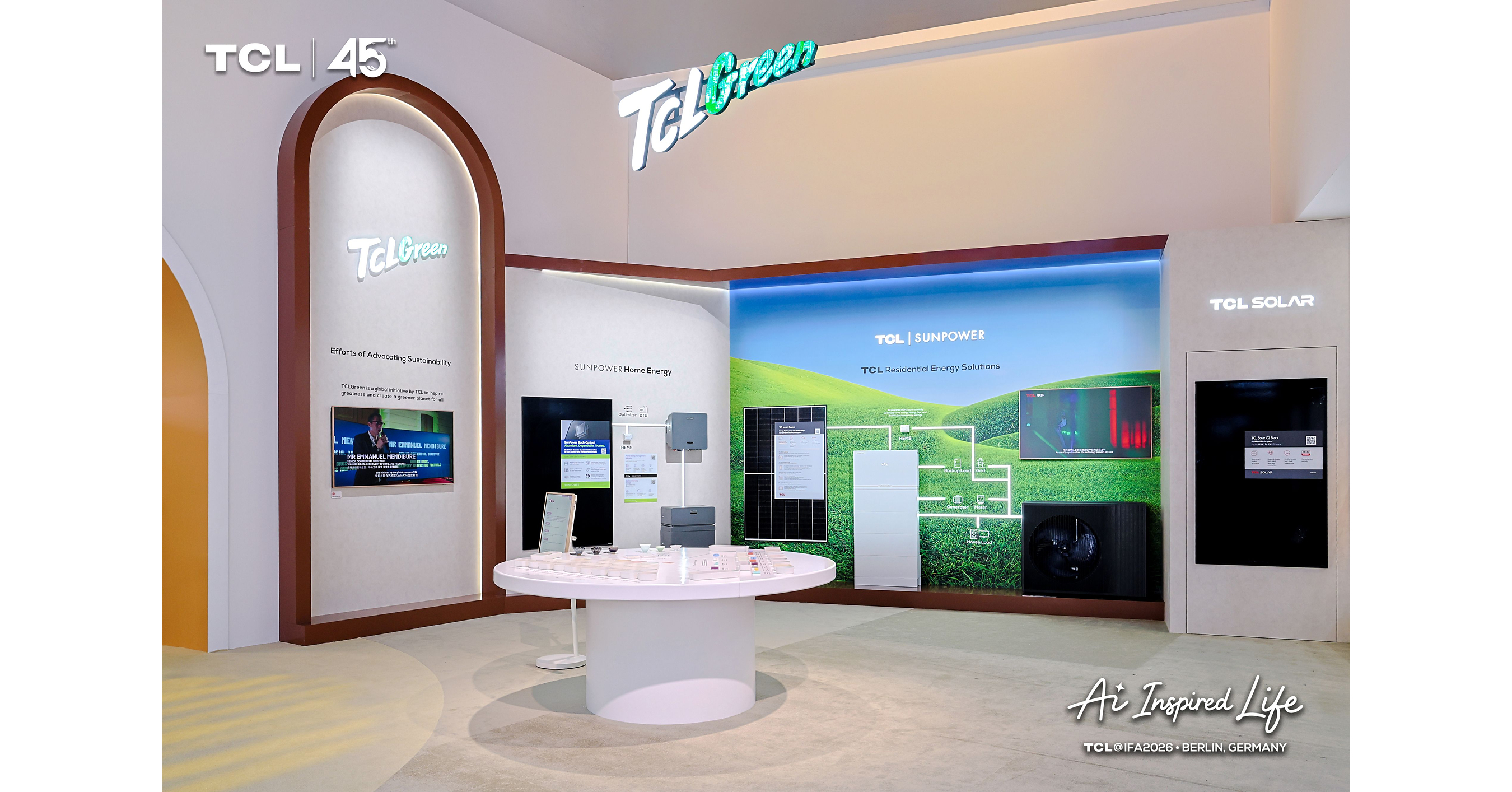
TCL will showcase its “Inspiration Habitat” at IFA 2026, highlighting a home energy ecosystem that integrates solar generation, battery storage, heat pumps, and a single Home Energy Management System platform. The company said renewable energy sources, including green electricity and self-generated solar, represented 11.7% of TCL Industries’ energy consumption in 2025, underscoring its operational push toward sustainability. While this is primarily product/technology promotion, the integrated energy-management pitch could support modest positive sentiment around TCL’s clean-energy strategy.
Analysis
The investable signal is not the demo itself; it is the attempt to move value capture from isolated solar hardware into the control layer that arbitrates generation, storage, HVAC and appliance usage. If that architecture scales, the economics shift toward software, financing and installation channels with recurring attach, while commodity modules and generic battery packs become lower-margin input layers. That is constructive for platform names with strong inverter/monitoring software and less so for manufacturers that compete mainly on price.
Near term, this is mostly a sentiment/read-through event, not a hard earnings catalyst. The real test is whether home-energy bundles can win on payback and simplicity in a high-rate environment; if consumer financing stays tight or utility bill savings narrow, the thesis decays over the next 1-3 quarters. Conversely, if installers report higher attach rates for storage and energy-management software, the market could start pricing a more durable mix shift over 6-18 months.
The contrarian point is that integrated consumer-technology branding can also signal margin defense: when a hardware OEM highlights ecosystem breadth, it often means individual products are under pricing pressure and need bundling to preserve share. For public comps, the cleaner relative winner is the name with the strongest software layer and lowest dependency on pure hardware ASPs; the loser is whichever company needs the home-energy stack to justify low-margin sales. For CETY specifically, there is no direct fundamental linkage here, so it should not be treated as a standalone trade catalyst.
AllMind Terminal
AI-powered research, real-time alerts, and portfolio analytics for institutional investors.
Request TrialMarket Sentiment
Overall Sentiment
mildly positive
Sentiment Score
0.15
Ticker Sentiment
Key Decisions for Investors
- Long ENPH / short SEDG for 1-3 months: express the view that the market will reward software/control attach and penalize hardware-heavy solar stacks; target 2:1 to 3:1 reward/risk if relative gross-margin trends diverge, and cover if SEDG shows improving inventory normalization or ENPH guides down on attach rates.
- Buy a small ENPH call spread into the next earnings window: this is a low-cost way to express optionality on a home-energy software re-rating without taking full delta risk; thesis fails if management commentary points to weaker residential demand or gross-margin compression.
- Do not chase CETY on this headline; keep it on watch only. There is no visible revenue or backlog linkage, so any move would be narrative-driven rather than fundamentals-led.
- If you want a commodity hardware hedge, short a basket of price-takers in residential solar/module supply only on confirmation of pricing pressure, not on this press release alone; use order-book commentary and ASP trends as the trigger.
More News
- Putin reportedly suggests summit with Trump and Xi to decide fate of Ukraine
- Ukraine launches over 1,000 drones at Russia, setting oil facilities ablaze
- China's CXMT sees shares drop over 6% as investors look past chipmaker's profit turnaround
- Trump defends Russian sanctions relief, lashes out at Zelenskyy
- China’s Coal Output Drops as Concerns Build Over Winter Supply
- Asian stocks skid, Wall Street and bonds aided by oil slip
From AllMind Research
- Anthropic IPO Preview: Valuation, Timing, and What to Watch
- Shein After the IPO: Venue, Valuation, and What Must Be Proved
- What AI Research Tools Should a Small Hedge Fund Buy First?
- Can ChatGPT or Claude Replace a Research Platform?
- How the 2026 Milan-Cortina Winter Olympics Will Reshape Company Revenues and Stock Performance