
Hurricane Polo Slips to Category 4 While Skirting Mexico
Source: Bloomberg
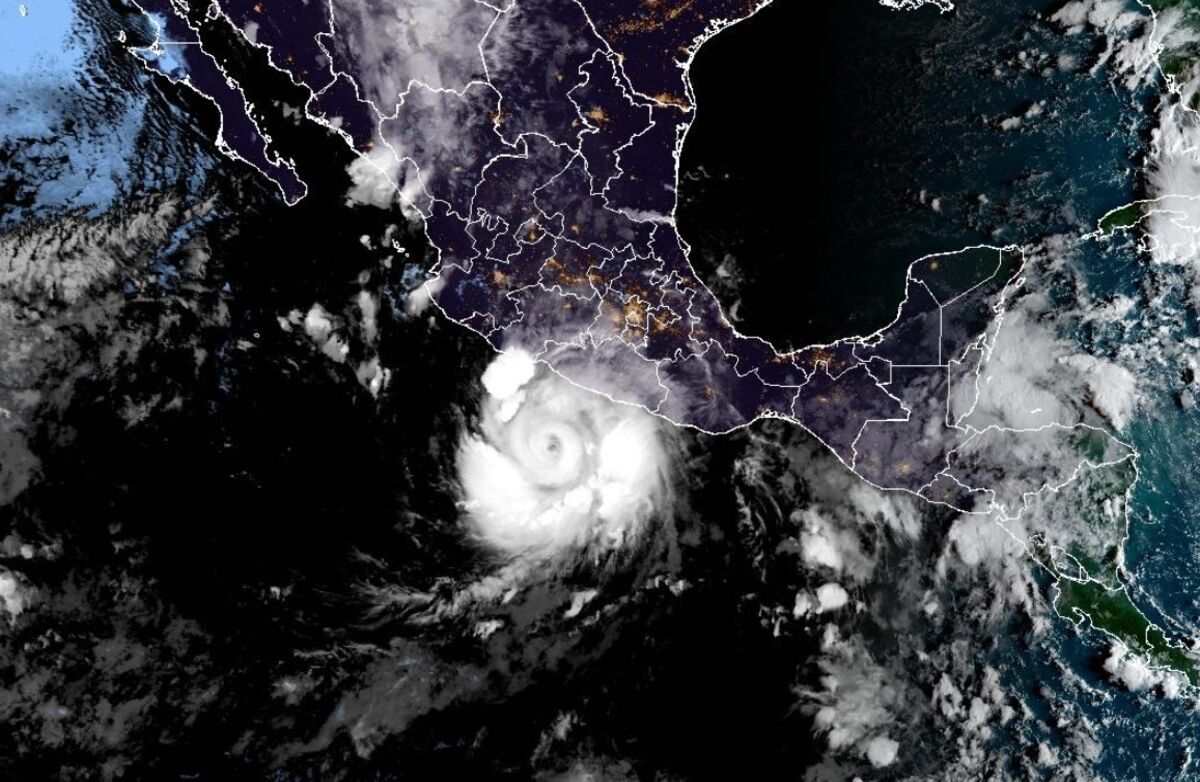
Hurricane Polo weakened to Category 4, with sustained winds falling to 150 mph from 180 mph, while remaining about 320 miles southeast of Mexico's key cargo port of Manzanillo. The storm is expected to skirt Mexico's Pacific coast and avoid a direct hit, limiting but not eliminating risks to port operations, shipping, and regional infrastructure.
Analysis
The market implication is primarily a short-duration logistics and insurance-risk event rather than a broad Mexico macro shock, assuming the storm remains offshore. Manzanillo handles a meaningful share of Mexico’s Pacific container throughput; even precautionary port closures could delay Asia-origin inventory flows into Mexican manufacturing corridors, creating days-to-weeks friction for import-dependent retailers and auto-parts supply chains. The likely direct public-market expression is modest unless closure duration, rail connectivity, or power infrastructure damage exceeds current expectations.
Near term, marine cargo and business-interruption insurers face headline risk, but a weakening offshore track should limit insured-loss severity and makes a broad short in insurers unattractive. The more relevant second-order risk is operational: container diversions to Lázaro Cárdenas or delays at Manzanillo can raise spot trucking and warehousing costs, pressuring already thin margins for Mexican importers. Watch for port authority closure notices, vessel queues, and disruption to industrial power; these are more investable indicators than wind-speed updates.
Contrarian view: the initial negative read-through could reverse quickly if the storm avoids landfall, as avoided damage removes a tail risk without creating a sustained demand impact. Hurricane-related rallies in transport or rebuild beneficiaries are not warranted absent verified infrastructure damage; the event is too localized and the expected disruption window is likely measured in days. A broader risk-off response in Mexican assets would be a better entry opportunity than a directional disaster trade.
AllMind Terminal
AI-powered research, real-time alerts, and portfolio analytics for institutional investors.
Request TrialMarket Sentiment
Overall Sentiment
mildly negative
Sentiment Score
-0.15
Key Decisions for Investors
- No immediate directional equity trade: wait for confirmed Manzanillo closure duration and vessel-backlog data over the next 24-72 hours; an offshore passage with reopening within 48 hours should be treated as a fade of any Mexico logistics-related selloff.
- Set an alert on Mexican ETF EWW: if weather headlines drive a >3% underperformance versus EEM without evidence of material port, power, or industrial damage, consider a 1-3 month tactical long EWW versus short EEM. Falsifier: confirmed multi-week port disruption or significant damage to western Mexican industrial infrastructure.
- Monitor publicly traded marine insurers and reinsurers such as RNR, ACGL, and EG for unusual weakness; avoid initiating shorts unless modeled insured-loss estimates rise materially. Their exposure is more likely to be business interruption and cargo claims than a balance-sheet event under the current track.
- For supply-chain books, flag Mexico-exposed auto and industrial manufacturers for earnings-call questions on Pacific-port inventory exposure. A disruption persisting beyond one week could create isolated Q4 working-capital and expedited-freight headwinds, but does not yet justify a sector-level position.
More News
- Why Trump banning diesel exports would upset the U.S. oil sector and upend global fuel markets — ‘the cure would be far worse than the disease’
- US aviation sanctions disrupt Iran flights, push travellers overland
- As Trump and Xi meet, Chinese automakers could be a Pandora's box for U.S. auto industry
- China Is Holding Sensitive F-35 Parts Diverted to Hong Kong
- Can flurry of New York diplomacy lead to US-Iran diplomatic breakthrough?
- US, Iran hold mediated UNGA talks on ending war, opening Strait of Hormuz