
Fight for Senate Control Moves to Debate Stage in Key Battlegrounds
Source: Bloomberg
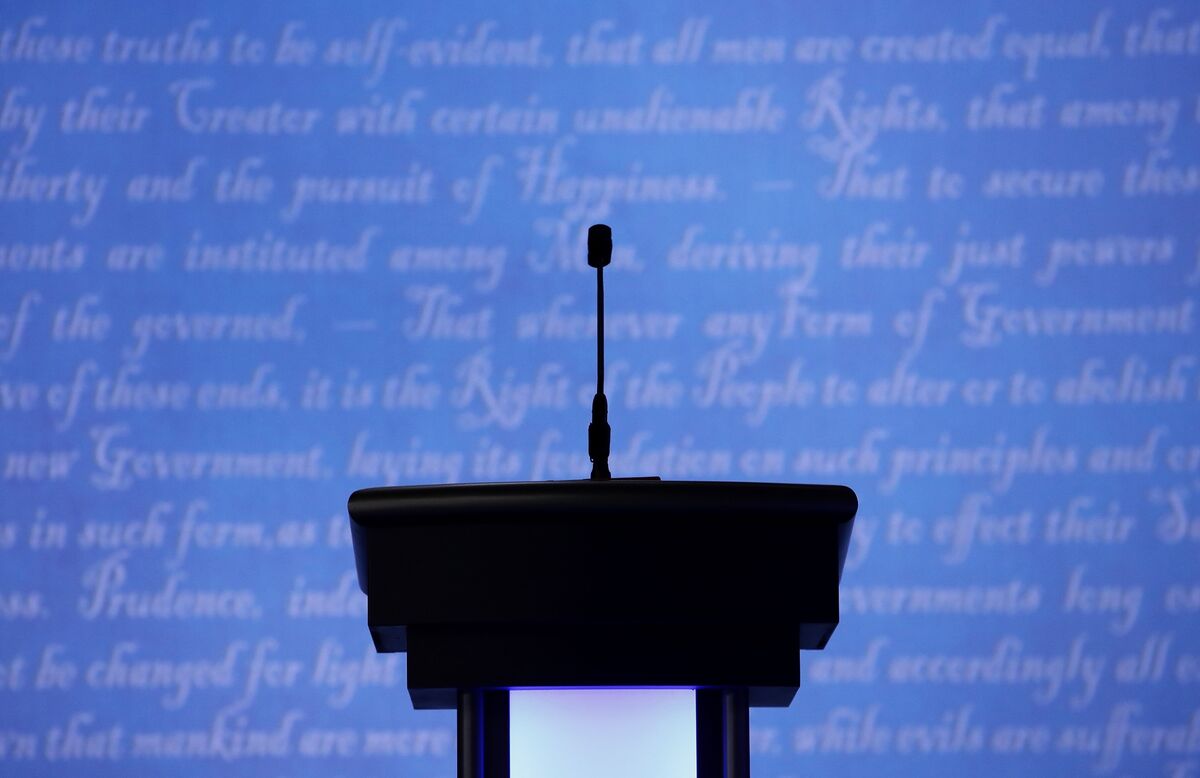
U.S. Senate candidates in Georgia, Michigan and Maine are entering debates as control of the chamber is at stake in the midterm elections. The article describes the debates as opportunities and risks for candidates but reports no debate outcomes or market reaction.
Analysis
The investable variable is not debate performance by itself, but whether it changes the probability of Senate control enough to alter expectations for legislation, confirmations, and oversight. A single debate is a noisy signal; absent durable movement in state polling, its near-term market impact is more likely to be brief headline volatility than a repricing of earnings. Over the next 1–3 months, watch whether polling changes persist and whether the chamber-control outlook becomes more concentrated or more uncertain. Over 6–18 months, control could affect policy optionality for healthcare, energy, financials, and clean-energy companies, but the direction depends on the winning coalition and its legislative priorities—not provided here. The contrarian risk is treating a close debate or viral moment as a policy catalyst: Senate outcomes also depend on state-specific fundamentals, turnout, and the broader national environment. No sector direction is justified from this article alone.
AllMind Terminal
AI-powered research, real-time alerts, and portfolio analytics for institutional investors.
Request TrialMarket Sentiment
Overall Sentiment
neutral
Sentiment Score
0.00
Key Decisions for Investors
- No immediate directional trade: the article supplies no candidate, party, polling, or policy detail sufficient to map debate outcomes to sector earnings.
- Monitor state polling and chamber-control probabilities after the debates; consider broad-index event hedges only if uncertainty rises and implied volatility remains inexpensive relative to realized moves.
- Keep healthcare, energy, financials, and clean-energy exposure tied to company fundamentals rather than debate headlines; revisit only when a credible policy proposal and a plausible Senate path are both visible.
- Falsify the low-impact view if post-debate polling shifts persist across independent sources or if markets begin repricing policy-sensitive sectors alongside a sustained change in control odds.
More News
- Trump's diesel agreement with Putin accused of contradicting Russia sanctions law
- Israel’s economy prospers despite years of war, but prices worry voters
- Trump struck a diesel deal with Putin just weeks after signing Russia sanctions. Zelenskyy calls it ‘a weak decision’
- Trump announces Russian diesel deal amid soaring US fuel prices
- Elon Musk intensifies attack on Ambani over Starlink India launch delay
- Is Trump signalling a return to war with Iran after the midterms?