
La HUAWEI WATCH D3 fait ses débuts en avant-première au congrès ESC 2026 : une nouvelle ère dans la surveillance de la tension artérielle au poignet
Source: PR Newswire
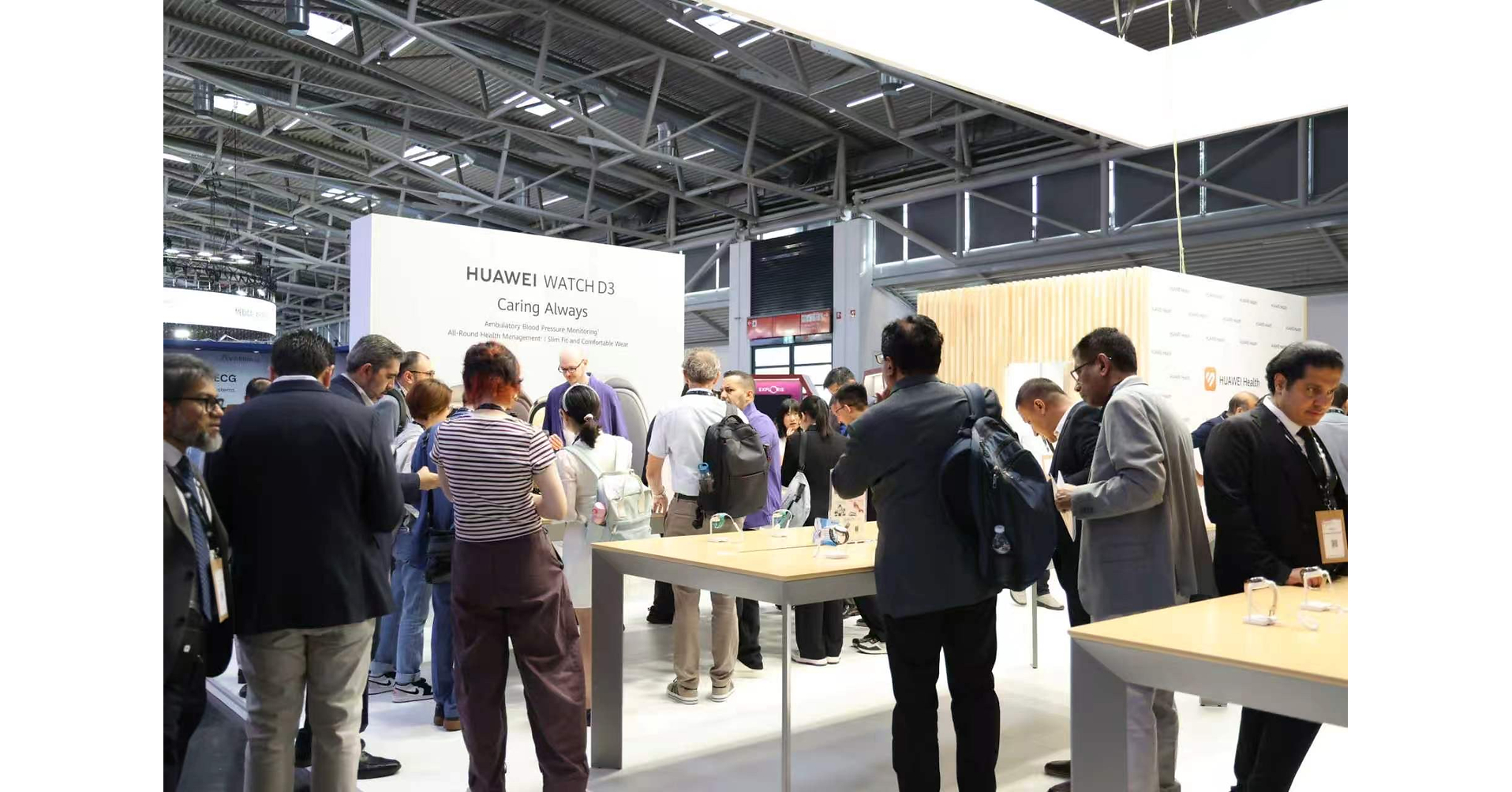
Huawei debuted the HUAWEI WATCH D3 at the ESC Congress 2026 in Munich, positioning it as a next-generation wrist-worn ambulatory blood-pressure monitor ahead of its official launch on 2 Sept. The company claims improved comfort via thinner/lighter design and more precise BP measurements during and around exercise, alongside CE MDR certification for EU market coverage. The news is product-focused with limited immediate financial impact, but it supports a mildly positive read-through for Huawei’s health-tech competitiveness.
Analysis
This reads more like category signaling than a near-term earnings catalyst. Huawei is privately held and regionally constrained, so the immediate market impact on public equities should be minimal; the real takeaway is that blood-pressure monitoring is moving from a niche medical add-on toward a feature-completeness race in premium wearables. That shifts value capture away from standalone sensor novelty and toward ecosystems that can convert health data into recurring engagement, software, and services.
The incremental pressure is most relevant for consumer wearable rivals and lower-end home-monitoring devices over 6-18 months, but the substitution is likely to be weaker than headlines imply. For Apple, the risk is feature parity, not share loss: health hardware updates are increasingly table stakes, and the moat remains the installed base, app layer, and regulatory trust. For Garmin, the bigger issue is premium ASP compression if competitors keep adding regulated health claims without materially changing consumer willingness to pay.
The contrarian view is that investors may be overestimating how quickly a wrist-based BP feature becomes clinically or commercially sticky. The real bottleneck is not measurement alone but physician acceptance, calibration friction, and whether the data actually changes care pathways; without that, this is mostly a marketing upgrade. Watch the launch price, any independent validation, and whether the CE scope translates into distribution in Europe over the next 1-3 quarters; if not, the move stays mostly narrative.
AllMind Terminal
AI-powered research, real-time alerts, and portfolio analytics for institutional investors.
Request TrialMarket Sentiment
Overall Sentiment
mildly positive
Sentiment Score
0.25
Key Decisions for Investors
- No immediate trade: treat this as a watch item, not a signal, until Huawei discloses pricing, channel strategy, and independent validation data over the next 1-2 quarters.
- Low-conviction pair for 6-12 months: long AAPL / short GRMN into any rally on wearable-health feature creep; thesis is that ecosystem monetization will outlast hardware commoditization, while Garmin is more exposed to premium ASP pressure.
- Do not chase long-only 'medical wearable' exposure here; wait for evidence that wrist BP monitoring drives repeat engagement or subscription attach before paying up for the theme.
- Set an alert on European consumer-medtech names if competing devices show price cuts of >15% after launch; that would be the first sign of margin compression rather than just product noise.
More News
- AI Capex, Gamble or Jackpot?: Market Snapshot
- ‘I told you so’: China’s chip sector is making breakthroughs—and U.S. export controls are the reasons why
- CoreWeave credit default swaps hit distress levels as investors sour on AI debt
- The IPO drought is driving private equity-owned companies to the debt market to pay investors
- Hybe shares jump 10% as K-pop sensation BTS' tour lifts earnings hopes
- Giant Taiwanese chipmaker TSMC confirms it’s in talks with Elon Musk to join ‘Terafab’ complex in Texas: ‘The AI market continues to be very strong’
From AllMind Research
- Anthropic IPO Preview: Valuation, Timing, and What to Watch
- Shein After the IPO: Venue, Valuation, and What Must Be Proved
- What AI Research Tools Should a Small Hedge Fund Buy First?
- Eli Lilly Q4 2025 Earnings: Revenue Surges 43% as Mounjaro and Zepbound Dominate the GLP-1 Market
- Investment Research Software Costs: A 2026 Budget Framework