
Dowinx Reframes Everyday Seating Around the Way People Really Live
Source: PR Newswire
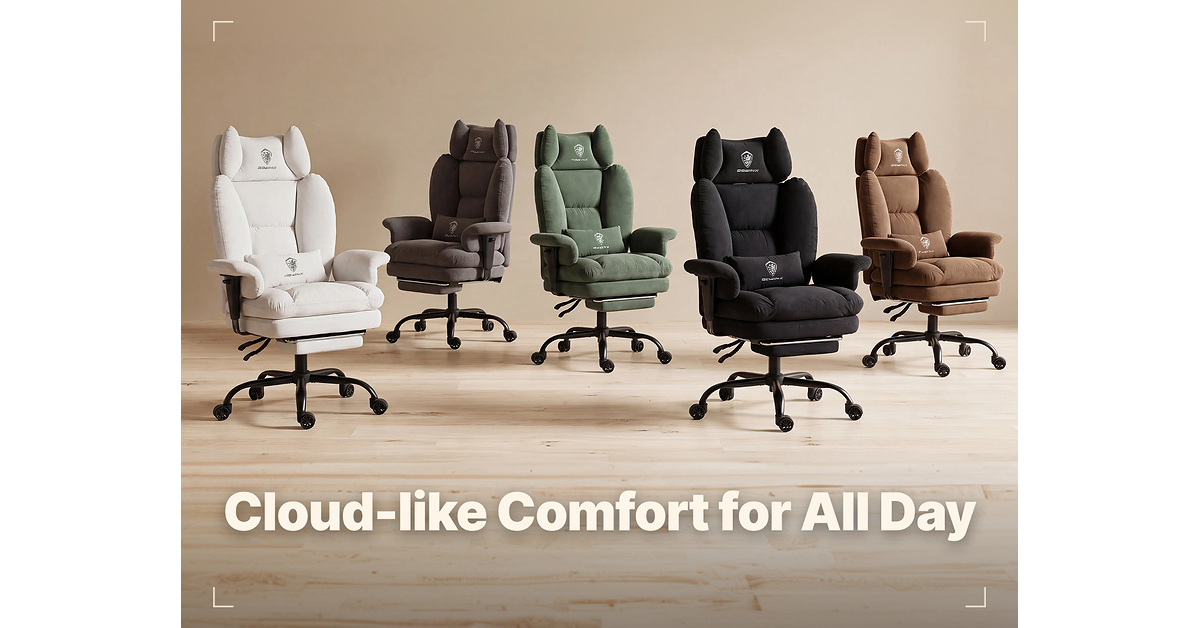
Dowinx launched the QL-66B6 Executive Office Chair focused on “adaptive comfort” for hybrid use (work, gaming, relaxation). Key specs include a headrest with up to 2.7 inches of height adjustment, armrests adjustable up to 3.1 inches, independent pocket springs with high-density foam, and recline from 90° to 135° plus a retractable footrest. The news is a consumer product announcement with limited implications for broader markets.
Analysis
This reads as branding, not a revenue event. In a category where product differentiation is mostly incremental and switching costs are low, the main competitive risk is not to Steelcase or MillerKnoll’s core contract accounts but to mid-tier DTC and marketplace chair sellers that depend on paid traffic and review velocity. If Dowinx can extend beyond gaming into “hybrid living,” the second-order winner is likely the component ecosystem—OEMs with adjustable mechanisms, foam, and upholstery capacity—rather than the finished-chair brand itself.
The market mechanism to watch is CAC efficiency, not launch language. A chair like this only matters if it converts at scale on Amazon, Wayfair, or paid social, because the gross margin can be quickly consumed by shipping, returns, and discounting. That makes the near-term catalyst path 1-3 months of search/rank/share data; absent that, the stock impact on any public peer is probably negligible.
Contrarian view: consensus tends to over-read “hybrid living” as a structural demand wave, but this category is highly cyclical and rates-sensitive. If home-office replacement demand is real, it will show up first in accessories and replacement cycles, not a single launch; if it is not, the channel will force margin compression within two quarters. The thesis is falsified if public peers show no improvement in unit growth or if e-commerce conversion for seating stays flat despite higher promotion intensity.
For now, the cleanest stance is to treat this as a watch item rather than a trade. The only actionable edge would come from channel checks showing sustained rank gains or from evidence that consumers are trading up within the $150-$400 chair band, which would modestly help consumer discretionary, but not enough to warrant an aggressive position today.
AllMind Terminal
AI-powered research, real-time alerts, and portfolio analytics for institutional investors.
Request TrialMarket Sentiment
Overall Sentiment
mildly positive
Sentiment Score
0.12
Key Decisions for Investors
- No immediate trade: avoid chasing consumer seating names on a single product launch; wait 1-3 months for Amazon/Wayfair rank, review velocity, and promo cadence before underwriting share gains.
- Set a watchlist on MLKN and SCS into earnings: if consumer/home-office demand improves, these are the public beneficiaries; buy only on evidence of unit acceleration or margin stability, not press-release noise.
- Relative-value idea only if channel data confirms share shift: long a diversified home-furnishings proxy (XLY or XHB) vs short a higher-multiple discretionary name with exposure to weak durable demand; target a 3-6 month window.
- If you want a pure alert, monitor e-commerce seating keywords and return rates; a sustained lift would support a tactical long in the most promo-efficient seller, but absent that the risk/reward is poor.
More News
- CoreWeave credit default swaps hit distress levels as investors sour on AI debt
- Penske Automotive agrees to be taken private by Penske, Mitsui
- Faraday Copper completes acquisition of BHP’s San Manuel project
- Supermicro promised a new CFO in December 2024. A $2.5 billion smuggling case and a co-founder’s arrest later, it has one
- Blackstone President Jon Gray Bets Big on AI Boom
- Ukraine to resume strikes on Russian refineries, shattering hopes of an 'energy ceasefire'