
Eluvio Showcases New Advanced Features in Global Broadcast Fabric for Zero-Copy Broadcast Distribution, D2C OTT Streaming & Monetization, and Inline AI Video Intelligence at IBC 2026
Source: PR Newswire
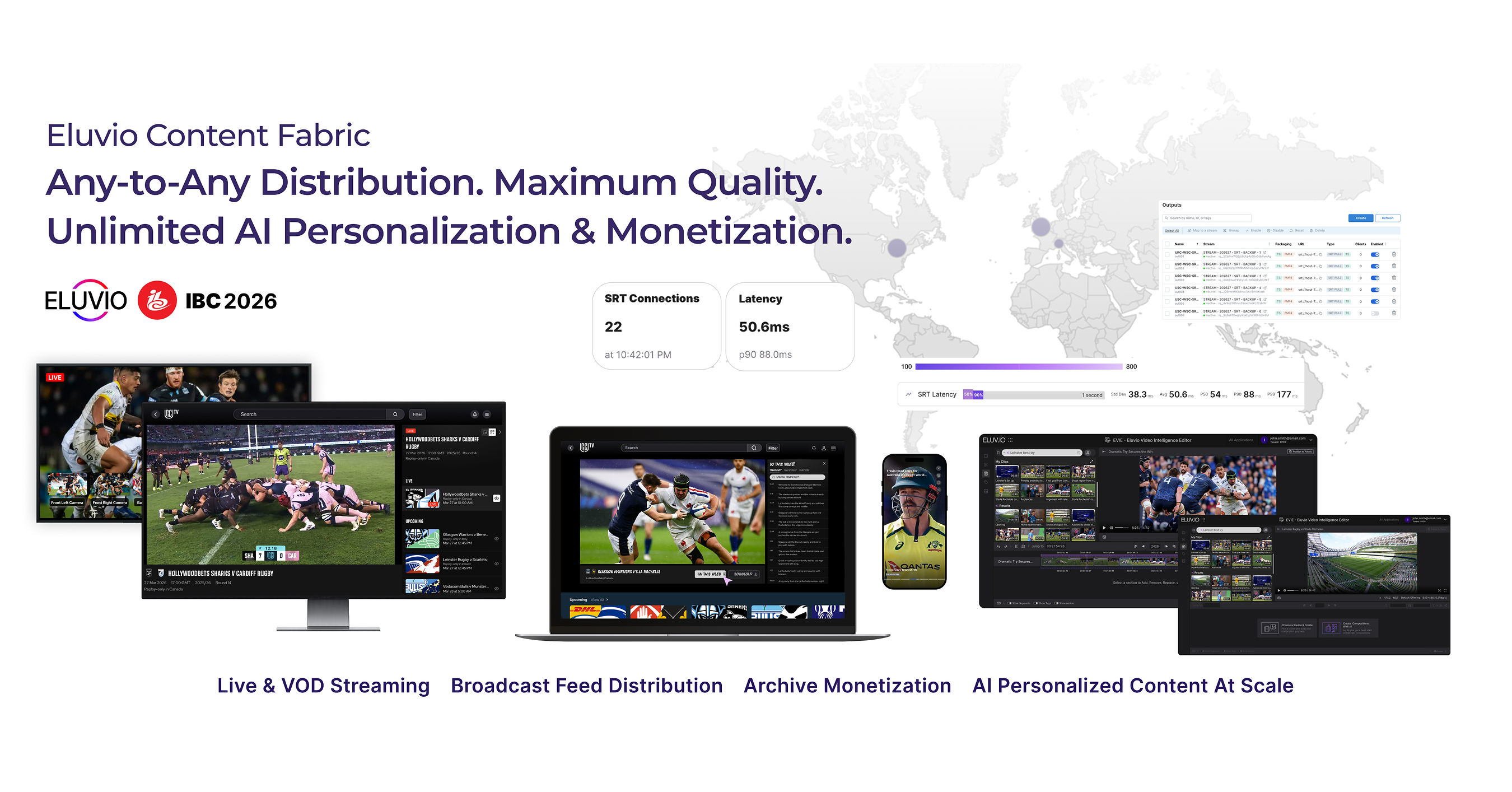
Eluvio announced Global Broadcast Fabric features for IBC 2026, including sub-500ms global latency with sub-millisecond jitter and decentralized zero-copy broadcast feed distribution, plus inline, frame-accurate multimodal AI (EVIE/Eluvio AI) running inference on live and VOD streams with zero copies/transcoding. For D2C OTT, it highlighted performance improvements such as 8x live stream cross-variant serving and <=30ms segment delivery latency, alongside new white-labeled “Pocket TV” monetization and ad insertion capabilities. The article is largely product/technology focused with a World Cup pilot reference showing 15–45+ seconds faster latency than legacy services, implying incremental positive momentum but limited direct financial impact.
Analysis
This reads less like a near-term earnings catalyst and more like a potential pricing-pressure event for legacy video distribution stacks. If the economics are real, the first-order winner is the content owner/broadcaster that can add more variants, more personalized ad inventory, and more reruns without linear distribution cost; the second-order loser is whoever currently monetizes that fan-out layer, especially CDN/video transport vendors and satellite-backed workflows. The key market implication is not latency, it is margin capture: more value can shift from infrastructure spend toward rights owners and audience monetization software.
For the public names in the file, AMZN and GOOGL are only indirectly exposed. This is not an AWS or YouTube thesis on day one; it matters only if live video workflows start to migrate away from hyperscaler distribution and egress-heavy architectures over the next 6-18 months. SONY is the clearest optional beneficiary because anything that raises monetization efficiency for sports/anime/library content can modestly improve return on content spend, but the effect is too small to underwrite a standalone trade without evidence of adoption. PBH.TO looks irrelevant here.
Contrarian view: the market should assume demo-to-production friction is high. Broadcast buyers care about interoperability, auditability, SLA liability, and procurement inertia more than feature breadth, so the base case is that this is a pilot story unless multiple independent broadcasters confirm budget reallocation. The thesis is falsified if no named customer expansions appear within 1-2 quarters after IBC, or if existing CDN/satellite vendors show no pricing or volume pressure in their next results.
AllMind Terminal
AI-powered research, real-time alerts, and portfolio analytics for institutional investors.
Request TrialMarket Sentiment
Overall Sentiment
mildly positive
Sentiment Score
0.15
Key Decisions for Investors
- Do not initiate a directional trade in AMZN, GOOGL, PBH.TO, or SONY today; treat this as an event to verify, not a revenue-mover, until independent customer references or budget displacement are visible.
- Set an alert for named broadcaster conversion at/after IBC 2026: if Eluvio announces a production rollout rather than another pilot, add a small short AKAM/FSLY basket on the thesis of video-CDN pricing compression over the next 1-3 months.
- Consider a pair trade only after confirmation: long SONY / short AKAM on a modest size, with the long leg as a rights-owner monetization beneficiary and the short leg as the more directly exposed distribution-layer loser; exit if SONY does not show content-platform margin uplift in the next reporting cycle.
- For AMZN and GOOGL, watch next cloud commentary for media egress and live-video mix; if management tone stays constructive and no competitive churn appears, this story should be faded as niche rather than structural.
- Falsifier for the bearish infrastructure view: if CDN peers report stable video demand and no pricing deterioration through the next 1-2 quarters, cover any short exposure immediately.
More News
- Everyone can find a reason to dislike data center construction
- From $2 billion to $112 billion in annual profit: How Apple transformed its business
- Campaigners tell Burnham not to trade away the UK's tech tax to please Trump
- Microsoft cuts hundreds more jobs, shifts next ‘Halo' game to Activision in Xbox overhaul
- Meta bull case increasingly playing out, Mizuho says
- Intel surges 12% as CPU stocks rally. Here's what's driving the move